Four things happened last week. I'm still in awe. And I'm probably writing this down so I remember.
1 - I officially declined a leadership opportunity. I'd been serving in this realm in a temporary status for about two years and although it's a great opportunity, it's not quite in my sweet spot. I'm being obscure on purpose but those of you close to us probably can guess what this is. Suffice to say that after I gave the official word, there was a huge sense of relief. Maybe tell you more one day.
2 - The very day I declined, somehow my name made an internet list. I will be the first to tell you that the other people on this list are amazing - many of them inspire me and I almost always click all the links when this thing comes out every month. So I'm humbled and flattered to be thought of in the same manner. Making the list was not about the arrival somewhere. In the context of this particular day, it was confirmation about my earlier decision.
3 - I met with the Ember board for our first official meeting. As you might imagine, I don't know much about running boards. What I do know is that I value each one of these board members as friends and co-conspirators. What I had no idea about was how much each of them believe in Ember and the challenge they would put forth to really run this thing so we could serve more and more students. Their vision scared and awakened me. We throw fire.
4 - Finally, attending and sharing at the ACMC conference. The combination of sharing what we learned, interacting with some friends about the material, and being at a conference which really was implicitly about the future - all of it was so generative for me.
And so.... this week?
Tuesday, November 16, 2010

Monday, November 15, 2010
ACMC 2010 DMV conference
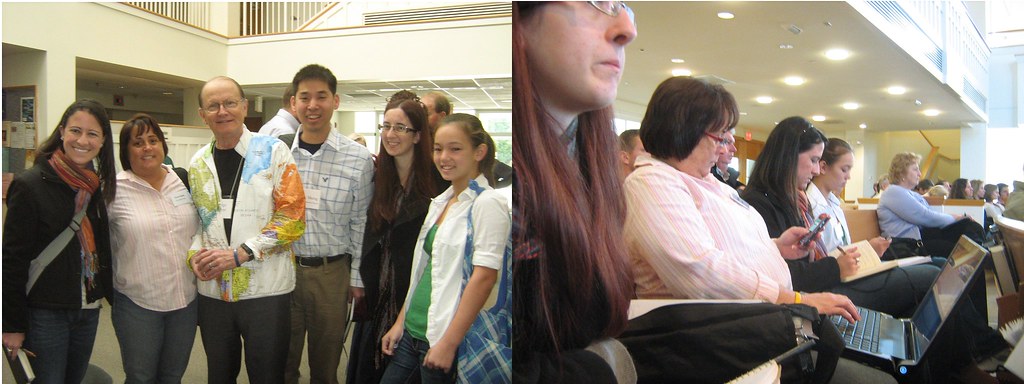 Had a great time at the Advancing Churches for Missions Commitment [ACMC] DC/MD/VA conference on Saturday. Our little group that went consisted of Leslie - Ember board member, Joyce - Ember board member, Robyn - college student/trying-to-figure-out-life, and my 12 year old daughter Kt.
There were some really great sessions and George Verwer, founder of OM, was ridiculous in the two plenary sessions. Ridiculous in terms of very engaging and lots of really good information. I thought my breakout went really well and I had a great time doing it.
Met some interesting people as well as caught up with some old friends doing neat stuff. The quick list:
MBoorman - new youth pastor at Barcroft Bible - they have 6 languages in their congregation
DH - old friend who runs NavYouth, been running open mic nights to connect with students who are musicians, now going to try an experiment with music studios.
Dave Shive - former prof at Washington Bible College, now works for ACMC full time, in his mid 60s but probably has a higher Millennial score than I do. His session on passing the missions leadership baton from the older generation to the younger generation was fantastic - see the notes below.
The demographic was, sorry to be blunt, old. As far as I could tell, there was 2 or 3 people involved with students there. I saw one middle or high school kid - mine. All of this is unfortunate because I think any high school or college kid interested in global leadership would have had a lot of fun at the conference. Next time, Ember focuses on recruiting a whole bunch of students to attend.
Finally, I know they conference organizers had some trouble putting this thing together - last minute issues and cancellations and all that. But it really was a fun day so my thanks to them for their efforts and for inviting me to run a breakout.
My notes to follow - enjoy.
+ George Verwer - Plenary 1
Any missions event in 2010 should start with Thanksgiving. We are making progress.
Acts 13
1. church - the local church
the church is in a credibility crisis
2. worship
3. Holy Spirit
4. Sent
5. Prayer
6. Preached
social concern + proclamation come together
Luis Palau - new kind of evangelistic outreach [related]
7. Helper
George has had 55 personal assistants - all do it for one year and live with him as family, all young men. All 55 are still walking closely with Jesus.
+ Dave Shive - Passing the Baton to the Next Generation lf Church Missions Leadership
'missions activist' - love that term he used
passing the baton has a backdrop of precision
older gen needs to decide if they trust younger gen to create new structures or to micromanage them
older gen needs to decide whether to pass it on, what exactly they are going to pass on, how do they pass it on.
responsibility rests on older gen - form of church is irrelevant to Dave - as a 60 year old, he doesn't need his needs met by a church
10 problems
1. maturation - spiritual growth is important in this discussion - love and maturity between generations
2. alienation - goal is not to alienate
3. stereotypes
young are lazy
old are stuffy
from the audience - a youth pastor and his wife - a lot of this is also based on our expectations of people - they rise or fall to what we expect of them - very very true.
4. change - change is essential - technology also makes us aware of the change faster
5. changing interests
6. control
7. departures - kids leaving the faith/church
8. faith loss - younger people have less loyalty to institutions
9. gender - large issue for men - feminization of the Church
missions used to be the brave thing to do
70% of boys will leave church in their teens and twenties
10. old age - we all die
+ George - plenary II
top 10 impossible countries
1. North Korea
2. Tibet
3. Afghanistan
4. Iran
5. Iraq
6. Saudi Arabia
7. Yemen - Socotra - not one believer on the island of about 50,000
8. Libya
9. Tunisia - few hundred believers
10. Somalia/Turkmenestan
Christianization of America is a greater priority than the evangelization of the nations.
Top Trends
1. most church growth in history
2. house church movement - alpha course, G12 colombia
3. emerging missions
new range of sending countries - from anywhere to anywhere
4. partnership
5. rapid shift to holistic ministry
6. business as missions
7. explosion in short term missions
8. explosion of technology in missions
"I've never had a boring day since my conversion"
[Related: ACMC conf notes - 2004, 2003]
Friday, November 12, 2010
Taking Back The Future
Here are my breakout "Taking Back The Future: Transforming Students into Cross Cultural Workers" notes for the Advancing Churches in Missions Commitment DC/MD/VA conference tomorrow. If you download them, make sure you open up the notes section in powerpoint [sorry hahaha] so you can see some of the actual stuff I'm talking about instead of just pretty pictures about some phenomenal people. If you are reading this today and want to attend, I'm pretty sure there is still room. If you are going, please stop by to say hi.
[Update: had to update the slides, if you download it, make sure it's version 9]
I've included a list of resources on the last slide - here's the list with some links. As always, with anything and everything you find on this blog, feel free to take, steal or borrow what works in your context.
The Forgotten Ways - Alan Hirsch
An Unstoppable Force - Erwin McManus
Waking the Dead - John Eldredge
Movements That Changed The World - Steve Addison [blog]
Perspectives
Rob Wegner
Alex McManus
Bob Roberts
Swerve - Lifechurch.tv
Andrew Jones
Ben Arment
Thursday, November 11, 2010
Thursday Burn
::: Rob Wegner at AND
Link. Make sure to check out this graphic about Granger's attractional and missional combination - it will make your head spin, in a good way.
::: Google and Endangered Languages
Link
::: A Sugar and Salt Solution for Haiti's Cholera Epidemic
Link via Becky Straw
Link. Make sure to check out this graphic about Granger's attractional and missional combination - it will make your head spin, in a good way.
::: Google and Endangered Languages
Link
::: A Sugar and Salt Solution for Haiti's Cholera Epidemic
Link via Becky Straw
Tuesday, November 09, 2010
The Salisbury Win Sheet
You reach a goal, you experience a win.- Andy Stanley
Here's the link to our "win sheet" for the Ember Salisbury Cast coming up in a few weeks. As always, with everything on this blog, feel free to steal whatever works best for you. Just remember to contextualize it. =)
Monday, November 08, 2010
Book Notes - Forces for Good
 Forces for Good: The Six Practices of High Impact Nonprofits, Leslie Crutchfield and Heather McLeod Grant
12 orgs after thousands of interviews of npo execs.
America's Second Harvest
Center on Budget and Policy Priorities
City Year
Environmental Defense Fund
Exploratorium
Habitat for Humanity
The Heritage Foundation
National Council of La Raza
Self-Help
Share Our Strength
Teach for America
Youthbuild USA
++ Chapter 1 - The 6 practices of high impact nonprofits
1. Advocate and Serve
High impact orgs don't just focus on doing one thing well. They may start out providing great programs but eventually they realize that they cannot achieve systemic change through service delivery alone. So they add policy advocacy to access government resources or to change legislation, thus expanding their impact.
2. Make Markets Work
No longer content to rely on traditional notes of charity or to see the private sector as the enemy, great nonprofits find ways to work with markets and help business 'do well while doing good.'
3. Inspire Evangelists
Great nonprofits see volunteers as much more than a source of free labor or membership dues. They create meaningful ways to engage individuals in emotional experiences that help them connect to the group's mission and core values.
4. Nurture Nonprofit Networks
High impact organizations help the competition succeed, building networks of nonprofit allies and devoting remarkable time and energy to advancing their larger field. They freely share wealth, expertise, talent and power with their peers, not because they are saints, but because it's in their self interest to do so.
5. Master the Art of Adaptation
All the orgs in this book are exceptionally adaptive, modifying their tactics as needed to increase their success.
6. Share Leadership
They distribute leadership throughout their organization and their nonprofit network - empowering others to lead. And they cultivate a strong second-in-command, build enduring executive teams with long tenure and develop highly engaged boards in order to have more impact.
++ Chapter 2 - Advocate *and* Serve
Five Principles for Successful Policy Change
1. Balance Pragmatism with Idealism
They would rather win than be right. They strike a balance between achieving results and maintaining their integrity.
2. Practice Principled Bipartisanship
3. Preserve credibility and Integrity
4. Hire Policy Experience
5. Find Funding for Advocacy
+ Policy advocacy is a powerful force for social change.
High impact nonprofits understand that they cannot achieve maximum results without advocating for policy reform or without accessing the power and resources of government.
+ The best nonprofits both advocate and serve.
Ultimately the two activities reinforce each other.
+ Don't be afraid to jump into the political fray.
+ It's never too late to advocate.
++ Chapter 3 - Make Markets Work
Env Defense Fund and McDonalds' trash issue
Env Defense and FedEx packaging more env friendly and revolutionizing company's truck fleet
Cap and Trade - a market for trading pollution permits
These nonprofits don't seek to act like a business so much as leverage the power of business.
It's hard to change the world without changing business.
There are three ways to harness market forces:
1 - work with business to change corporate practices and make companies more socially responsible.
2 - partner with business to access more resources for their cause
3 - some orgs run their own businesses to generate earned income
++ Chapter 4 - Inspire Evangelists
"I was more interested in building a movement than an organization. The key ingredient of a movement is abandon - you don't hold back. It takes passion, commitment, dedication." - Millard Fuller, founder of Habitat for Humanity
top cultivation events - transform volunteers into evangelists:
City Year - serve-a-thons - one-day local volunteer events for thousands
Share Our Strength - Great American bake sale
TFA - TFA week
High impact groups are particularly strategic about identifying, converting and cultivating powerful individuals or super-evangelists.
For the social entrepreneur, the solution is to make the network not as a tool for information or resources but as a community defined by a common set of values. The community itself becomes the agent of change - Joel Poolny, dean of Yale School of Mgt.
++ Chapter 5 - Nurture Nonprofit Networks
Adopt a network mind-set
Share Knowledge
Develop leadership
Work in Coalitions
Networks are the future [references to Wikipedia, open source software and The Starfish and the Spider.]
++ Chapter 6 - Master the Art of Adaptation
The Cycle of Adaptation
Adaptive capacity is one term used to describe this phenomenon - and high impact nonprofits have it in abundance.
"It is one thing to deliver a program ... [and another] to know where and how to change programs and strategies so that the organization is delivering on its mission. For an organization to be more than the sum of its programs, it needs the ability to ask, listen, reflect and adapt." - High Performance Nonprofit Organizations - Christine Letts
"The limits to innovation have less to do with creativity and more to do with management systems." - Ten Rules for Strategic Innovators
We observed that 'staying close to the customer,' to borrow a business phrase, is the most common impetus for adaptation.
- listen to the environment
experiment and innovate
evaluate and learn what works
modify programs
- what not to do
Many nonprofits fail to find this delicate balance - they are either so freewheeling that their cultures are more chaotic than creative, or they are so structured that they become hidden bound and paralyzed. But high-impact nonprofits are able to work with this tension.
++ Chapter 7 - Share Leadership
These CEOs take the Level 5 leadership concept one step further. They not only put the interests of their organizations ahead of their personal egos, they often put their overall cause ahead of their organization’s interests.
++ Chapter 8 - Sustaining Impact
People - develop a people strategy and invest heavily in top performers. First what, then who. All the orgs we studied are guided first and foremost by their mission, and this purpose is the primary reason a person will take the job. [opposite of Collins - First who then what]
Capital - find the right sources of funding
Infrastructure - invest in overhead, despite the pressure to look lean
+++
Great read. Not that Ember is even close to being some of this, but here's a few ideas that are percolating:
1 - Policy change [chapter 2] reminds me of global missions strategy.
2 - Love the stuff about leadership and adaptability. Knowing that it's an art and not a science.
3 - What kinds of businesses are out there that align with something like Ember?
Friday, November 05, 2010
Latest Kindling
Hello Nov Ember! Got a few crazy weeks up ahead - but all very generative.
+ Advancing Churches in Missions Commitment DMV conference in 2 weeks - would love to meet you if you are going to be there.
+ Ember's board of directors meets officially for the first time next week. Praying for summer 2011 is on the agenda.
+ Very much looking forward to Ember Salisbury Cast. I'm sure the students there are still amazing as last time.
+ A leadership event proposal I helped write was accepted - the Leadership Collective - scheduled for late January 2011. I am almost sure I bit off more than I can chew. Learning by doing.
+ Had to make some adjustments with the interns - both of them are overwhelmed with senior year, jobs, college apps, their small groups and Friday night youth ministry outreach leadership opportunities. It's a lesson in contextualization - I'm not going to pull them out of where they are already making an impact to 'teach' them about leading.
Thursday, November 04, 2010
Thursday Burn
::: The core competency of any movement is apprenticeship
Link
::: Rob Fairbanks apologizes for all Americans
But this is funny....
Youtube Link
::: Today
A video about children and mission, shown at Capetown.
Youtube Link via Andrew Jones
@rickwarren : "I don't dream at night, I dream all day; I dream for a living." Steven Spielberg
@alanhirsch : An apostolic movement is its own R+D department
@jontyson : The priesthood of all believers is the most neglected doctrine in the church. Everyone is a priest. Everyone has a parish.
Wednesday, November 03, 2010
You Don't Hold Back
"I was more interested in building a movement than an organization. The key ingredient of a movement is abandon - you don't hold back. It takes passion, commitment, dedication."- Millard Fuller, founder of Habitat for Humanity, as quoted in Forces for Good
Tuesday, November 02, 2010
Tracking Some Global Leadership
So Capetown came to a close - sounded like a pretty amazing experience and I loved being able to read a ton about it. So thankful for the technology to be able to do that.
You might imagine that I was most interested in the topic of global leadership [see this post - related to this advance paper.] Kind of a no-brainer - if we are going to have successful teams, mission organizations, churches, nonprofits, social enterprises, etc., the people that lead them are going to have to be solid. And since 99% of all leaders are not born, someone somewhere has to intentionally do the difficult work to cultivate and grow them.
I was disappointed in the CapeTown session for only reviewing the current gaps in leadership. Granted I wasn't there so I might be wrong on this but it didn't seem like there was any focus on the bright spots of people developing global leaders with positive results.
In light of that, here's a few global leadership initiatives that I'm tracking:
Leadership XP
Christian Associates
Xealot
Fuller MAGL
National Community Church Proteges
Mosaic proteges
Acumen Fund Global Fellows
[Tracking mostly meaning that I've got google reader searches turned on for them...]
One BIG caveat to these - most of them have a big Western American context. What kind of global leadership movements are you watching?
Monday, November 01, 2010

Friday, October 29, 2010
The proof might be in ...
 the leaders that aren't leading yet.
Fun conversations this week with Tayest [SPACE alumni] and Trevin [our first Ember guide.] It's one thing to traipse the world engaging different cultures, serving and encouraging people and being involved on mission. It's a completely different level to empower and help others into doing the same kinds of things - start with lots of dreaming, listening, encouraging and connecting. It also requires movement thinking and catalytic leadership - like finding ways to jump start indigenous initiative. Complex, nonlinear and oh so exciting and generative. Something like this tweet:
@trevinhoekzema : spent an hour on the phone with AR, talking, catching up, dreaming... #Duke is doing an amazing this with its Engage program.
Ember hits Salisbury in November working on a community project based on demographic data - so privileged to work with these two catalytic leaders. Even more fun than working with them - we do this for leaders that aren't leading yet. They are out there, on the brink of being engaged and sometimes they need a bright spot like Tayest and Trevin to kick them into the future.
Thursday, October 28, 2010
Thursday Burn
::: How to Take on A Passion Project When You Have a Job
Great article - it seems lots of people I know are doing this.
Link
::: Charity:water's 2009 annual report
Great example of how you present lots and lots of data.
Link
:::How to Buy a Round-the-World Plane Ticket
Link
::: The DIY Foreign Aid Revolution
A must read.
Link
Great article - it seems lots of people I know are doing this.
Link
::: Charity:water's 2009 annual report
Great example of how you present lots and lots of data.
Link
:::How to Buy a Round-the-World Plane Ticket
Link
::: The DIY Foreign Aid Revolution
A must read.
Link
Wednesday, October 27, 2010
Tuesday, October 26, 2010
Antidote - Generate - Collective - Upstream
I just submitted a proposal for a leadership event at GRACE slated for early 2011. We'll see if it really flies or not but I'm excited about the potential. Even though the Christian conference space is way over-saturated, there is almost always value in gathering leaders when we facilitate them connecting and inspiring each other. Hopefully this event creates an environment to do that with a lot of context as a backdrop. Tell you more about it if it gets wings.
Some other ideas that have framed this:
+ always, always, always bring in an ideator [TMurray...]
+ distributed - one speaker to a passive audience doesn’t work anymore.
+ interactive - note that Capetown 2010 broke 5000 people into table groups of 6.
+ The TED commandments
+ how to organize the room
+ the producer versus the artist
+ no wired microphone, a handheld microphone or a podium microphone.
Monday, October 25, 2010
First Ember Board
 The Ember Cast Board of Directors gathered for the first time last Friday night - a very informal ice cream party with families.
Intentions on my part: ice cream because we like to have fun; families because I want board members to know the context of other members; informal because this is quite a collection of world changers and I wanted them to get to know each other. I like driving this bus.
Friday, October 22, 2010
Tracking #capetown2010 - 2
Another post highlighting some interesting and cool stuff coming out of Capetown 2010.
+ Capetown got hacked - Link
+ Who got invited to Capetown - representative of the global church - Link
+ Cities
[See my notes from one of the advance papers here.]
People are moving into the cities faster than the church is moving into the city.
Churches in the city need to:
Extremely patient with charges of cultural insensitivity – as they have more cultures involved and more potential criticism. Churches outside of a city don’t have to deal with that conflict.
Show people how their work links to their faith as they live and work in the same city. Too often we disciple by bringing people into the context of the church and outside of the work place.
Constantly open to disorder and change.
Intensely evangelistic and famous for its concern for justice.
Attentive to the arts.
Co-operative with other churches and denominations – you’ll never reach the city without partnership.
[Yes, this is quite different from the operating culture of my suburban church.]
We're witnessing big numbers of diaspora churches – reaching out to their peoples but also preaching the gospel to their host nation. [Diaspora churches - faith communities of migrant peoples outside of their natural country.]
Juan Pablo Bongartra (Argentina) shares on development in Buenos Aires through increasing unity between the churches. Now implementing a plan to:
- Shepherd the City – a brother or sister is now in charge of each of the 12,000 blocks in the city – to develop a personal relationship and prayer – at the moment in over 6,000 blocks! [and you think we dream big...]
The above notes from Chris Kidd
+ Leadership
[See my notes from one of the advance papers here.]
+ Why is there such a shortage of Christ-centred leaders?: so-called "leadership training programmes" don’t really prepare people to lead in the real world, people have credentials but they can’t lead.
+ Too many of our leaders today are not Christ-like
+ We are doing a poor job of leadership development through our existing programs today!
+ The quest for significance – a fractured spirituality is widespread.
+ We have a leadership problem:
Christ-like leadership is not a luxury, but a necessity.
Providing opportunities for leaders to grow is critical to a healthy, vibrant, transformational, multiplying Church.
We must be wise stewards of the resources available because the future of the Church is at stake.
Pray
Commit to becoming a more Christ-like leader
Release and enable others, and intentionally find, use and promote the very best in leadership development resources.
The above notes from Chris Kidd [again - tons of great notes]
[Post update:
I would have loved to have seen some follow up to this paper with some examples/case studies of orgs/people that are doing a good job with global leadership missions development.]
+ Deanna recommends watching this video from IJM India on the global slave issue
Be prepared - it's powerful. And sickening.
@krishk : Why do we have to chose between prioritising evangelism or justice: we don't chose between priorities of bible study or prayer #capetown2010
@ChrisHeuertz : Boom. Hilarious... just heard someone say the Lausanne meetings are basically Urbana for adults. Damn.
Thursday, October 21, 2010
Thursday Burn
::: DC's definitive guide to bedbugs
Link via Leslitab
The lesson for global leaders who are on the move - put all your clothing and luggage in your dryer right when you get home.
::: The middle class is disappearing because technology is rendering middle-class skills obsolete.
Link
Very intriguing article.
::: The World's Fastest Growing Cities
and ones in decline.
Link
Wednesday, October 20, 2010
Tracking #capetown2010 - 1
I'm tracking the Lausanne Congress - you should be too. In case you aren't, here are some tidbits that I found interesting. [And actually, what would make for an even more interesting post would be some followup with the advance papers I posted about last week. I'm planning on another one of these 'tracking' posts later - hopefully that will include some follow up.]
+ People wearing blue nametags cannot be photographed - these are people working in closed countries. For something as big as this, and the effort to broadcast this over the Web, I'm glad to see there are measures like this. [PS - Orgs that support people working in closed countries should take some good notes about how this is done.]
+ The congress is taking more bandwidth than The World Cup Link
+ Table groups - all delegates are conversing in table groups of 5 or 6 people. Like most Christian conferences, the move is to more interaction.
+ The new edition of Operation World was released on Monday evening.
+ Is the conference is a colossal waste of money, brains and time? Link
+ 2040 scenario – no single ethnic majority in the United States. Need to track this down.
+ Lon Anderson: not just about sending workers, but equally about receiving missionary workers. Who will come to America and help us, esp. with the growing immigrant community? A trend of reciprocal mission.
+ Leif Anderson on immigrants: Rome received Paul, who was an immigrant, as a leader. Most immigrants coming to the United States are coming from places where christianity is on fire. Think about what it means to receive these people as the Roman church received Paul—as a leader. Might we not find an Apostle Paul today among them? Or perhaps 100 Pauls? Perhaps 1,000 Pauls?
+ The number of people who have no access to Christ, Christianity or the Gospel is presently increasing by an estimated 19 million per year. The reason is simple: not enough people are working among these groups to make a sustainable difference in the long run.
The above from Justin
+ Forty percent of the participants are in their 20s-40s, one-third are women, 1200 are missionaries/church leaders, 1200 are pastors/denominational workers, 1200 are scholars/academics, and 600 are in the marketplace. From JD Payne
+ Some of interesting tweets:
@LigonDuncan : What does the West need to say to the Global South about globalization? Humbly - "Don't do what we did." (Os Guinness)
@LigonDuncan : "Globalization is the greatest challenge to, and opportunity for, the Gospel since the age of the Apostles." (Os Guinness)
@krishk : more Iranians have come to christ in the last 30 years than in the last 1300 years before that.
@RedeemerCTC : Archbishop Robert Duncan: "The average Anglican is now a woman, an African, a mother, and under the age of 20"
@lifeofjenn : RT @lcwe: Rich Stearns "The American Dream is a nightmare for the rest of the world."
@RedeemerCTC : There are more Arabs on Facebook than read newspapers
@RedeemerCTC : "There are more mobile phones in India than toilets"
@robhoskins : Europe is the prodigal son having sold its soul to a materialistic secular world- Stefan Gustaavson
There are many more stories to share...but not on a public website like this. But I have heard many remarkable things about the Gospel reaching dark lands and transforming people. Unfortunately we cannot openly discuss these things for security reasons and for the sake of brothers and sisters living in these countries. But what is happening around the world is truly amazing. I will simply say this--be encouraged, Christ is building his church and the gates of hell are not prevailing against it.Link
+ People wearing blue nametags cannot be photographed - these are people working in closed countries. For something as big as this, and the effort to broadcast this over the Web, I'm glad to see there are measures like this. [PS - Orgs that support people working in closed countries should take some good notes about how this is done.]
+ The congress is taking more bandwidth than The World Cup Link
+ Table groups - all delegates are conversing in table groups of 5 or 6 people. Like most Christian conferences, the move is to more interaction.
+ The new edition of Operation World was released on Monday evening.
+ Is the conference is a colossal waste of money, brains and time? Link
+ 2040 scenario – no single ethnic majority in the United States. Need to track this down.
+ Lon Anderson: not just about sending workers, but equally about receiving missionary workers. Who will come to America and help us, esp. with the growing immigrant community? A trend of reciprocal mission.
+ Leif Anderson on immigrants: Rome received Paul, who was an immigrant, as a leader. Most immigrants coming to the United States are coming from places where christianity is on fire. Think about what it means to receive these people as the Roman church received Paul—as a leader. Might we not find an Apostle Paul today among them? Or perhaps 100 Pauls? Perhaps 1,000 Pauls?
+ The number of people who have no access to Christ, Christianity or the Gospel is presently increasing by an estimated 19 million per year. The reason is simple: not enough people are working among these groups to make a sustainable difference in the long run.
The above from Justin
+ Forty percent of the participants are in their 20s-40s, one-third are women, 1200 are missionaries/church leaders, 1200 are pastors/denominational workers, 1200 are scholars/academics, and 600 are in the marketplace. From JD Payne
+ Some of interesting tweets:
@LigonDuncan : What does the West need to say to the Global South about globalization? Humbly - "Don't do what we did." (Os Guinness)
@LigonDuncan : "Globalization is the greatest challenge to, and opportunity for, the Gospel since the age of the Apostles." (Os Guinness)
@krishk : more Iranians have come to christ in the last 30 years than in the last 1300 years before that.
@RedeemerCTC : Archbishop Robert Duncan: "The average Anglican is now a woman, an African, a mother, and under the age of 20"
@lifeofjenn : RT @lcwe: Rich Stearns "The American Dream is a nightmare for the rest of the world."
@RedeemerCTC : There are more Arabs on Facebook than read newspapers
@RedeemerCTC : "There are more mobile phones in India than toilets"
@robhoskins : Europe is the prodigal son having sold its soul to a materialistic secular world- Stefan Gustaavson
Tuesday, October 19, 2010
Contexting
You've heard this a lot before - context and culture are important. All of us know this in our heads - it's hard to make an impact if you don't have a good understanding of what is going on in the environment, the person, the community. But some of us keep telling high school kids that they can change the world and yet we neglect teaching them how to understand context. We are inspiring them but not giving them the right tools. Farmers with the wrong kind of seed.
Been re-reading a research report from a missions agency's vision team. The report is a gold mine on how to discover things in a city and community and getting a pulse on the movement of Christianity there. Model gathering this kind of data with your students and you've given them an innumerable gift.
Here is a rough outline of the report I'm looking at:
1. Leading churches in YYY.Granted, this isn't the only way to do it, but it's a good one. Oh - in November, Ember tries getting info for #3, #4, and #7. Students are along for the ride, but if you understand this post, you know it's more than that.
2. The history of YYY.
3. YYY’s demographics
4. YYY’s spiritual climate
5. Religious History.
6. Emerging culture in YYY.
7. Infrastructure of YYY.
8. Potential Church planting locations
Monday, October 18, 2010
When I Was Your Age
When I was your age, we weren't thinking about people with unclean water.- Craig Groeschel, Catalyst 2010.
Friday, October 15, 2010
Lausanne Friday : Cities
 From the paper Urban Realities: What is God's Global Urban Mission? :
: What is a city and cities in the Scriptures
Today, a city is defined almost exclusively in terms of population size. Larger population centers are called 'cities,' smaller ones 'towns,' and the smallest are 'villages.' We must not impose our current usage on the biblical term, however. The main Hebrew word for city means any human settlement surrounded by some fortification or wall. Most ancient cities numbered only about 1,000-3,000 in population. 'City' in the Bible meant not so much population size as density. The word translated 'compact' meant to be closely intertwined and joined. In a fortified city, the people lived close to one another in tightly compacted houses and streets. In fact, most ancient cities were estimated to be five to ten acres, with 240 residents per acre. By comparison, contemporary Manhattan in New York City houses only 105 residents per acre.
When we finally come to the early church, we see God's redemptive mission no longer centers on any particular city such as Jerusalem, or on Babylon. All the cities of the world become crucial. In Acts 17, Paul goes to Athens, the intellectual center of the Greco-Roman world. In Acts 18, he travels to Corinth, one of the commercial centers of the empire. In Acts 19, he arrives in Ephesus, perhaps the Roman world's religious center as the hub of many pagan cults and particularly of the imperial cult, with three temples for emperor worship. By the end of Acts, Paul makes it to Rome, the empire's power capital, the military and political center of that world. John Stott concludes: "It seems to have been Paul's deliberate policy to move purposefully from one strategic city-centre to the next."
: Why cities:
+ If the gospel is unfolded at the urban center, you reach the region and the society.
+ Cities are culturally crucial. In the village, someone might win its one or two lawyers to Christ, but winning the legal profession requires going to the city with the law schools, the law journal publishers, and so on.
+ Cities are globally crucial. In the village, someone can win only the single people group living there, but spreading the gospel to ten or twenty new national groups/languages at once requires going to the city, where they can all be reached through the one lingua franca of the place.
+ Cities are personally crucial. By this I mean that cities are disturbing places. The countryside and the village are marked by stability and residents are more set in their ways. Because of the diversity and intensity of the cities, urbanites are much more open to new ideas; such as the gospel! Because they are surrounded by so many people like and unlike themselves, and are so much more mobile, urbanites are far more open to change/conversion than any other kind of resident.
+ World cities are becoming more and more economically and culturally powerful; Cities are the seats of multinational corporations and international economic, social, and technological networks. The technology/communication revolution means that the culture and values of global cities are now being transmitted around the globe to every tongue, tribe, people, and nation. Kids in Iowa or even Mexico are becoming more like young adults in Los Angeles and New York City than they are like adults in their own locales. The coming world order will be a global, multicultural, urban order.
+ The millions of newcomers in burgeoning cities have characteristics that make them far more open to the Christian faith than they were before arriving.
: The urban church in practice
However, there is a great barrier to urban mission that is not in the cities themselves nor in urban residents, but in the church. The sensibilities of most evangelical churches and leaders are often non or even anti-urban. Many ministry methods have been forged outside of urban areas and then simply imported, with little thought to the unnecessary barriers this erects between urban dwellers and the gospel.
+ Effective urban church leaders must be far more educated and aware of the views and sensitivities of different ethnic groups, classes, races, and religions. Urbanites know how often members of two different racial groups can use the identical word to mean very different things. Consequently, they are very circumspect and careful when approaching issues that racial groups see very differently.
+ Traditional evangelical ministries tend to give believers relatively little help in understanding how they can maintain their Christian practice outside the walls of the church while still participating in the world of the arts and theatre, business and finance, scholarship and learning, and government and public policy. Away from big cities, it may be more possible to live one's life in compartments, with Christian discipleship largely consisting of activities done in the evenings or on the weekend. That doesn't work in cities, where people live most of their lives in the careers or the long work-hours of their jobs.
+ Most evangelical churches are middle-class in their corporate culture. People value privacy, safety, homogeneity, sentimentality, space, order, and control. In contrast, the city is filled with ironic, edgy, diversity-loving people who have a much higher tolerance for ambiguity and disorder.
: Two tipping points
+ The gospel movement tipping point. A church planting project becomes a movement when the ecosystem elements are all in place and most of the churches have the vitality, leaders, and mindset to plant another church within five to six years of their own beginnings. When the tipping point is reached, a self-sustaining movement begins. Enough new believers, leaders, congregations, and ministries are being naturally produced for the movement to grow without any single command-and control center. The body of Christ in the city funds itself, produces its own leaders, and conducts its own training. A sufficient number of dynamic leaders is always rising up. The number of Christians and churches doubles every seven to ten years. How many churches must be reached for this to occur? While it is impossible to give a number that would hold for every city and culture, all the elements in the ecosystem must be in place and very strong.
+ The city tipping point.
That is the moment when the number of gospel-shaped Christians in a city becomes so large that Christian influence on the civic and social life of the city;and on the very culture is recognizable and acknowledged. For example, neighborhoods stay largely the same if new types of residents (richer, poorer, or culturally different from the rest) comprise less than 5 percent of the population. Some prison ministers report that if more than 10% of the inmates become Christians, it changes the corporate culture of the prison. The relationships between prisoners, between prisoners and guards—;all change. Likewise, when the number of new residents reaches somewhere between 5 and 20 percent, depending on the culture, the whole neighborhood ethos shifts. In New York City, some groups have a palpable effect on the way life is lived, when their numbers reach at least 5 to 15 percent and when the members are active in public life.
: For students:
+ Spend some time in a city. Weekends, summers, etc. Get to know the smells and sounds of a city. Get really good at urban navigation.
+ Do some research with regard to on the ground ministries in a city. Meet some people doing innovative, creative urban ministry. Take detailed notes on the organizational culture of an urban ministry and compare it with the ministry culture you currently serve in. [See UYWI, Jeremy Del Rio]
+ Read The Tipping Point.
This post is part of a series of posts about Cape Town 2010 highlighting what I think are some important concepts that students interested in missions should be aware of.
Thursday, October 14, 2010
Lausanne Thursday : Diaspora
The Gospel comes to us on the way to someone else. - Alex McManusMovement is inherent in the Gospel. Right now, we find ourselves in the midst of an incredible mass of movement - the largest amount of people moving in human history ever. If you've been around here long enough, you’ve already heard about the concept of global urban migration.
On diaspora: "Over the centuries, the term 'diaspora' has been added to contemporary vocabulary in reference to the People on the Move who will cross national borders, i.e. the scattered peoples. Other terms such as 'migration,' 'emigration' and 'immigration' have been used in reference to People on the Move." The global leader of the future will understand this idea and it will be integral to the way they impact people.
Some concepts pulled out of the advance paper - "Ministering to the Scattered Peoples" as well as this chart for some good comparisons:
Challenges to change:
local vs. global
here vs. there
sending vs. receiving
reached vs. unreached
laity vs. clergy
coming vs. going
cultural linguistic barriers, cultural distance [Something to think about, but I'm not sure the concept of diaspora eliminates cultural distance. If anything, the migration of cultures almost makes preparing students for cultural distance even easier ie: not far to travel to deeply experience another culture.]
Opportunities:
nonspatial, no boundary
unreached = accessible
borderless = ministry without borders
new reality of unprecedented movements of peoples
New Approaches:
unprecedented movement in the 21st century
mobile and fluid
sending and receiving from anywhere
moving targets and move with the targets [how should/will this affect organizations that want a long term impact in a locality?]
glocal and liquid
+ Many churches in the West have 'Church buses,' but diaspora people have 'Bus-Churches.'
+ Japan is known to be 'the graveyard of missionaries' yet many nationalities within Japan are receptive to the gospel.
+ Reaching Transients Illustrations: Filipino seafarers are reaching multinational crew members and travelers on ships; Australian Christian host families are reaching out to International Students from countries like China; Malaysian Christians are reaching out to Nepali contract workers in Malaysia; Zambian Christians are reaching out to Malawi Muslim diplomats stationed in Zambia.
+ "We believe God is scattering the nations of the world to bring in a mega-harvest globally. Accordingly, the Church must embrace this new global reality and strategize to reach the various Diaspora people groups." [I could not agree with this idea more.]
If you are a student:
+ Understand and embrace this sociological concept. God has a strategy behind migration.
+ Start to look at the culture you live in with the mix of global cultures. Yes, even though your friends and their families are American, if they don't look like you, where are they really from? What could you learn from them? Have the nerve to ask them about their backgrounds - it will be fun.
For more info, also see JD Payne's series on diaspora.
This post is part of a series of posts about Cape Town 2010 highlighting what I think are some important concepts that students interested in missions should be aware of.
Thursday Burn
::: The Kind of Pastors We Need
::: I'm homeless and this is why I have an ipad
Link via Justin Long
The global nomad aren't like the gypsies of old.
::: How Big is Africa?
Link
1. Be resourceful – often able to earn their own livingThe whole post is worth the read as Dave Fitch talks about the future of the North American church, suburban churches and cultural flexibility, and what to do about it.
2. Communal shepherds – cultivators of community identity in mission
3. Interpretive leaders - funders of imagination thru scripture for what god is doing among us and around us
4. Directors of spiritual formation – shapers of places that shape our lives into christ and his mission
5. Leaders who give away power – dispersers of authority and leadership into the neighborhoods
::: I'm homeless and this is why I have an ipad
Link via Justin Long
The global nomad aren't like the gypsies of old.
::: How Big is Africa?
Link
Wednesday, October 13, 2010
Lausanne Wednesday : Global Leadership
Some snippets from the advance paper on global leadership, "We Have A Problem! - But There Is Hope! - Results of a Survey of 1,000 Christian Leaders from Across the Globe"+ 1031 senior global christian leaders across 7 continents surveyed.
+ Big boss leadership is a prevalent issue.
+ Christ-centered leadership is challenging because it's counter cultural at its essence.
+ Christ-centered leadership: Integrity, authenticity, excellent character, servant's heart, humble, spiritually mature, hears God's voice, holy and prayerful, excellent people management skills and ability to discern and develop the gifts of others, Biblical knowledge, theologically sound, compassionate, good listener, more oriented to people than accomplishing the task.
+ When 1,000 leaders were asked the question, "If you had the opportunity to take classes in leadership development right now, what subjects would be of most interest to you?" their top prioritized choices included: Mentoring/Coaching, Prayer and the Personal Life of a Leader, People Management, Conflict Resolution, Strategic Planning.
+ What would you say is the most frequent cause of failure in Christian leaders to 'finish well' as a Christ-centered leader in the nation where you are currently living? Respondents could pick three answers. The top five included: Burn-out, Abuse of power, Inappropriate use of finances, Inordinate Pride, Lack of growth in their Spiritual Life
+ "Which of five answers comes the closest to explaining why there is such a shortage of Christ-centered leaders?" Their overwhelming response was: So-called 'leadership training programs' do not really prepare people to lead in the real world. People have credentials but they can't lead. A somewhat close second was the answer: The current leader won't allow the new ones to develop.
A few points of commentary:
+ Notice that even across cultures, the identified leadership issues are common. Leadership should certainly keep in mind context and culture but the common challenges span contexts.
+ There is a systemic gap in the way people view leaders. Reason 1 for the shortage in Christian leaders [last bullet] : "Leadership training programs don’t really prepare people to lead in the real world." Leaders learn in crisis, failing fast, in experiment mode. Not many of our ministries are prepared to handle that kind of chaos for the cause of 'leadership development.'
+ Reason 2 for the shortage : "The current leader won’t allow the new ones to develop." We have to stop using the word leader for anyone and everyone that we think might have influence. A person that isn’t allowing others to grow is a chaperone at best, but not a 'leader.' If the person in charge is not identifying and investing in emerging people of influence, let's stop using the description 'leader' for them.
+ If you are a student, one of the best things you can do to learn about some of the topics above is to start or run a volunteer organization.
This post is part of a series of posts about Cape Town 2010 highlighting what I think are some important concepts that students interested in missions should be aware of.
Tuesday, October 12, 2010
Lausanne Tuesday : State of the World
This the big advance paper from Lausanne - World Evangelization in the 21st Century: Prioritizing the Essential Elements of the Great Commission. For big picture-quick-look-at-the-world, this has tons of info in it that we should all be aware of. Heress a few things you should know:: Translations of the Bible
Out of 6909 spoken languages in the world:
451 have a complete written Bible.
1185 have a written New Testament.
843 languages have a written portion of the Bible.
Nearly 2000 languages have some work begun.
2252 languages have no one working on Bible translation.
Oral story Bible teams - need about 50-60 Bible stories translated orally.
70% of the world are oral learners - they don't read.
: Unreached People Groups
[Personal note - I've done lots of thinking about the emphasis on unreached people groups and how that fits in with catalyzing people, engaging a local church and living on mission. I believe the concept is important but not all encompassing.]
As of 2005, 639 people groups with populations of over 100K still unengaged/unreached.
419 of these groups have been engaged since then. [That's some amazing news!]
2365 people groups with populations of over 5,000 that are still unengaged/unreached.
Need to have one worker for 50,000 people in each of these groups.
[Side note on the last statement. For comparison sake, check out JD Payne's post about evangelical statistics in the US.
Compare this ratio of 1 missionary to 50,000 people to what JD says about a good strategic ratio for churches being 1 church to 1000 people in an urban context and 1 church to 500 people for rural contexts. This comparison highlights : 1 - that missionary has their work cut out for them and, 2 - that is a tremendous need.]
: Evangelization
increase the numbers of workers in the least reached.
use best platforms for message delivery - cell phone technology and the internet.
: Church Planting
- To encourage each country to conduct a survey to determine every village and city segment where there is no known church. [big need for demographic research teams.]
- To plant 5 million new churches by 2020.
- To establish church planting movements in all unengaged people groups by 2020.
Well, those are 4 of the big ones in the paper - if this gets you excited, you should definitely go read the whole thing. If you are a high school student and this gets you excited, let me give you some more suggestions:
- Merely knowing about these global issues is a big deal. Awareness is the first step that leads to action.
- These 4 areas [and probably all of the areas listed in the paper] can use a whole realm of expertise and experience. Interested in political science, engineering, medicine, economics, leadership, education? Get a viable degree in one of those areas [or a bunch of others] and I'm sure you could find a place to assist.
- Some of this is going to require people that are highly creative, innovative and entrepreneurial. Get some experience now in creating something from nothing, gathering teams around you and knowing your gifts and talents.
- Oh and if you fit in with the "I'm excited about this and I'm a high school student" and I don't know you already, contact me please.
This post is part of a series of posts about Cape Town 2010 highlighting what I think are some important concepts that students interested in missions should be aware of. See the previous introduction post. Tomorrow’s post will be about global leadership development.
Monday, October 11, 2010
Cam 2006 revisit
 We had a get together with Gilles Naine last weekend - he and his family live in Yaounde, Cameroon working with high school kids. They hosted a team that I led in 2006 and then hosted another SPACE team in 2008. We had a great time catching up with some people from both of those teams.
What's most impressed me about G is his sense of catalytic leadership. They've always known their time in Cameroon, as white people, is limited and that Cameroonians will impact their country more than they can. He is always on the look out for emerging indigenous leaders and the investment into these leaders is central to their ministry. He's been meeting for a few years with a small group of students that he calls their 'Timothys' and now those students are starting to take over things. Exciting to hear that some of the students we met in 2006 have now owned their faith and are influencing others in the same way.
Cross cultural workers with exit strategies are bright spots.
Friday, October 08, 2010
Lausanne
The Third Lausanne Congress on World Evangelization, occurring in Cape Town, South Africa next week, will be the most historic missions gathering in human history. Seriously, it's going to be huge. If you are a regular around here, you need to track some of this stuff closely.The first world congress was held in 1974 with the likes of Billy Graham, John Stott and Francis Schaeffer - some of the most significant leaders in their time. Ralph Winter introduced the concept of unreached people groups there, the Lausanne Covenant was developed there [Ember affirms this by the way] and the working mantra became "The Whole Church taking the Whole Gospel to the Whole World." Since then, they hosted a few other gatherings, most notably the Younger Leaders Gathering . [You might remember my nominations.]
This year, there will be over 400 leaders from some 200 countries discussing the major mission issues of our time. In advance of the actual congress, Lausanne has put together a huge web platform for lots of conversations, networking and great content. They've got a series of advance papers that have been published prior to Cape Town, and they've actually set up some technology that does auto translate. There is also a set of global sites where you can participate from around the world. Cool huh?
I'll be doing a series of posts next week [I think starting on Tuesday] highlighting what I think are some important concepts that students interested in missions should be aware of. In the meantime, poke around the website, there is a ton of content out there.
Some great on the ground resources:
Justin Long
Andrew Jones
The Lausanne blog
Capetown on twitter
Thursday, October 07, 2010
Thursday Burn
::: This is youth demographics
Nashville - where teenagers go, what they do, gangs, drugs, malls, technology. Want to understand a community - do research like this as a starting point.
Link
::: Mawwaige in the US
For the first time in U.S. history, the number of young adults (those between 25 and 34) who have never been married exceeds those who are married.
Link
::: Traveling with Little Kids [or big kids I suppose]
Link
::: Tweets
@sanderssays : If you haven't had a 'scary moment' at work recently, you are probably not innovating much.
@craiggroeschel : My opinion: The emerging generation is the most cause driven, mission minded generation in modern history.
Wednesday, October 06, 2010
The MatchBox
A portable way to start some fire.
1 - kids - everything you need to run a kids camp in a park for 1 hour - crafts, games, balloons, bubbles, short talk, plan A and plan B
2 - handyman - hammer, nails, screwdrivers, rake, garbage bags, gloves, etc. - materials for simple fix it stuff
3 - fringe - items that will bless people on the fringe - new socks, grocery gift cards, contact info for homeless services
What am I missing?
Tuesday, October 05, 2010
Latest Kindling
+ Interns are reading. But not too much writing yet. I'm hoping to motivate them some more to that end.
+ After our guests last week, dinner last night with only 4 people felt really strange.
+ Hosting another missionary get together this Friday evening. GNen, who hosted SPACE teams from 2006 and 2008, visiting from Cameroon.
+ Mostly done with my notes for the ACMC DMV conference. Would love to meet you if you are there.
+ Solid commitment for an Ember weekend at Salisbury Uni in NovEmber to help out with Crusade down there.
+ Board of Directors meets for Ember in a few weeks. First meeting is with spouses and families for ice cream and I'm really going to enjoy the board members meeting each other's families. We will work hard, be nimble and enjoy dessert. We meet in October for ice cream and then officially for the first time in November.
Monday, October 04, 2010
The Tallskinnykiwi visit
 Andrew and Debbie Jones and their family stayed with us for a few days last week. You probably already know how much I've loved his blog over the years - it's the least we could do to host them as payback for all the inspiration and information.
They are entering into a new season of ministry soon, specifically with global nomads who they see hold so much potential for mission. So they've spent a few months recently driving around Europe and North Africa in an overland truck and are now in the States for a few months. They will return to Europe early next year, pick up their truck and continue on to what's next.
Since they are at our house, we've been kind of holding them captive to meeting some of our friends and students in the Ember tribe. That's been so great and there have been so many fabulous conversations with so many great people. One of my favorite parts has been both Andrew and Debbie always asking, "What about your story?" They have a serious learning posture.
Here are a few snippets of some conversations we've had over the past few days. It's been simply awesome.
+ on the future of missions:
the global recession - money has dried up, it might come back again but don't count on it.
more missionaries coming from third world countries, the US is not the biggest sending country anymore.
sustainability is a huge issue for missionaries - full time supported missionaries might be a dying breed - instead go get a degree with some skills and maybe get a job that allows you to go someplace.
lots of value in social enterprises.
we should think about 'character based missions' - the idea of supporting someone because they have great character first versus a strategy or location first.
+ on preparing for the mission field:
ministry skills really aren't that hard to learn. it's harder to learn how to be a good person, to be a person of character, how to be a nice person.
+ on missionary strategies:
unreached people group and 10/40 window focus were/are very helpful paradigms. maybe moving forward, its more helpful to add a few other perspectives to it, rather than throw it all away and start with a new one.
+ on Luke 10, the person of peace and possessions:
the disciples were told to leave their bags at home. instead, when they find the person of peace, that person probably has everything needed. sometimes when we bring our own stuff, it negates really needing that person.
+ on identifying, nurturing emerging talent and leaders:
it might already be in people around you. you can nurture it by encouraging them, helping them see other options for their ideas, coach and mentor them. lots of these people struggle with the institutional church because it wants stability. when these people don’t fly, they die.
find the real needs of a community, the really bad stuff and see who comes out to help. those are the emerging leaders that you want - no budget, no heros, no ego. they are already influencers so it's only a matter of time before they bring other good leaders.
+ one of andrew's favorite sayings:
go start your own damn church.
Not only a ton of stuff in each one of those points, but their whole family made an impact on our whole family. Especially in the areas of living frugally, being flexible to the Spirit moving, and broadening our thinking regarding mission in the world. The fun we had buying a 1987 station wagon at a car auction might be the epitome of some of those ideas. Yeah, long fun story....
Thanks again Andrew and Debbie. Besides grilling a london broil, helping find a leak in my furnace and babystting our kids - and those world famous crepes are really good! - we are most incredibly grateful for the gift of your time sharing your wisdom with us.
Related: Andrew's guest post on mission trip advice from 2006.
Thursday, September 30, 2010
Thursday Burn
::: Poverty Rates by State
Link Also see DC stats.
::: Global Idea Shortage
Link
via Travis Mason
::: New country ? The first thing you should buy
Link
::: Fav Tweets
+ @mwbuckingham : Great managers don't create a play book and plug players in. They go the other way, from the players to the plays.
+ @willmancini : "The most important people at our church are the next 100 to come" - Todd Wagner
Wednesday, September 29, 2010
Andrew Jones in Merryland
Tonight - come meet and greet Andrew Jones [tallskinnykiwi] and his family and learn of his latest adventures. Long time readers know what kind of resource his blog has been for me and our little band of students for years and years now. Trust me, it will be well worth your time.
Contact me for details.
Contact me for details.
Tuesday, September 28, 2010
Missionaries IRL
I love the fact that every year for interns is always very different. 2006 included ESunde planning a missions weekend for her class. In 2008, Tricia and Elly and some others attended Humana with me as well as saw first hand the planning for a team of 26 to Europe. Last year, John and Andrew met a bunch of local people doing some amazing things here in our area.
This year is starting off with at least two opportunities for the interns to sit down with some people that serve overseas long term - you know real live missionaries - in real life! The chance to do this doesn't happen everyday so I'm excited for these conversations. Donna and Ryan are sponges and are going to soak up as much as they can.
Funny thing - the 'missionary call' doesn't grow on us the longer we do this. Not to say that someday it wouldn't happen, but we don’t feel a call to leave our current home. The longer we do this, though, the more passionate we get about catalyzing suburban, highly brilliant, truly inspiring high school students to care about the world. Part of that is working hard to help them meet fantastic people like these because time with real missionaries help make new ones.
Tell you more about these gatherings soon.
Friday, September 24, 2010
PRESS RELEASE: THE EMBER CAST BOARD OF DIRECTORS
FOR IMMEDIATE RELEASE.
Contact: Tony Sheng
The Ember Cast
301-580-4767
tonytsheng@gmail.com
http://theembercast.ning.com
THE EMBER CAST BOARD OF DIRECTORS
The Ember Cast, a global student leadership tribe, is pleased to announce it's Board of Directors for the 2010-2011 term.
Leslie Brettschneider
Gregory Klassen
Matthew Maloy
Joyce Sabin
Dale Swinburne
Tony Sheng
Bios and more info will be published on The Ember Cast website in the near future.
About The Ember Cast
The Ember Cast is a group of talented, passionate and experienced guides that mentor, resource and inspire the next generation in the areas of global missions, world cultures, and leadership development. We exist to reignite the Jesus fire in each student and to launch them out to serve a world in need. We throw fire. The Ember Cast is a 501C3 nonprofit.
A PDF version of this press release can be found here.
Thursday, September 23, 2010
Thursday Burn
::: Interactive - Success of The Millennium Development Goals
Link
::: The Talent Gap in education
Top performing nations recruit 100% of their teachers from the top third of classes.
Link
::: Blowing up your block party
So much in here to be contextualized for blessing a community.
Link via Joey Shaw
::: Some Fav Tweets
+ @JesseGiglio : Good leaders create protagonists out of others.
+ @_Matt_Carter : You can always count on ministry to do at least one thing: provoke radical insecurity. -@darrinpatrick http://ow.ly/1VmZm
+ @alanhirsch : Stop hitting your head against the wall and look for the loose brick ~ Mark Goulston. Advice for changing systems.
Link
::: The Talent Gap in education
Top performing nations recruit 100% of their teachers from the top third of classes.
Link
::: Blowing up your block party
So much in here to be contextualized for blessing a community.
Link via Joey Shaw
::: Some Fav Tweets
+ @JesseGiglio : Good leaders create protagonists out of others.
+ @_Matt_Carter : You can always count on ministry to do at least one thing: provoke radical insecurity. -@darrinpatrick http://ow.ly/1VmZm
+ @alanhirsch : Stop hitting your head against the wall and look for the loose brick ~ Mark Goulston. Advice for changing systems.
Wednesday, September 22, 2010
Intern Blogs
Ever year that I work with interns, I ask them to do a good bit of reading. I also ask them to write - to keep a blog - so I can gauge their understanding. But really, that's only part of the reason. The other part is that they are indirectly creating a journal of their experience - just like this blog is a journal for me and you. Even more important, I'm hoping they are learning about communication. Whatever your idea, goal or win, you've got to be able to share it. Being able to write clearly is a critical skill for the leader of the future. Say what you want about blogs being dead, but I'm still a fan of the medium. Here are their blogs:
Donna
Ryan
Add them to your reader and I'm pretty sure you won't be disappointed.
Donna
Ryan
Add them to your reader and I'm pretty sure you won't be disappointed.
Tuesday, September 21, 2010

Friday, September 17, 2010
Getting on the Bus
I've spent a good bit of time in the past few months thinking about a Board of Directors for The Ember Cast. It's one of the stipulations of our 501C3 status - and rightly so. I don't want to have sole responsibility and authority with other people's money. Even though you probably trust me - which I totally appreciate - I want other people to help have oversight over this area. Also, quite selfishly, it's a way for me to continue to work on a shared project with people I admire and for me to have wise people speak into my life.
So I've invited 5 other people to join the Board of Directors for one year. I'm thrilled that all of them have accepted - we are currently scheduling our first two meetings for the rest of 2010 [one of those is an ice cream gathering =) ]. Tell you about these people soon.
Jim Collins' principle of "First Who... then What." drove a lot of my thinking about this Board. First, get the right people on the bus. Then get them in the right seats. Then you can decide on where to drive the bus. I don't know much about Boards, but these 5 people, I'm pretty sure, are the right people on the bus.
Check out the Good to Great diagnostic tool.
Thursday, September 16, 2010
Thursday Burn
::: The World's Largest Megacities
Probably not any news to you readers here, but hey... Also, Dhaka is the fastest growing megacity right now.
Link
Also, check out this interactive urban growth map
::: Why We're Teaching 'The Wire' at Harvard
Never watched it, but this makes me want to.
::: Seven Themes of Fruitfulness
Results from discussions with 300 practitioners from 34 mission agencies distilling some best practices.
Link via movements.net
Probably not any news to you readers here, but hey... Also, Dhaka is the fastest growing megacity right now.
Link
Also, check out this interactive urban growth map
::: Why We're Teaching 'The Wire' at Harvard
We developed a course at Harvard drawing on the show's portrayal of fundamental sociological principles connected to urban inequality.Link via EthanZ
Never watched it, but this makes me want to.
::: Seven Themes of Fruitfulness
Results from discussions with 300 practitioners from 34 mission agencies distilling some best practices.
Link via movements.net
Wednesday, September 15, 2010
Still Fearing It

"Courage is fear that has said its prayers." - Karl BarthIt's one thing to tell people to face their fears. It's another to ride your very first roller coaster at the age of 40. Yes, it was a kids coaster. Yes, I absolutely screamed my head off in terror.
Tuesday, September 14, 2010
The Long View Podcast
Justin Long is a long time friend of this blog. Those of you that have been here for a while have probably seen his comments, reposts of his and resources he has provided. He's one of the most active missions mobilizers around today and has some great insight into the idea of 'swarming' for mobilization. Think 'tribe' on speed.
He interviewed me for a podcast series he's doing - really loved chatting with him about student missions, transitioning out of SPACE and how Ember came to be, and the dream of students marking the future. It's 20 minutes - hopefully you'll find that it's not all rambling. Excited to see who else Justin interviews as part of this series.
[Related: Justin's contributions on this blog]
Monday, September 13, 2010
2010-2011 Interns
 So proud to introduce you to the 2010-2011 Ember interns, DKnox and RyanAyl - Donna on the left, Ryan in the green. They are both in their senior year in high school, been a part of lots of missions initiatives in the past few years and have a passion that is uncommon. Part of their internship is based on current global missions issues while another part that they are interested in is the idea of catalyzing a community of their peers. Both Donna and Ryan were on our AZ team this past summer.
 Ryan was actually on the very first SPACE missions experience way back in 2004, so so long ago - I think even back then he felt responsible for the world. I first met Donna in the summer of 2008 when she served on a SPACE Baltimore team [Ryan is in this picture too]. Little did I know that her uncle and I were part of a youth ministry way back when we were high school students. Funny small world. Amazing people - we are going to have a very good year. Excited to share their journey with you.
Friday, September 10, 2010
Summer 2010 Listening - Di
I had lunch with Di Dinnis - she was on the World Race in 2009 and before that served in the student ministry at GRACE. She's now getting ready for another WR of sorts - she's traveling with a WR team for 4 months as a squad leader. Di will help them prep for the first part of their race and then turn over leadership. She will then return to the team in month 8 and help them start to debrief their trip. You read that right - they start debriefing 3 months before they come home.
I've heard nothing but great things about all the stuff Adventures in Missions [who run The World Race] does and lunch with Di continued to confirm this. Stuff like:
+ Choosing World Race teams includes: 3 days of observing people in various team building initiatives including immediate evaluation; MBTI, StrengthsFinder and personality test results; asking God to reveal the right combination of people and teams.
+ World Race teams have a feedback session every single night on how to better their team - based on the combination of trust and vulnerability and grace filled conversations. One principle they live by is to 'vent up.'
+ Ask God and then life happens. While on the field, everyone gets some time every day to 'ask God' about what they should be doing with that time and the freedom to execute on it.
+ Most team members have to take a blogging seminar during training camp.
Teams and preparation are two vital pieces of preparing young people to make a difference. Not only does Adventures seem to be a great model on how to prepare people and teams, we would all be better if we followed their posture of an organization that is constantly learning how to do it even better.
[Related:
+ Best debriefing resources from Seth Barnes, pres of Adventures
+ Seth's recap of what some WR alumni are doing now ]
Thursday, September 09, 2010
Thursday Burn
::: Operation World, 2010 edition
Available in October - a must have resource.
Link
::: Impacting a City - Portland
Heard about this originally at Catalyst West 2009. Check out some of the results, two years later.
Link
::: Working with Futurists
Brad has a series of posts [more coming] discussing church leadership and futurists.
Link
Wednesday, September 08, 2010
Summer 2010 Listening - Taylor
 Hardly any of us can land on a different planet - say perhaps where all the people there have purple skin - and gauge their response. It's kind of like the time I arrived in the Dominican Republic to a group of elementary school kids chanting the phrase "Chino, chino, chino!" over and over - and then laughing uproariously. My hosts explained, "You are probably the first Asian they have ever seen." Oh, thanks for the clarification.
We listened to Tayest tell us about her recent opportunity that was similar. Her trip to Zimbabwe included traveling to a village where no white skinned people had ever visited. Using a digital camera to show people their faces for the first time. Showing the Jesus film in a native tongue. Running a kids school program for 800 kids. Sex ed class for teenage girls with 15 minutes notice. Giving kids pencils and them not knowing what they were for.
You probably can guess this - Taylor doesn't have purple skin. In fact, her skin is white - suburban white, she would probably say. Up until a little while, she had a worldview that was about the same - centered around nice yards, getting a good education and making a good life for yourself. Something changed in there though and the next few summers found her traipsing the world giving herself to bigger things. It might have been a new awareness of the world, the Ghost marking her heart, friends that promised to not live ordinary lives anymore. Whatever it was, we are better for it.
You might not be able to land on a different planet. Then again, you might.
Tuesday, September 07, 2010
Summer 2010 Listening - Trevin
 Ember guide Trevin traveled to South Africa for 6 weeks this summer. He's had an incredible trajectory, starting in 2006 when he was on one of our teams serving in DC for a week. The subsequent summers were England+Hungary, Hungary+Cameroon and, last summer, Belgium, where he connected with some people planning World Cup festivities for 2010 in South Africa. Intersect that with his interest in international community development and his love for soccer and he initiated some plans that he executed this summer.
Some of Trevin's time was spent with an org called Keep Them Safe which used the opportunity of the World Cup to gather and create momentum for the community via sports, the arts, culture and entrepreneurship. Trevin visited and helped local teams with this org in a different spots within South Africa including locations and around Cape Town and Pretoria. Although all of his stories are great ones, I loved hearing how he concentrated on observing and identifying local, indigenous leadership with Keep Them Safe. He embodies two key characteristics of leaders: they identify other leaders and they contextualize.
Plenty more stories and pictures on his blog - make sure to read the one about the bread of life.
Lots of people dream, some people initiate, even fewer execute. Finding the ones that do all three is arduous and joyous. Empowering and releasing them is even something else - let's continue. The world is desperate for them.
Friday, September 03, 2010
Friday Burn
Lots of Burn, since I’ve been away. If I don’t say myself, this is a pretty great list.
::: On the Ground, Pakistan
Chris Anderson [from TED] and Jacqueline Novogratz and their first hand accounts on Pakistan. See http://www.ontheground.pk and http://tedchris.posterous.com. They make the short list for that question, "If you had to bet humanity's future on someone..."
::: TEDxChange - focused on the Millennium Development Goals
If you don’t know about the MDGs, you should do a little reading about them.Link
::: Where do people live in a borderless world?
Link
::: The most isolated man on the planet
Link
::: Expat raising kids in China
Lots of great stuff in here about parenting, culture and this big statement on global perspective:
Link
::: Respecting the early adopter
Link
::: World population maps by latitude and longitude
Link
Check out the other stuff about maps via the menu on the left sidebar. Amazing stuff.
::: Almost Christian
Must read : Kenda Dean on faith and teenagers.
Responses 1 and 2
::: The Global Cities Index
Link
::: Bill Gates and Latrines
Link
::: How panhandlers use free credit cards
Maybe not quite what you would have thought...
Link
::: On the Ground, Pakistan
Chris Anderson [from TED] and Jacqueline Novogratz and their first hand accounts on Pakistan. See http://www.ontheground.pk and http://tedchris.posterous.com. They make the short list for that question, "If you had to bet humanity's future on someone..."
::: TEDxChange - focused on the Millennium Development Goals
If you don’t know about the MDGs, you should do a little reading about them.Link
::: Where do people live in a borderless world?
Link
::: The most isolated man on the planet
Link
::: Expat raising kids in China
Lots of great stuff in here about parenting, culture and this big statement on global perspective:
Over the next 20 years, some 400 million people -- more than the entire population of the United States -- will move from the countryside to China's fast growing cities.Read that sentence again - then grow your appetite for Chinese food.
Link
::: Respecting the early adopter
Link
::: World population maps by latitude and longitude
Link
Check out the other stuff about maps via the menu on the left sidebar. Amazing stuff.
::: Almost Christian
Must read : Kenda Dean on faith and teenagers.
I get nervous when people think, "Oh, if we make teenagers go to church, they will be safe." I'm not convinced that Christ calls us to be safe. If you want teenagers to be safe–is a religion based on a guy who died on a cross out of divine love for others really the place to go?The CNN article
Responses 1 and 2
::: The Global Cities Index
Link
::: Bill Gates and Latrines
Link
::: How panhandlers use free credit cards
Maybe not quite what you would have thought...
Link
Thursday, September 02, 2010
Sept Kindling
+ Ember is now an IRS approved 501(c)3 nonprofit. You can find our determination letter here. If you are looking for a great way to invest in global student leaders, get in touch. And I mean invest.
+ Over the past few months, I've thought a lot about the board of directors that Ember should have - and having a board will certainly be a learning experience. Made 5 invitations and all accepted. First, the right people on the bus.
+ Got two interns for this coming school year. Ryan and Donna - both from the AZ team. We start in mid Sept.
+ Had lunch with Ben Cloud [AZ host] last weekend. Still lots of momentum going on - especially at San Clemente. Picture some unchurched demanding that their community group start up earlier than scheduled - so they started it, themselves.
+ Doing a one hour workshop in November at a missions conference for local DMV churches. Would love to meet you if you are there.
+ Laying plans for some college students doing some demographic and on-the-ground research while blessing people. Hands on lab for them to see themselves as missionaries to their community.
Wednesday, September 01, 2010
Hello Sept Ember
We had an amazing summer - definitely ranked as one of the best summers of my life, after probably the worst few months earlier this year. Thanks for still being here - some of the highlights:
+ Ember AZ
+ Niagara Falls with the fam. And... I got on a boat. You know me and boats - be proud of me, I overcame a fear, at least for an hour.
+ An 8 hour drive with our 12 year old, listening to her talk about Jesus, church, leadership and reaching this culture for greater things.
+ 2 weeks of listening to so many amazing people loving the whole world. Tell you some of those stories later.
+ The whole summer was a really rich time with our kids - even though we weren't totally together all summer, feel like as a family, we are really well connected right now.
Exciting stuff happening this Fall too - let's go.
+ Ember AZ
+ Niagara Falls with the fam. And... I got on a boat. You know me and boats - be proud of me, I overcame a fear, at least for an hour.

+ An 8 hour drive with our 12 year old, listening to her talk about Jesus, church, leadership and reaching this culture for greater things.
+ 2 weeks of listening to so many amazing people loving the whole world. Tell you some of those stories later.
+ The whole summer was a really rich time with our kids - even though we weren't totally together all summer, feel like as a family, we are really well connected right now.
Exciting stuff happening this Fall too - let's go.
Friday, July 30, 2010
See you in September
Hey happy readers, I'm taking a little break from the blog. Don't worry though, still some fun things to tell you about later, like:
- some AZ team follow up
- syncing up with all those friends who spent time overseas in the past few months
- setting up for Ember 2010-2011 intern(s)
- going over the border with the fam next week.
- today Dea and I celebrate our 16th wedding anniversary. ow ow.
See you after August is over.
- some AZ team follow up
- syncing up with all those friends who spent time overseas in the past few months
- setting up for Ember 2010-2011 intern(s)
- going over the border with the fam next week.
- today Dea and I celebrate our 16th wedding anniversary. ow ow.
See you after August is over.
Wednesday, July 28, 2010
Wednesday Burn
::: The Big Mac Index
The index is a lighthearted attempt to gauge how far currencies are from their fair value.
Link
::: Whats In Whats Out in Leadership
fantastic list from Brad
Link
::: Within 5 years,
all kindergartners in China will be studying English. Link via @DanielPink
The index is a lighthearted attempt to gauge how far currencies are from their fair value.
Link
::: Whats In Whats Out in Leadership
fantastic list from Brad
Link
::: Within 5 years,
all kindergartners in China will be studying English. Link via @DanielPink
Monday, July 26, 2010
Where to Really Dig
 I've been doing some research since returning from AZ - yes, research on facebook.
The dialogue on there - statuses, pictures, videos, wall-to-wall conversations - is a gold mine for gauging the emotional responses from our trip. Not only that, it's fun to see who else was/is following the team and trip closely - it's a well connected world we live in.
Two other thoughts:
1 - sometimes that biggest fans are on the fringe.
2 - my developer talent consistently asks, "what can we do to engage this person to catalyze growth?"
Sponges and Vultures
 I knew they were sort of like this - but never seen it to the extent like last week. I know I mentioned it before in one of the AZ posts but it's worth stating again in different language: the next generation have an incredible posture of learning and they do this a lot faster than you or I. Never had I seen a group of young people so absolutely hungry for wisdom. The images are representative of what happened the whole week. Anytime there was someone in the room that was wiser or older or more experienced, there would be a group of students surrounding them. Lots of questions, writing notes and dialogue.
So when it comes to getting yourself ready for the future, grab someone younger, engage them in great things, see that they pulled 75% of the material, and then unleash them.
Subscribe to:
Posts (Atom)