Monday, April 13, 2009

Support Metrics by Day

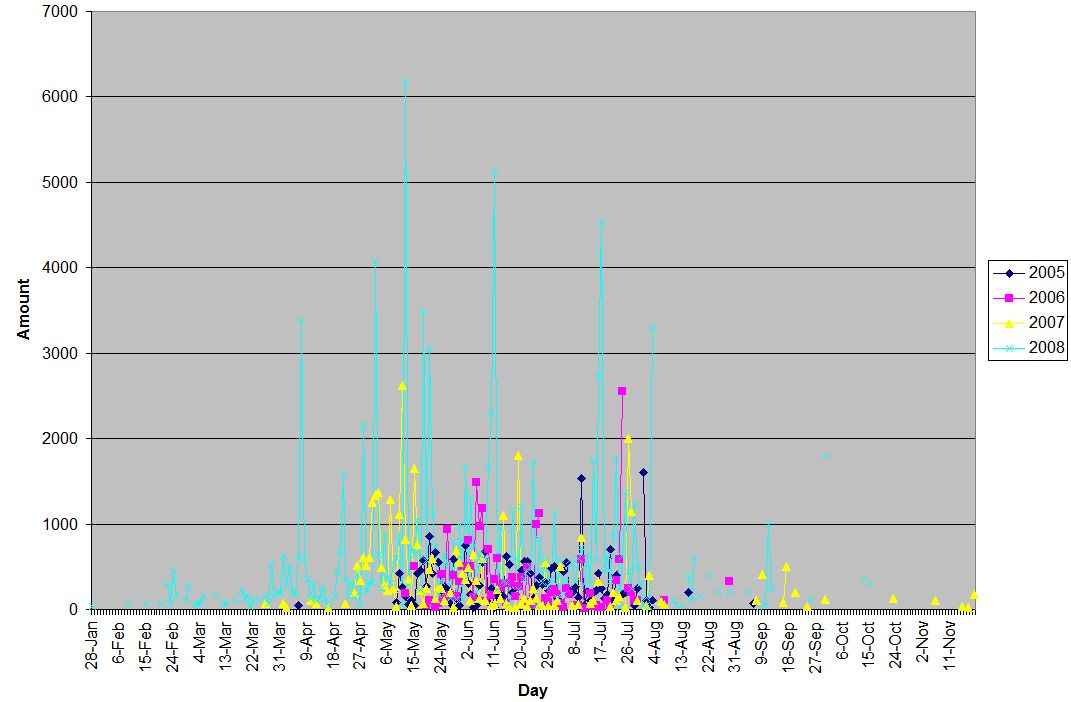
Because some of you are in the midst of raising support for your teams right now and I'm not, I was curious about support by day - compared among years - for teams I have coordinated in the past. This particular chart [click for full size] is a graph of support raised by day with the years plotted as each data series for comparison. [For example, for each year, how much was raised on June 6?]

A few notes about the data:
+ only for overseas teams
+ highly affluent suburban demographic
+ mostly high school kids raising support via support letters - with the exception of a few support raising events

If you would like the raw data to do your own charting, trending, comparing, etc. let me know. I'm willing to send it to you - cleansed of any personal information, of course.

What might also be helpful to know would be data points such as departure dates, percentage marks and team size. But I couldn't figure out a good way to do that. Maybe you can.

Thursday, April 09, 2009

Thursday Burn

::: Acumen Fund hosts questions from future social entrepreneurs
Some excellent questions in the comments.
Link


::: Managing Generation F
+ Tasks are chosen, not assigned.
+ Power comes from sharing information, not hoarding it.
+ Users can veto most policy decisions.
Link via Alan Hirsch


::: Small foundations
small foundations (less than $10 million in assets) account for 105,000 of 110,000 of America's charitable foundations - @rudycarrasco


::: Bethel Sem Masters in Transformational Leadership info session [For those of you in DC]
Link


::: swerve.lifechurch.tv wants to hear from youth pastors
Favorite comment:
Biggest challenges:
- Doing ministry in a context where a lot of people (adults at the church and parents) want nothing more than a fun, safe environment for their teenagers. My new favorite answer is, "I'm not running a Chuck E Cheese."
Link

Wednesday, April 08, 2009

The Second Time

The day will come after mastering the winds, the waves, the tides and gravity, that we shall harness for God the energies of love. And, on that day, for the second time in the history of the world, man will have discovered fire.
- Pierre Teilhard de Chardin

Tuesday, April 07, 2009

Book Notes - Strong Fathers, Strong Daughters

Strong Fathers, Strong Daughters by Meg Meeker, M.D.

I picked up this book after seeing it on the recommended list of Jeff Henderson. I expected it was going to be good but I was completely blown away right from the introduction. Here is a snippet:
What you say in a sentence, communicate with a smile, or do with regard to family rules has infinite importance for your daughter...
I want you to see yourself through her eyes. And I don't want this just for her sake, but for yours, because if you could see yourself as she sees you, even for ten minutes, your life would never be the same. When you are a child, your parents are the center of your world. If your mother is happy, your day is good. If your father is stressed, your stomach is knotted all day long at school...
Your daughter gets up in the morning because you exist. You were here first and she came into being because of you. The epicenter of her tiny world is you. Friends, family members, teachers, professors, or coaches will influence her to varying degrees, but they won't knead her character. You will. Because you are her dad...
I have watched and listened to your daughters for many years and have heard what they say about you. I have talked to countless fathers. I have treated daughters and counseled families. I have read psychiatry texts, research papers, psychology journals, religious studies, and pediatric journals. Doing this has been my job. But I will tell you that no research paper, no textbook diagnosis, no instructions can begin to change a young girls life as dramatically as even a handful of interactions with her father. Nothing.
The rest of the book is just as good. Not only does she have great tangible suggestions about the roles of fathers, like in the areas of being a hero, teaching her humility and defending your daughter, she frames it in the context of a culture that is toxic to our daughters. I agree with her observation and if you've read this blog for a while, you know what I think about 'culture' - we must understand how to 'see' culture. This book is a fabulous resource for engaging life with our daughters. Some of this book - like very sobering statistics and the all-too-real journal of an eating disorder - will scare the crap out of you - and it should. For as scared as you get, you'll also be just as inspired.

Here is some more:
+ Nowadays, the idea of assuming authority makes many men uneasy. It smacks of political incorrectness. Pop psychologists and educators have told us that authority is suffocating, obtrusive and will crush a child's spirit... But the greatest danger comes from fathers who surrender leadership, particular during their children's teen years. Authority is not a threat to your relationship with your daughter - it is what will bring you closer to your daughters, and what will make her respect you more.
+ One of the best things fathers can do is raise their daughter's expectations of life. That will directly affect how your daughter talks, how she dresses, how well she does in school, even what sports or musical instruments she chooses to play. You can help her se goals, help her define a higher purpose for her in life, and as a result, her self-esteem will skyrocket. And it will bring you closer, because she'll recognize you as a leader and an ally, helping her to chart a better course.
+ One of the primary treatments for girls with eating disorders is to spend time like this [one on one] with their dads. These fathers learn not to harp on problems, but to focus on having fun together, which helps daughters center themselves on this healthy relationship and disassociate their illness from who they are.
+ Kids get depressed when they experience a loss for which they cannot express a healthy emotion. This is very common with sexual activity.
+ When she dates, sweep the garage. Every boy who dates your daughter needs to know he is accountable to you.... And when he brings her home, be sure he sees you.
Got daughters? Read this book.

Monday, April 06, 2009

Worth The Unimaginable?

Seth writes about having to deal with the accidental death of a student serving with AIM. Unbelievable.

The longer we do this - taking students out of the familiar and comfortable to act upon a world of great need - the odds get better and better for accidents and tragedy. You cannot prepare for this.

I've lost kids, had a kid call his parents joking that they were lost, almost left my seven year old in an Austrian subway station by herself. Had kids get hurt - knife wound to the thigh, bit by a dog, dragged through Paris subways with sinus infections, stomach and intestine issues - one kid self medicated himself with Cipro, another one threw up right upon passing through customs after landing back in the US.

But all of that is trivial compared to this. And it must make you ask, is it worth it?

Friday, April 03, 2009

Friday Burn

::: Gmail in Indian languages
Link


::: See Africa Differently
Since 2003, 29 million more African children have started primary school.
Rwanda now has the largest proportion of women in parliament than in any other country around the world.
Some African countries - including Egypt, Kenya, Rwanda and Uganda - already have mobile phone coverage of well over 90%
Link


::: How To Lead When You Aren't The Boss
Real leadership is never a matter of mere formal authority. Leaders are effective when other people acknowledge them as such--by listening seriously to their ideas, valuing and following their suggestions for action, and turning to them for advice.
Opportunities to lead aren't limited to times when you have formal authority over a particular team or venture.
Link

Thursday, April 02, 2009

Myers Briggs in Community

I spent some time with a high school guys small group the other night, facilitating them through the Myers Briggs Type Indicator. I always have a lot of fun walking teams through this assessment and this was no different. [And it made me miss my small group that I ran from 1999-2003.]

I was surprised at how different each one of these guys was - all kinds of different talents and interests, ranging from the very cerebral to the artistic to the entrepreneurial. The group had math geniuses, musicians, writers, athletes, one kid owned his own landscaping company [with employees] and another one had just started a t shirt company. Even more interesting, there was a real sense of community among them - they have been meeting for four years - different people with different interests but a common and deep sense of belonging. In this case, their cause was to seek God while encouraging each other through their high school careers.

Uniqueness + community + cause = the perfect intersection for talking about Myers Briggs.

Tuesday, March 31, 2009

The Wheel

You know the old saying, "Let's not reinvent the wheel." Don't believe it.

It might be possible to get really great results with minimum investment. Or you might get a boring speech, an experience that seems incredibly rote, or team behavior that prefers the status quo because that is what was done before. It will probably look a lot like just information. Not reinventing also usually means ignoring context and culture, paying little attention to fit and timing and having an excuse to be lazy.

Passion deserves an original outlet. Whether its motivating others, taking a journey together or empowering a team, creating it from scratch won't seem like work. Instead, you'll find you and your team operating at totally new levels of energy, intention and purpose. Inventing it over and over again repeatedly requires commitment to the core. Transformation starts at signing up.

You are welcome to everything here on the blog - feel free to take it and use it if you want. But use it to help you rediscover and reengage. If I can reinvent every time, so can you.

Monday, March 30, 2009

Nairobi A18 Coffee House

KellanD, the leader I have told you a little bit about, and his team hosted a coffee house over the weekend - a gathering to raise awareness and support for their team, which departs in late May.

Their team is serving in Nairobi, Kenya, primarily around Kibera, one of the largest slums in the world. Over 1 million people live in the size of about 1.5 square miles - the size of Central Park. Their team will be involved in projects such as soccer/sports activities, light construction, and serving in an orphanage, as well as other various small projects.

Hosting events to raise support for mission teams is notoriously difficult. Usually, there is way more effort than worth the support raised - except it's a great way to build team identity. It's also difficult to plan appropriate program elements. This team did it right: short, simple, one short introduction, video with pictures, three team members speaking via an interview format and one closing song. One more thing - check out the web presence for all of their teams for this year.

Photos: KD, right, speaking; @trevinhoekzema, KD and me.

Thursday, March 26, 2009

Book Notes - Axiom

Axiom by Bill Hybels

Catalyst sent me a copy of this and after the first chapter, I asked myself why I had never read Hybels before. This is a great book and although the lessons are short and succinct, it should make you ask questions about your leadership style and habits of influence.

Axioms that caught my attention:
Language Matters - the right words give weight to vision or ideas.
Make the Big Ask - let people tell you no instead of you thinking they won't.
Values Need Heat - practice intention and purpose around the values you want to have.
First Tested - never put someone in leadership without seeing them up close and personal.
Pay Attention to Greetings and Goodbyes - the most important part of a meeting is your personal greeting and goodbye [esp context of a board]
Give Me an A, B or C - grade every person on the team [not sure how I feel about this one]
Obi-Wan Kenobi Isn't For Hire - it's possible to be mentored by someone that you have never met. [yes, i do this, but don't call it stalking]
Read All You Can - self explanatory.
Lead Something - the best way for leaders to get better is to lead something that is not their 'main' thing.
Arrive Early or Not at All - promptness is about character.
Fight For Your Family - leadership's first test is the test of the family.

You should pick this up for yourself.

Wednesday, March 25, 2009

Wednesday Burn

::: Taking Students to Mexico?
"The consumerist, individualistic culture that our students are immersed in every day may not compromise their physical safety, yet it does do violence to their souls."
YouthFront's response to churches and parents inquiries about whether it's safe to go to Mexico.
Link


::: Rwanda Rising
President Kagame's goals are ambitious: to boost GDP sevenfold, find paying jobs for half of Rwanda's subsistence farmers, nearly quadruple per capita income to $900, and turn his country into an African center for technology, all by 2020.
Link via Brad Lomenick


::: The Gospel Spectrum
...data visualization and data-mining to deconstruct and then visually reconstruct the story of Jesus as presented in the Bible.
This is a must see.
Link via @CatalystLeader

Monday, March 23, 2009

Moldbreaking and Significant

Loving the questions from the application for TED Fellows. Additionally, check out these questions from the reference form
1. What is your relationship to the applicant, and how long have you known him or her?
2. Do you feel that the applicant has achieved something significant? How is this evidence that he or she can do more in the future?
3. What is it about this individual that is moldbreaking?
4. Please provide an anecdote from time spent with the applicant that will shed light on his or her unique character.
Moldbreaking and significant - that's what the future needs.

Friday, March 20, 2009

Czech Bible done

I wrote earlier about efforts to translate the Bible into a modern day translation of Czech. It's now done - this is S and the printed copies. How cool. More here from Marc.

Thursday, March 19, 2009

Latest Kindling

+ Two of the students that were on the SPACE Hungary 2008 team are volunteering with a nonprofit called FIRN - Foreign Born Information Network. "i like this kid named Rodrigo-he doesnt speak any english but hes my favorite." The world is coming to our doorsteps.

+ Not only did K&K help out with the NYC weekend, they also spent a week in Portugal a few weeks ago seeing if it was a possible overseas gig they want to do. Most insightful issue was personalities - personality of the overall organization, team leaders and individual team members. 50% of new people serving in cross cultural environments leave because of interpersonal issues.

+ There is a team leader I'm informally coaching - KellanD - who is helping lead a team to Kenya in late May. The past few weeks have been very tough for him and his team. He got sick with the flu, his cell phone broke [he's in his younger 20s, so you know this is a big deal] and his car broke down. One couple on his team had to deal with the death of a family member and then their house being broken into. In other words, attempt to do something significant and get ready for some weird stuff to happen.

Wednesday, March 18, 2009

Wednesday Burn

::: The Cult of Done
My favorites:
4. Pretending you know what you're doing is almost the same as knowing what you are doing, so just accept that you know what you’re doing even if you don’t and do it.
5. Banish procrastination. If you wait more than a week to get an idea done, abandon it.
8. Laugh at perfection. It's boring and keeps you from being done.
9. People without dirty hands are wrong. Doing something makes you right.
10. Failure counts as done. So do mistakes.
Link via Dan Pink


::: Migration Flows in the US
note the interactive maps - how cool
Link via kotkke


::: Diffusion of innovation scale - by area of the world
Link via Derek Webster

Monday, March 16, 2009

New York 2009 Mission Cast

I had a great time in New York City this past weekend serving alongside a fabulous team of mission catalysts - our goal was to facilitate a weekend comprised of service experiences, cultural exercises and team initiatives for two teams from churches that are within our network of friends.

I learned a few things this weekend, like always:
- This was the first time doing anything like this for a team of adults. It was unknown and a little bit intimidating. But the team that came was full of passion, wanting to grow and desiring to serve. One of their team goals was to be "be poured out completely by the end of the weekend." We had a very full weekend and didn't have very much downtime - I believe all of them took in whole experience, fully engaged and poured their whole selves into what we were doing.
- The serving experience is easier to facilitate than you think and there is great value when you serve someone less fortunate than you. What is much more valuable is when someone can help you process that experience in light of a team, a bigger view on the world today and the unique role that all of us play. Serving can easily be very transactional or it can be part of transformation [This concept of transaction vs transformation is not originally mine.]
- Facilitating requires that we fade out as time moves on, while the localized leaders become more visible.
- If you know me, you know that I'm not always the most punctual. This gets reflected in teams I lead - not a good thing. On Friday, we were about 90 minutes late to our destination. That doesn't make things any easier on our hosts.
- The rest of my leader team made this weekend. These guys and gals are so affirming, engaging and experienced and they bleed global cultures, intention and leadership development. They visualize what we are trying to spark. Amazing team - so fortunate to be able to work with them.
- We had to adjust slightly on Saturday night due to our hosts having double booked. Although I know our team was slightly disappointed in having to skip something we originally planned, they took it in stride and we were able to rotate small groups in anyway.
- Our 11 year old daughter came on this one - she did an amazing job serving, engaging and being a part of our team.
- Hostel=ear plugs.
Below are the specifics - as always, use what you want.

+ Schedule
Fri
09.30am - Depart Baltimore on the megabus.
12.45am - Arrive NYC and meet CT teams in Grand Central Station.
04.30pm - After checking into hostel, big game of kick ball at GenXcel.
06.30pm - Send teams on urban trek [get to multiple locations as a team, sort of play "Bigger or Better" on the way] while lead team connects and has real time decompress on weekend so far.
09.30pm - Decompression with all teams.
Sat
09.00am - Day starts with more team thinking. Love languages, personalities, and how you work together as a team. Team stages = Forming -> storming -> norming -> performing.
10.15am - Arrive at Abounding Grace, start working on sorting clothes pantry.
12.15pm - Continue cleaning out vault/storage area.
01.30pm - Quick lunch break. While teams are eating, they are engaging strangers with the idea of "What is Church?" Lead team eats together for decompress.
03.15pm - Teams clean out kitchen #1. Approx 20 bags of clothes are dropped off at the Bowery Mission.
05.00pm - Teams take a break to do a cultural activity with world maps and strangers - where are you from?
06.15pm - Change in plans from serving with Apple Core to cleaning out kitchen #2. Fed 21 people for $86 - New York pizza. Spend too little time hanging with Jeremy Del Rio.
08.15pm - Decompress on church structure and global urban migration.
Sun
08.30am - Communion together as a community
11.00am - Facilitators decompress the weekend.
01.30pm - Home on the megabus

+ Twitter summary
Home. Glad to not be on a moving vehicle. 7:04 PM Mar 15th
On the mega bus 1:19 PM Mar 15th
Breakfast communion close out other team has left we now travel home 9:57 AM Mar 15th
Plan b worked out fine. Long day after decompress on culture, global urban migrate and exp of Church. Tomm am is closing the weekend 10:39 PM Mar 14th
Executing plan b with @jeremydelrio 7:01 PM Mar 14th
Setting up for apple core coffee house. Cool example of simple church 5:38 PM Mar 14th
Team out doing cultural activity 4:47 PM Mar 14th
@jeremydelrio yeah man will be great to see you! 4:15 PM Mar 14th
My daughter is an ordinary superhero. Like all of us. 3:25 PM Mar 14th
Lunch with lead team at chipotle while other teams do 'what is church structure?' 12:31 PM Mar 14th
Sorting clothes for apple core 11:22 AM Mar 14th
Forming storming norming performing 9:25 AM Mar 14th
Keely and farr running session on high impact team roles - follow up with urban trek from last night 9:09 AM Mar 14th
Decompress in the hostel in the boys rm. Andy is point. So the room smells just a tad 9:47 PM Mar 13th
Spanish tapas with lead team while others are on urban trek 7:20 PM Mar 13th
@JoyceElizabeth thanks its going well so far 6:51 PM Mar 13th
Kickball at Gen xcel comm dev and lead dev in lower man nyc 4:29 PM Mar 13th
@timtjones thanks bro! 3:00 PM Mar 13th
Ah central park hostel home away from home 3:00 PM Mar 13th
New York how I've missed you you have so much influence over the world 12:26 PM Mar 13th
@trevinhoekzema ha yup thanks for praying the norms and the bowns are here with me too 12:25 PM Mar 13th
@trevinhoekzema yeah going to lots of fun doing some of the same stuff we did last year the bridge church in groten 12:05 PM Mar 13th
@trevinhoekzema I'm on the way to nyc to facilitate a weekend for a church mission team 11:58 AM Mar 13th
@JoyceElizabeth ha ha yes one advantage to riding on a bus 11:57 AM Mar 13th
New jersey is more fun when I'm driving 11:35 AM Mar 13th
On the megabus. Not front seat but near boys room so that will do 9:49 AM Mar 13th

Photos: The team from CT; kickball at GenXcel; craft time with Andy; Andy and the 25 bags of clothes for the homeless.

Friday, March 13, 2009

The Big Apple

By the time you read this, I'm hopefully en route to NYC with a team to facilitate a mission experience for some friends and their community. We would really appreciate your prayers - for safe travels, for eyes to be opened to seeing the realities of the future, for hearts to engage the epic story in all of us. And of course, pray for me and the 3 hour bus ride up and back. You know how that goes. And, a slight twist to this weekend, Kt our 11 year old is joining me and the team for the weekend - it will be fun to have her along. I'll be updating via twitter when I can. Click here or read along in the left sidebar.

Those that have traveled with me before know that I almost always put together a leader reading packet. Some of those are listed below. And to you, thanks for reading, following and praying - I share the packet with you as well. Tell you more next week about the investment you are making.

Your Future Comes From Your Free Time
Peer Pressure
In Search of Dolphin Leather
Those With No Religion Fastest Growing Group
Primates on Facebook

Thursday, March 12, 2009

Andrew Murray

Steve Knight, blogger, communication coordinator for SIM and friend of mine from the Internets, sent me a notice about a new devotional blog starting today based on the writings of Andrew Murray.

Murray [the picture is Murray, not my friend Steve :) ] was one of the founders of the Cape General Mission, which later became known as Africa Evangelical Fellowship (AEF). AEF continued until 1998 when it merged with SIM (Serving In Mission).

Some of you readers here might be interested in checking this out. Murray famously said, "Missions are the chief end of the Church ... The chief end of the ministry ought to be to equip the Church for this. Each congregation is meant to be a training class." That should pique your interest huh?

Wednesday, March 11, 2009

Tuesday, March 10, 2009

Reflecting

on this.

my name - before I was born.
mouth like a sharpened sword.
polished arrow.
light.

Monday, March 09, 2009

So You Have Plan A...

We are in the final prep for this weekend's NYC experience. Lots of fun and been great working with this team. We think we have plan A down - we'll see about plan B, C and D...

Note the 'Follow Up' column - every significant component of the weekend has something for this column. This is how we give it away.

Thursday, March 05, 2009

Book Notes - Culture Making

Culture Making: Recovering Our Creative Calling by Andy Crouch.

Tons of stuff in this book - too much to actually really go into here. Long time readers will read about familiar themes, including: creativity, being a student of the culture around you, and the different types of postures we take in a given environment. But there is loads more.

Probably the most helpful and tangible for me was the five questions about a cultural good listed in chapter 1 and the discussion on scope, scalability and the 3:12:120 pattern of influence in chapter 15 [does this remind you of the rule of 150?].

Highly recommended. Personal notes below, use them as you will.

==
Part 1 - Culture
1. The Horizons of the Possible
This, then, is the picture of humanity we find in Genesis: creative cultivators.

Culture is what we make of the world.

So how do we make sense of the world? The two senses turn out to be more intertwined than we might have thought. We make sense of the world by making something of he world. The human quest for meaning is played out in hman making: the finger painting, omelet-stirring, chair-crafting, snow-swishing activites of culture. Meaning and making go together - culture, you could say, is the activity of making meaning.

"Every human society is an enterprise of world-building" - Peter Berger. Culture is not just what human beings make of the world; it is not just the way human beings make sense of the world; it is in fact part of the world that every new human being has to make something of.

1 What does this cultural artifact assume about the way the world is?
2 What does this cultural artifact assume about the way the world should be?
3 What does this cultural artifact make possible?
4 What does this cultural artifact make impossible?
5 What new forms of culture are created in response to this artifact?

Culture is the realm of human freedom - it's constraints and impossibilities are the boundaries within which we can create and innovate.

2. Cultural Worlds
Some people choose a set of cultural ripples that was not originally their own. When they do so in pursuit of economic or political opportunities, we've traditionally called them "immigrants"; when they do so in pursuit of evangelistic or religious opportunities, we've called them "missionaries." But as the wheels within wheels overlap more and more in a mobile world, most of us have some choice about which cultures we will call our own. We are almost all immigrants now, and more of us than we may realize are missionaries too.

3. Teardowns, Technology and Change
[Stewart] Brand's most important insight is that there is an inverse relationship between a cultural layer's speed of change and it's longevity of impact. The faster a given layer of culture changes, the less long-term effect it has on the horizons of possibility and impossibility.

Even the resurrection of Jesus, the most extraordinary intervention of God in history, took hundreds of years to have widespread cultural effects.

But there is one more easy abstraction we need to clear up in order to appreciate how culture changes. To define culture as what human beings make of the world is to make clear that culture is much more than a "world-view."

The danger of reducing culture to worldview is that we may miss the most distinctive thing about culture, which is that cultural goods have a life of their own. They reshape the world in unpredictable ways.

4. Cultivation and Creation
fundamental rule - The only way to change culture is to create more of it.

human cultures have the strange yet fortunate property of always being full.

Human nature abhors a cultural vacuum.

Cultural creativity requires cultural maturity.

5. Gestures and Postures
Condemn, critique, consume, copy -> culture. A gesture moves to a posture.

Part 2 - Gospel
6. The Garden and the City
Creation brings being out of nothing.
Creation is relational.
Creation requires cultivation.
Creation leads to celebration.

To be sure, God has provided the raw material - the garden, the animals themselves and Adam's very breath. But now the Creator graciously steps back just enough to allow humankind to begin to discover what it means to be a creator. Adam, like his Maker, will be both gardener and poet, both creator and cultivator.

Our world is unevenly divided, to say the least, between wilderness and theme parks. Most of humanity lives all too close to wilderness, at the mercy of a creation whose original good wildness has been made implacable hostile to human flourishing by the Fall. A privileged billion or so can choose to live in theme parks, where neither the dangers nor the beauty of the created, fallen world intrude on a manufactured environment of amusement. But we were made for neither theme parks nor wilderness - we were made for the place where we are challenged to become creators and cultivators. We began as gardeners.

Interlude - The Primordial Story
7. The Least of the Nations

8. Jesus as Cultural Maker
Jesus as cultivator and as creator
Jesus as creator - altered practice of meals, stretched the horizons of rituals, confronted head-on the most powerful cultural institution of first-century Judaism, the temple in Jerusalem.

Of all the things cultures conserve most carefully - of all that they are most committed to cultivating - among the most important are ritual and time. For several thousand years, in the midst of a bewildering variety of geographic locations and civilizations - even as their own language and cultural practices changed in myriad ways - the Jews have never forgotten which day is the sabbath. The observance of the sabbath is written into the Ten Commandments as the story of creation itself and was sustained in Jesus' time, as it is now, as a profoundly countercultural act with little or no support from the surrounding society. And yet, within a few years of Jesus' death, we have clear evidence (from Luke, Paul, and John in the biblical canon, and from writers like Ignatius just a few decades later) of a group of largely or exclusively Jewish believers, living within sight of the temple no less, who have shifted their primary day of worship from the seventh to the first.
To grasp the cultural significance of this, imagine leaving the United States for a decade or so and returning to find that while the wider society continued to get up on Monday and go to work and school, a substantial number of churches left their buildings dark on Sunday and gathered for worship on Monday instead - perhaps getting up before dawn to do so, perhaps gathering after the work day was done, perhaps skipping work altogether - and, for good measure, now called Monday, "the Lord's day." You would conclude that something absolutely extraordinary must have happened - or at least that they believed something extraordinary had happened.

9. From Pentecost
10. ...To Revelation

11. The Glorious Impossible
In a lovely Christmas book for children, Madeline L'Engle called the incarnation "the glorious impossible" - an unthinkable idea that nevertheless shines with possibility and hope. It's a good description of the gospel as a whole. And it is precisely the impossibility of the gospel that makes it so culturally potent and so perennially relevant. The gospel constantly challenges every human culture with the possibility that we live within misplaced horizons.

Part 3 - Calling
12. Why We Can't Change The World
Which leads us to the deflating observation that not a single human cultural artifact has changed the world at that scale - neither the compass nor indeed any other application of magnetism, the Gettysburg Address nor any other work in the English language, Einstein's theory of general relativity nor any other set of mathematical formulas. Even the color mauve hasn't change the world in that sense.

the difference between necessary and sufficient conditions.
what are the all-important sufficient conditions for cultural influence? The sobering truth is that at a large enough scale, there are no sufficient conditions for cultural change.

Our ability to change culture is a matter of scale. On a small enough scale, nearly everyone has the power to change the world.

So can we change the world? Yes and no. On a small enough scale, yes, of course we can. But the world is sufficiently complex, not to mention sufficiently broken, that the small scale of our own cultural capacity is never sufficient.

Our central story begins with a Creator who set into motion a cultural process that had myriad consequences that were never within his original intent. Because all culture is shared and public, all culture is also a risk, dependent on the cultivation and creativity of present and future generations. Adam and Eve certainly did "change the world," but not in the way their Creator had surely hoped.

Changing the world sounds grand, until you consider how poorly we do even at changing our own little lives.

Is there a way to change the world without falling into one of the many traps laid for would-be world changers? If so, it will require us to learn the one thing the language of "changing the world" usually lacks: humility, defined not so much as bashfulness about our own abilities as awed and quiet confidence in God's ability.

13. The Traces of God
When God acts in culture, he used both the powerful and the powerless alongside one another rather than using one against the other. To mobilize the powerless against the powerful would be revolution; to mobilize the powerful against the powerless would simply conform 'the way of the world.' But to bring them into partnership is the true sign of God's paradoxical and graceful intervention into human history.

I believe this pattern - God working with the poor and the rich, the powerless and the powerful - serves as a kind of template for seeking out what God might be doing now in our human culture.

Q: What is God doing in culture? What is his vision for the horizons of the possible and impossible? Who are the poor who are having good news preached to them? Who are the powerful who are called to spend their power alongside the relatively powerless? Where is the impossible becoming possible?

14. Power
For nearly all of us, becoming a celebrity is completely, categorically impossible. For all of us, becoming a saint is completely, categorically possible.

Cultural power can be defined very simply as the ability to successfully propose a new cultural good.
No one every knows how much power they have.
And no one ever has enough power.

One of the basic disciplines I have put in place in my own life is travel outside the developed world, about once a year if our family budgets of time and money allow....

What does it mean to embrace stewardship as a spiritual discipline? It is different fro service, which requires setting aside our power entirely for a time.
Stewardship means to consciously take up our cultural power, investing it intentionally among the seemingly powerless, putting our power at their disposal to enable them to cultivate and create. This is different from charity, which is simply the transfer of asses from rich to poor. It is closer to investment.

Q: Where have we successfully proposed a new cultural good? With whom am I sharing my power? Is my transformation keeping pace with the cultural power I have been given? Are we engaging in acts of service that take us into places of anonymity and invisibility?

15. Community
Is there any sense to the idea that "all culture is local"? Mandarin Chinese, Coca-Cola, the common law system of jurisprudence and the twelve-musical scale form the horizons of possibility for millions or billions of people. They are as far from "local" as you can get, and they are cultural goods of tremendous importance, for better or worse.
And this mans that no mater how complex and extensive the cultural system you may consider, the only way it will be changed is by an absolutely small group of people who innovate and create a new cultural good.
The pattern of 3:12:120 - pattern of relationships, scale and influence.
And yet the almost uncanny thing about culture making is that a small group is enough.
Q: Who are your 3? Who are the few people you trust enough to risk creating something together? Who might be members of your 12?

16. Grace
I believe the single best question for discerning our calling is Where do you experience grace - divine multiplication that far exceeds your efforts?
Recommending

I get spurts of requests for recommendation letters and I love to do them. I'm on the tail end of one of those spurts right now, having written a handful of letters in the past few weeks. I really do love writing them when they are right person - people who I have served with closely, people who have demonstrated their reliability and passion, and people that are fun to be with.

I'm filling out one more form this week for a leader that I've worked very closely with and they are applying to a internationally known nonprofit - very exciting. It's always interesting to see what organizations value and good gauge is what they ask for on recommendation forms.

In this case, the reference [me] is asked to rate the candidate on:
Achievement
Perseverance
Critical Thinking
Organization Ability
Influencing
Integrity

What gets measured gets done. When it comes to building teams, the precursor is that what you strive for is what you get. So be clear about what you want out of your team. And then ask for it.

Wednesday, March 04, 2009

Watch Out Willow

Sometimes, believe it or not, we skip church on Sundays. And every once in a while, we do Shengchurch.

Tuesday, March 03, 2009

Tuesday Burn

::: Richard Florida - How The Crash Will Reshape America
Fascinating article about demographics, human capital, and suburbanization.
Perhaps no major city in the U.S. today looks more beleaguered than Detroit, where in October the average home price was $18,513, and some 45,000 properties were in some form of foreclosure...
New York is more of a mecca for fashion designers, musicians, film directors, artists, and—yes—psychiatrists than for financial professionals.
Last year fewer Americans moved, as a percentage of the population, than in any year since the Census Bureau started tracking address changes...
Link via TallSkinnyKiwi


::: 40% of 7,000 languages are going extinct
One language dies every two weeks.
Language technology kits include a laptop computer, a digital camera, a digital audio recorder, and a still camera.
80% of the world's languages are not documented.
Link via kottke


::: Starbucks (Red) Card
Link via Made to Stick

Friday, February 27, 2009

Florida in the Winter

The title of this post makes me sound like an old retired fart huh. Instead, Florida in the winter has found itself to be an epicenter of growth. I don't venture to Florida every single winter, but it's been pretty close lately [2005, 2006, 2007, 2008.] The number one reason is because I'm fairly serious about my own growth and development. [The number two reason is to combine it with some family time - you know WDW, etc.]

If you are serious about your leadership, you will seek out environments and catalysts for your own growth. It can be books that you read, conferences that you attend, resources on the Internet, or relationships that sharpen you. But in the end, leaders are learners and they hold themselves exclusively responsible for their own development. Your personal growth is not up to your pastor, church, company, boss or mentor.

I'm fortunate - our family has an almost unlimited go-for-it policy when it comes to leadership growth experiences. We fund it, make time for it, expect it and although it makes for juggling and saying no to other things, it's almost always worth it.

In the end, no one looks out for your growth but you. Oh, and you can be confident that if you are intentional about your own development, that gets noticed too.

Thursday, February 26, 2009

Now We Know

Probably like you, I've had some really fun interactions with old, and I mean OLD, relationships via social media. Like getting in touch with friends from elementary school over Facebook - meaning I haven't seen them in [gulp] 30 years. Surreal.

The other set of interesting interactions have been with former students in youth ministries that I was involved in. It's been a lot of fun to be back in touch, to see what they are up to and to see pictures of them, their interests and their families. But most interesting to me is the fact that now we know.

Now we know whether our efforts were successful or not. Some cases will be cause for great celebration, others not so much. This kind of relevant data begs an opportunity for change and improvement. If we still influence students, it's not too late to change - you now have proof. And of course, sometimes we still must, as the Russian proverb says, "Pray to God, but keep rowing to shore."

Wednesday, February 25, 2009

Wednesday Burn

::: Are we about to eliminate AIDS?
So if everyone with HIV were on therapy, there would be little or no transmission. Once all these people had died, of whatever cause, the virus would be gone for good.
Link


::: Drug giant pledges cheap medicine for the world's poor
In a major change of strategy, the new head of GlaxoSmithKline, Andrew Witty, has told the Guardian he will slash prices on all medicines in the poorest countries, give back profits to be spent on hospitals and clinics and – most ground-breaking of all – share knowledge about potential drugs that are currently protected by patents.
Link via Ethan Zimmerman


::: Billions of Earths
There could be one hundred billion Earth-like planets in our galaxy.
What are the implications of that for influence, culture and leadership?
Link


::: The ONE Sermon Challenge
From The One Campaign, an online collection of sermons [from various "religions"] related to global poverty and preventable disease.

Monday, February 16, 2009

Us

If you are a regular reader here, I owe you. I owe you for your time and for your attention. But even more, I owe you for your heart in this. Your investment here, even if it's just reading, is a big deal. So thanks. Thanks for being a part of it - the fight for the future.

If you are a regular and I don't know who you are, let me encourage you to leave a comment [or drop an email.] Would love to know who you are. Because we do this together. If I do know you, for fun, you can leave a comment too.

Friday, February 13, 2009

gcconlinelobby

Some enterprising people at Grace have started a social networking site for people in our church. If you are a part of Grace, click here to join. D and I have been bouncing some related thoughts around, like:
+ How much social media can ordinary people maintain?
+ What's the fine balance between a culture that is becoming more tribal and maintaining these kinds of affinity groups online?
+ Should our efforts in creating community move people away from open sets to closed sets? [ie - come join my social network which inherently separates you from all your other friends that I don't know - facebook to a church site]
+ The definition of friend is going to sway based on the context. On this site, aren't they all my friends?

All that to say, I think it's a cool idea and it will be fun to see how much momentum it gets. The site is built on ning.com, which is a platform that allows you to build your own social network site, based on whatever interest you choose. Long time readers might remember M, also built on ning.com, which is the latest creation from Marc Andressen, who created the first internet browser in the early 90s. [Yes, I used it.]

Thursday, February 12, 2009

Mission Hothouse

Of course, this is a draft....

=====
Description:
The [name of some cool org or something] Hothouse is a one year mentorship focused on the concepts of global missions, world cultures and leadership development. Other core concepts include risk, multiplication, experimentation, long term perspective, catalytic behavior and the utilization of technology. The mentorship's goal is to spawn and multiply a community of high impact leaders from students who burn for the world.

Learning Outcomes: Upon successful completion of the mentorship, interns will have:
+ been well informed and equally inspired with regard to major issues surrounding global missions.
+ understood social dynamics as they relate to culture, worldviews and belief systems.
+ participated in a number of learning experiments involving creating community and mobilizing peers.
+ experimented with the art of catalytic leadership.
+ on site experiences with some of the leading practitioners for missional ministry in the Washington DC context.
+ gained an even greater passion for the world.

Format:
+ reading assignments will be done virtually.
+ small group discussions once every two weeks.
+ inherent use of technology include blogs, social networking sites, video chat venues.
+ one on site experiential experience once a month.
+ selected field observation assignments.
+ The context will be in the suburban Washington, DC area, with access to a myriad of suburban and urban ministry resources. Time requirements are estimated to be 30 hours per month.

Reading List:
Selected passages, The Bible
An Unstoppable Force, Erwin McManus
Waking the Dead, John Eldredge
The Forgotten Ways, Alan Hirsch
Selected blogs on missiology, leadership development and global issues.
=====
Welcoming input on this.

Wednesday, February 11, 2009

Wednesday Burn

::: Texting as a part of youth church
Watching live stats roll in from a youth min using txtg for 1st time in a svc--over 90% participation. Wave of future - @dawnnicole


::: Innovation - Pipelines, Criteria and Mentors
Link
From an even bigger perspective, whatever you are trying to change in the culture requires a pipeline.


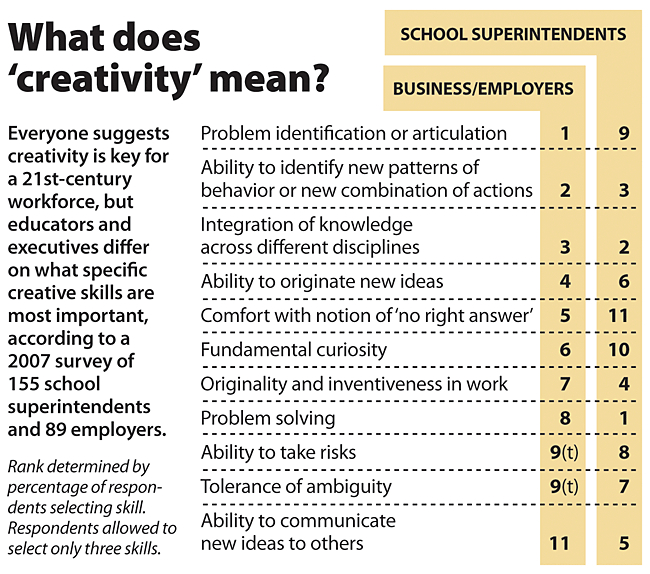
::: What does creativity mean?
via Dan Pink

Tuesday, February 10, 2009

21st Century Prayer Walking

+ Strasbourg, France.
+ Google Earth.
+ Basic demographic information.
+ Identify locations of elementary schools; universities; houses of worship; occult establishments; areas of concentrations of immigrants; third spaces like parks, cafes, etc.
+ GPS unit, camera, geotagging.
+ Lots of walking.

Do you know your community even half this well?
Link via Mark van der Woude

Monday, February 09, 2009

Latest Kindling

A quick recap of what's up around here:

+ Our plans for the NYC weekend are shaping up. There has been a slight change of context - the majority of the team we are facilitating is not going on overseas teams later this year, so this ends up being kind of their mission experience, instead of a prep weekend. Not quite the same thing, but still going to be a cool weekend.
+ We are taking the Megabus to NYC. We got tickets for $9 per person on the way up and $18 per person on the way back. A seat in the front, please.
+ Last week, I met with two high school juniors that were on my SPACE Hungary 2008 team last summer. The purpose of our meeting was to outline a mentorship structure for their senior year next year. Very similar to what ESunde did her senior year, these guys will be getting school credit for external projects in the area of global Christian missions. Um, yeah, they go to public high schools.
+ Speaking of ESunde, she is in Paris for the semester.
+ LeslieB is running an all female missions trip to San Francisco later. She is doing this experiment.
+ I'll be doing some urban migration for the next few months. Jacksonville later this month, New York in March and Los Angeles in April. Well, maybe not JAX, that would be southern migration.

Friday, February 06, 2009

From Monday to Sunday

Of all the things cultures conserve most carefully - of all that they are most committed to cultivating - among the most important are ritual and time. For several thousand years, in the midst of a bewildering variety of geographic locations and civilizations - even as their own language and cultural practices changed in myriad ways - the Jews have never forgotten which day is the sabbath. The observance of the sabbath is written into the Ten Commandments as the story of creation itself and was sustained in Jesus' time, as it is now, as a profoundly countercultural act with little or no support from the surrounding society. And yet, within a few years of Jesus' death, we have clear evidence (from Luke, Paul, and John in the biblical canon, and from writers like Ignatius just a few decades later) of a group of largely or exclusively Jewish believers, living within sight of the temple no less, who have shifted their primary day of worship from the seventh to the first.
To grasp the cultural significance of this, imagine leaving the United States for a decade or so and returning to find that while the wider society continued to get up on Monday and go to work and school, a substantial number of churches left their buildings dark on Sunday and gathered for worship on Monday instead - perhaps getting up before dawn to do so, perhaps gathering after the work day was done, perhaps skipping work altogether - and, for good measure, now called Monday, "the Lord's day." You would conclude that something absolutely extraordinary must have happened - or at least that they believed something extraordinary had happened.
- Andy Crouch, Culture Making: Recovering our Creative Calling

Thursday, February 05, 2009

Thursday Burn

::: Quote of the month
"Give me a lever and a place to stand, and I can move the Earth." – attributed to the Greek mathematician Archimedes via @ellmcgirt [Fast Company senior writer - note the '@' sign refers to a twitter feed.]


::: The 2009 World Watch List
Which countries have the most religious oppression and persecution.
Link via @CTmagazine [Christianity Today on twitter]


::: The leadership of the emerging Church is not a perpetually 29-year-old blond male with a goatee.
Link via Lon

Wednesday, February 04, 2009

This Funeral Makes Me Mad

I'm going a funeral later today and, not that you are ever truly happy about going to one, but I'm angry.

I'm angry because the message of the redemption of mankind that so many of us try to live is not getting through. It is irrelevant to a whole generation of people in our world. And it was a complete miss to this young girl's reality. This ought to make all of us mad enough to act.

So whatever it is that we [you and I] do, whether it's guiding or coaching, or funding and sending, or coercing others to risk so they can grow, whatever it is, we better make damn sure that we are engaging those younger than us. For however passionate we are, it needs to burn in their hearts all the more.

Tuesday, February 03, 2009

Book Notes - Two Views on

Women In Ministry - Belleville, Blomberg, Keener and Schreiner.

Three quick things before the notes [which are not very detailed.]
1 - If this topic interests you, this is the book to read.
2 - I realize this is quite a controversial topic.
3 - You'll have to come to your own conclusions.

1. Egalitarian - Belleville
+ Male-Female Relationship - Gen 1-3
+ Gen 3:16 - gender dysfunction
+ women in leadership - gifting for ministry
women prophets - Miriam, Deborah, etc
a ministry that was exclusively female was that of mourning
women singled out as patrons of house churches in the NT
Jesus didn't have women in the 12 but had them in the 70. Knew that change could only go so deep at first.
I Tim 3:2 - husband of one wife - requirement for being an elder
... knowledge of the mores of a Greek city like Ephesus sheds important light. Greek married women simply were not prone to multiple marriages of illicit unions, while Greek men were. In fact, extramarital affairs were par for the Greek male but not tolerated for Greek women. Also, the divorce rate among Greek men rivaled ours today.

I Tim 2:12 - permit a women to teach or to have authority over a man
Paul had a corrective stance - false teachers - alarming scenario - congregational contention.
Suggesting that women were disrupting worship.

teaching in the NT was an activity not an office, every believer was called to do this, not merely church leaders.
Discussion about head versus source.
Jesus core of 12 were twelve _Jewish_ men. If one used the argument that women cannot be elders because Jesus didn't have women in the 12, what about non Jewish men?

order of creation - what about:
John the Baptist before Jesus
Jesus appearing to Mary before Peter
language of hierarchy does not appear in Paul's language

2. Complementarian - Blomberg
Jesus - inner core of three closest followers. Then come the 12. The come larger group - only in there were women.
...One can argue that to have a woman as Jesus' twelve closest followers would have proved too provocative in his world to gain any adherents for his movement and thus relegate this restriction on women to a merely cultural phenomenon. But in light of all the ways just surveyed that Jesus was willing to scandalize his society, is this argument really credible?

I Tim 2:12
exercise authority
the word 'teach' is used throughout the NT, the word normally translated 'exercise authority' is found nowhere else in Scripture and is quite rare in Greek literature more generally.
'authoritative teaching' connected to I Tim 3 - overseers and deacons. Only in his instructions for elders must candidates be 'able to teach' and only in his instructions for deacons do women appear.

male headship based upon order of creation - Adam first and then Eve.

++ Huge quote from the book:
Once you have decided as best as you understand it, what Scripture does permit women to do, can any reasonably objective observer of your church and your ministry quickly recognize you are bending over backwards to encourage and nurture women in these roles? If not, then you can't possibly be obeying Scripture adequately, even on your interpretation of it. Interestingly, over the years, I have had a number of outspoken egalitarian women, some of them well known in evangelical circles, confide in me privately and tell me that if complementarians would just do this much consistently, they could live with the remaining areas of disagreement and even stop lobbying for further privilege.

++ One final note - Ed Stetzer states that churches should make sure they have wrestled with this issue and have clear communications regarding it. He also cites research that says that "sixty-five percent of all of the younger unchurched said [knowing that the church did not endorse the ordination of women as pastors] would negatively impact their decision about getting involved."

Yeah.... go get the book.

Monday, February 02, 2009

Seven Years Later

In the middle of March, I'm traveling to New York City with a small team to facilitate some mission team training. The connection is via some friends who work with Christian Associates and it's a real privilege to help out in this kind of manner.

Our goals include the normal team preparation - helping the team learn to communicate clearly, see something different from the familiar, build a team identity, etc. We are also eager to help each person see their unique role on the team and for each person to experience valid but different expressions of Church. Overall though, this weekend serves to help jump start this team so they can continue to prepare well for their summer experience. For each segment of the weekend, we are providing some followup material to the leaders involved. This context requires leaders that understand not only the specific elements of leading teams in other cultures, it also requires leaders that understand how to be catalytic - how to give it away.

I'm delighted that KevGN and his wife KeelyN are on the team - you'll remember them from serving with the SPACE 08 Hungary team this past summer. Also joining me are JAB and FB - long time readers will remember them from the SPACE 05 Brasil team, before they were married. Each one of them has served in a leadership capacity in other cultures, they understand serving and they are super excited to be a catalyst for this team. It's plain awesome to serve with these four, whom I've worked with on separate occasions, but now all together at once. Extra bonus - Kev and Andy were in my small group when they were high school students.

Kev, Andy and I traveled to NYC with some other students in the summer of 2002, serving with a YWAM base. Seven years later, it gets even better.

Photo: Kev, me and Andy, NYC, 2002.

Friday, January 30, 2009

Friday Burn

::: A letter from Bill Gates
Must read including these significant concepts:
- Population growth : Reducing the number of childhood deaths actually reduces population growth.
- Agricultural innovation : Almost every country that has become wealthy started with a huge increase in farming productivity.
- Context is important : In order to convince enough families to participate in the polio campaign, you need not only dedicated teams that track down all the children but also a clear message from political, tribal, and religious leaders that the vaccine is safe and should be taken.
- Do you know what a microbicide is?
- Monte Carlo Simulations and malaria vaccines
Link via Jeff Shinabarger


::: Manga Messiah
Link
If you don't know what manga is, you should look it up.


::: Who is Tom Peter's #1 Entrepreneur?
Wendy Koop, who started Teach for America
Link

Thursday, January 29, 2009

Masters in Transformational Leadership in DC

Over lunch in Union Station in December, D and I got some details first hand from JVD and his wife about Bethel Seminary's Masters in Transformational Leadership. Highlights include:

- degree program specifically based around people who are serving in ministry already - meaning that it's meant to be part-time while you do what you do.
- cohort based so that you get to learn and interact with people that are likely doing different but just as cool things around DC as well.
- based at Bethel's DC sateliite campus, housed at First Baptist of Glen Arden.
- this program starts for the first time here in DC in Fall of 2009.

If you or someone you know is interested, let me know and I can put you in touch.

Wednesday, January 28, 2009

Dream the Impossible

Have you seen this series from Honda called "Dream the Impossible"? If you haven't, you should. Two of my favorites include "Failure: The Secret of Success" and "Kick Out The Ladder." [via Brian Russell]

What about you - are you willing to kick out the ladder and fail to find success?

Tuesday, January 27, 2009

7,000 hours

KevGN and I have been discussing this 10,000 hour principle from Gladwell's Outliers. Here are some thoughts:

- If you do something for a vocation, you can get there in about 5 years. 40 hours a week = 2000 hours a year = about 5 years.
- This means you really need to love what you do. And that's the rub - what is it that you want to do?
- I think I've got about 7,000 hours in this student missions thing.
- I've noticed that there were a few iterations related to significant milestones of hours. At 2000 hours, then again at 5000 hours, and now at 7000 hours, there were significant redefinitions of what I do. I wonder if other people have seen that pattern as well.
- Maybe an inherent part of being an expert is being able to reinvent what you do. Picture a commitment to the core yet a flexibility and insight to the culture and environment that you find yourself in.

Thursday, January 22, 2009

Thursday Burn

::: Banned airlines
From the EU and from the FAA in the US
via FP Passport


::: Plans for Atheist Bus Campaign in Italy were shot to hell.
Link


::: The State of Church Planting in North America
Link via Ed Stetzer

Wednesday, January 21, 2009

What I'm Not Going to Miss

about SPACE.... And why not missing it is probably only temporary.

: Raising support.
I'm not going to miss the every-3rd-day pattern [in the spring and summer] of entering support, sorting and watching Excel magic with subtotals. But at some point, most apostolic leaders have to raise funds for their vision. And people wiser than me have made the observation that the ability to raise funding is usually an accurate barometer to overall success.

: Defining and redefining leadership.
It was an almost constant job to communicate what makes a leader. But not because we were so far off, but rather because we were very close. Slight nudges to the trajectory of current leaders make large swings in impact 500 years later. And when you have a leadership pipeline [because all catalytic leaders have these] investments in defining and redefining don't go away.

: Arranging, logistics, scheduling and coordination.
Calendars, schedules and depending on the number of people involved, a lot of moving parts. I'm not going to miss the level of complexity, especially from 2008, but am pretty sure the movement ethos of this will be back. It will be back eventually because the Gospel moves.

: Using someone else's bankroll to front funding a few of my optimistic experiments.
Ok - this one's probably gone for good. And I will miss it.

Monday, January 19, 2009

Only 46 years

Abraham Lincoln : Martin Luther King Jr. : Bono : Barrack Obama

Oh. And you and I.

These are amazing times, I'm telling you.

Photo via earmuffboy.

Thursday, January 15, 2009

Try These

Want to try some student mission experiments? The ideas below were things that were bouncing around my head over the years as a coordinator of student missions. Feel free to use them to help you engage students, world cultures, global missions and leadership development.

: Female only missions trip
: Intersect little kids and students
: Global orbit
: Party at a Laundromat
: Reverse Missions
: Serving the Homeless
: Leadership - Urban Plunge
: Community Icons
: Culture Exchange

Wednesday, January 14, 2009

Spring Project

I'm helping facilitate a weekend project in NYC for some friends who are heading up a global missions initiative at their church. The keyword is facilitate since I want others to help me do it, we as a team want to train their team to do it themselves and 'top-down' is not the concept.

Planning at Pei-Wei is a great start. Tell you more about this later.

Wednesday Burn

::: American's default faith is not Christianity
Link
via everyone and their mother


::: Global opportunities
Some hot jobs overseas from Fast Company
Link


::: I'll never look at Wedgwood [the ceramics and crystal company] the same way
Link via Seth Godin

Tuesday, January 13, 2009

Book Notes - Outliers

What can you say.... Gladwell.... These notes are for me, but you are welcome to them....

+ The Matthew Effect
Those who are successful are most likely to be given the kinds of special opportunites that lead to further success.
Cutoff dates - inherently favoring those closer to the date especially in physical environments and also squandering half of the population of the same kinds of opportunities.
Outlier - freak, unpredictable, rise-from-the-ashes success story.
The Talented didn't start as outliers.

+ The 10,000 hours
The idea that excellence at performing a complex task requires a critical minimum level of practice surfaces again and again in studies of expertise. In fact, researches have settled on what they believe is the magic number for true expertise: ten thousand hours.
Bill Joy, Mozart, The Beatles [by the time they had their first burst of success in 1964, they had performed live an estimated 1200 times,] Bill Gates.
Timing of getting 10,000 hours requires kids start young if they are going to be recruited in their field by the time they are young adults - think athletics.

+ The Trouble With Geniuses
IQ tests - convergence vs divergence test
Chris Langan
Practical intelligence
middle class parenting style "concerned cultivation" - foster and assess a child's talents, opinions and skills.
entitlement redefined - "acted as though they had a right to pursue their own individual preferences and to actively manage interactions in institutional settings... appeared to be acting on their own behalf to gain advantages... made special requests of teachers and doctors to adjust procedures to accommodate their desires."

+ Three Lessons from Joe Flom
1 - The Importance of Being Jewish
2 - Demographic Luck
3 - The Garment Industry and Meaningful Work
Autonomy, complexity and a connection between effort and reward are the three qualities that work has to have if it is to be satisfying.

+ Harlan, KY
"culture of honor"
Cultural legacies are powerful forces. They have deep roots and long lives. They persist, generation after generation, virtually intact, even as the economic and social and demographic conditions that spawned them have vanished, and they play such a role in directing attitudes and behaviors that we cannot make sense of our world without them.


+ Ethnic Theory of Plane Crashes
The kinds of errors that cause plane crashes are invariably errors of teamwork and communication.
"mitigated speech" - any attempt to downplay or sugarcoat the meaning of what is being said. linguists found six levels of mitigation in flight crew conversation.
Planes are safer when the least experienced pilot is flying, because it means the second pilot isn't going to be afraid to speak up.
Combating mitigation has become one of the great crusades in commercial aviation in the past fifteen years.
Hofstede Dimensions - 5 dimensions
Power Distance Index - attitudes toward hierarchy, how much a particular culture values and respects authority.
Western communication has what linguists call a "transmitter orientation" - responsibility of the speaker to communicate ideas clearly and unambiguously.

+ Rice Paddies and Math Tests
Chinese number counting system - the difference means that Asian children learn to count much faster than American children.
Throughout history, the people who grow rice have always worked harder than almost any other kind of farmer - working in a rice field is ten to twenty times more labor-intensive than working on an equivalent-size corn or wheat field - wet rice farming is very exacting.
Chinese proverb - "No one who can rise before dawn three hundred sixty days a year fails to make his family rich." - indicative of the kind of mentality.
The TIMMS exam - pre-questionnaire of about 120 questions. Compare the questionaire rankings with the math test rankings country by country - they are exactly the same. Countries where the kids are willing to concentrate and focus on answering every single question in a questionnaire are the same countries where students do the best job at solving math problems.

+ Marita's Bargain
KIPP school
achievement gap is the results of things that happen during the school year as well as what happens during summer vacation - quantitative evidence of the benefits of school in the summer - keeps the momentum going through the summer.
The only problem with school for the kids who aren't achieving is that there isn't enough of it.

:: Environments matter. Holistic, big picture, anything but random.

:: Most well prepared people are intentional - 10,000 hours. Can't get this unless you are very disciplined.

:: How are we grooming those around us for success? It is in fact not random at all.

Monday, January 12, 2009

Distance Team Preps

Here is a rough outline of some of the phone chats and topics I've been diving into with this team leader for an overseas team departing in the late Spring.

#1 - overall, partnership, will host church be doing admin, sample application, recruiting the right people, mission trips are not reform school.
#2 - support raising, who will lead with you, uniting the team, travel logistics, backwards milestones based on time line, optimal team sizes, how you will say no to those that may not be a great team fit.
#3 - more support, using the MBTI, key goals for team preps [unity and ministry skills],
#4 - outline of the first official team meeting [which happened this past weekend] - overall project goals, partner goals, brainstorm your own personal goals, tracking and emphasis on support materials getting out, response cards.

More fun with this team soon.
[Related: Team Preps - The 3rd team meetings.]

Saturday, January 10, 2009

Happy Birthday Em!

Happy birthday Em! Never let your affection for any kind of created creature - dogs, cats, lizards, fish, hermit crabs, etc. - stop making us pay attention to Who and Why.

Friday, January 09, 2009

Blessing Your Mission Team

Leader.... In five years, I had an amazing number of people serve and bless me in some extraordinary ways.

+ The missions board got a gift certificate to a nice restaurant for me and D as a Christmas gift.
+ The student ministry paid my way cross country to a conference.
+ Right after our family returned home from being overseas with a student team, two families brought us dinner. that was a god send.
+ The oh-so many thank you notes, cards and written affirmations.
+ Being asked to write recommendation letters, to be a mentor, to give counsel or advice.
+ Offers to do some of the legwork for getting a team ready, including shuttling students to vaccination appointments, running paperwork for foreign visas or purchasing materials/supplies.
+ Helping a certain leader vindicate himself from moving violations involving church vans. [Oh wait, no one did that... ;-)]

Wednesday, January 07, 2009

Wednesday Burn

::: Could text messages save languages?
Link via Andy Crouch


::: Decaffeinated Belief
A recent visitor to our church's Sunday morning gathering told me "we really enjoyed the service." At which point I felt the urge to puke.
Link


::: Content with too small a thing
Sometimes I sit on the hill surrounded by the city in which I live thinking of the gangs, the fatherless homes, the dominance of immorality and I think to myself, "It’s all just too much."
Link

Tuesday, January 06, 2009

Book Notes - Organic Community

Organic Community - Joseph Myers [recommended to me by a CA staffer]

1. Organic Order - Synchronized Life - moving from master plan to organic order
master plan - community based on programming
organic order - community based on environment
This is not a call for "come what may" leadership and ministry. There is a difference between being organic and seeking organic order.
I like small groups. I question, however, the manner in which they are promoted and structured At their best, small groups supply an organic-ordered environment for some people in some seasons of their lives to grow their sense of healthy community and belonging. At their worst, small groups deliver a manufactured environment that is promoted for all people and for every season of life.

2. Patterns - spatial observation - moving from prescriptive to descriptive

3. Participation - responsible anarchy - moving from representative to individual
people participate as individuals not as teams or groups
people participate in a decentralized, local way
people participate with the whole of their lives
people participate in a way that is congruous with the way they are asked
the aggregate of participation becomes known as the team or group acts, thinks and makes decisions

People participate as individuals. They are interested in why they - specifically - are being asked. They want to know that you have chosen them first and foremost because of who they are, not to fulfill a strategic master plan.
"Why me?" comes from a deep desire to live beyond one's self. A person wants to contribute in concrete ways, possibly in ways that only he or she could.

4. Measurement - recalculating matters - moving from bottom line to story
Are the stats on the back of a baseball card the true means of discovering the great players among the good?
Reducing living organisms to a census count demeans the way we were created.
Kennon Callahan has coined a phrase: "persons served in mission." He suggests that when we provide our congregational "counts," we remember to count "persons served in mission," not just our members, attendees and former members. Might I add that by using the words "in mission," Ken is confirming that story is the measurement tool of community. Churches don't become legendary on the community grapevine via reporting of numbers. They become legendary through the sharing of their story of mission within the community.

5. Growth - progressive evolution - moving from bankrupt to sustainable
model for growth: large-lump vs. piecemeal
pattern for maintaining growth: incremental vs. quantum leap
bankruptcy vs. sustainability
Consider these questions before you launch your next initiative:
- How much of our future will this one thing control?
- Will this one thing that I'm planning deplete all or most of our resources?
- Will this one thing I'm planning consume all or most of the community's life?
- If what I'm planning fails, will it devastate the whole?
- If what I'm planning succeeds, will it devastate the whole?

6. Power - authority - moving from positional to revolving

7. Coordination - harmonized energy - moving from cooperation to collaboration
The spirit of cooperation is a rigid spirit, one that stifles creativity and discovery.
People are not primarily looking to cooperate with our plan for their lives.
Often when people talk about "being intentional" what they mean can be summed up with words such as purpose-driven, measurable, scientific, deliberate, planned, calculated or premeditated. The problem is that all of these words are rooted in assumed control, and community cannot be controlled with intention.

8. Partners - healthy alliances - moving from accountability to edit-ability
Accountants keep records. Editors wipe away errors while keeping the voice of the author.

9. Language - future lingo - moving from noun-centric to verb-centric
Almost all Internet language describes relational activity.
Ask yourself - What am I treating as noun that really is verb?

10. Resources - mining wherewithal - moving from scarcity to abundancy
The spirit of abundancy is a celebration of possibilities.
A better question for the church might be "What can the church do to assimilate itself into people's lives?" instead of "How can we assimilate people into the church's life?"

+ My observations...
:: Loved Chapter 3 on Participation - made me think a lot about how we invite people into serving or on teams. How many times do we neglect to answer "Why me?" when we invite someone.

:: Chapter 4 on Measurement - how does this change the core score that we keep? I think it expands what we measure.

:: Chapter 5 on Growth - really different way to think about growth and control and large-lump and I really appreciate the idea that new initiatives shouldn't be the all-in-all, aside from even talking about sustainable growth. And part of that is my disposition to not want to be in charge of "all if it."

My BFFs

The SPACE 2008 Hungary team, at a team reunion this past weekend.
Love 'em.

Monday, January 05, 2009

Try This - All Girls Mission Trip

What: Take just the females in your ministry on a missions trip.

Focus on:
- Getting the right context/goals/partners/hosts - a unique challenge for an all girls excursion.
- Like always, the right leaders driving the bus.

Why:
- Most likely, you'll have more girls interested in missions than guys - use this to your advantage and that will change in the next 3-5 years.
- High drama = high reward
- The girl effect - empower and catalyze a teenage girl for how the world could look different and then sit back and take notes.

[This idea originally implemented by my friend Praying Mantis.]

Friday, January 02, 2009

Catalyst West Coast

Just registered on Wednesday [the early bird fees] for Catalyst West Coast. There are three of us that are going together - MPM [who you readers know about] and GKlas [whose two daughters have traveled around with me via SPACE], one of the most entrepreneurial people you will ever meet. It's going to be a blast processing with these two.

The first day of the conference is what they are calling the Origins Lab day - a workshop/breakout day. This lab day is the combination of Catalyst and Mosaic staff, Origins in the past being Mosaic's leadership conference. I'm looking forward to this the most since Origins 2005 was such a watershed experience for me personally.

Below is some of the write up from the website. Let me know if you are going to be there too.
The Event:
Catalyst West is a gathering of 3,000 next generation leaders from all over the world for three days of teaching, worship and exploration of what's possible for the church. Catalyst is a revolution of ideas: here, you'll get permission to challenge the process and think unconventionally. Join a movement of influencers who are passionate about impacting their communities, their churches and their culture for Christ.

Who is coming:
Catalyst attracts the most influential leaders from ministries, non-profits and companies. These are the do-ers, influencers and cultural architects of the future who share your desires and dreams. These are people are hungry for new information and eager to share it. Who want to be inspired, challenged and engaged. Who come together to ask questions, and seek answers and experience lasting change.