Great stuff, like always, from Dan.
Link
::: The 2012 Failed States Index
Required reading for global leaders.
Link
::: Mastery and Originality
Link
::: Facebook's Most Checked In Landmarks
Link
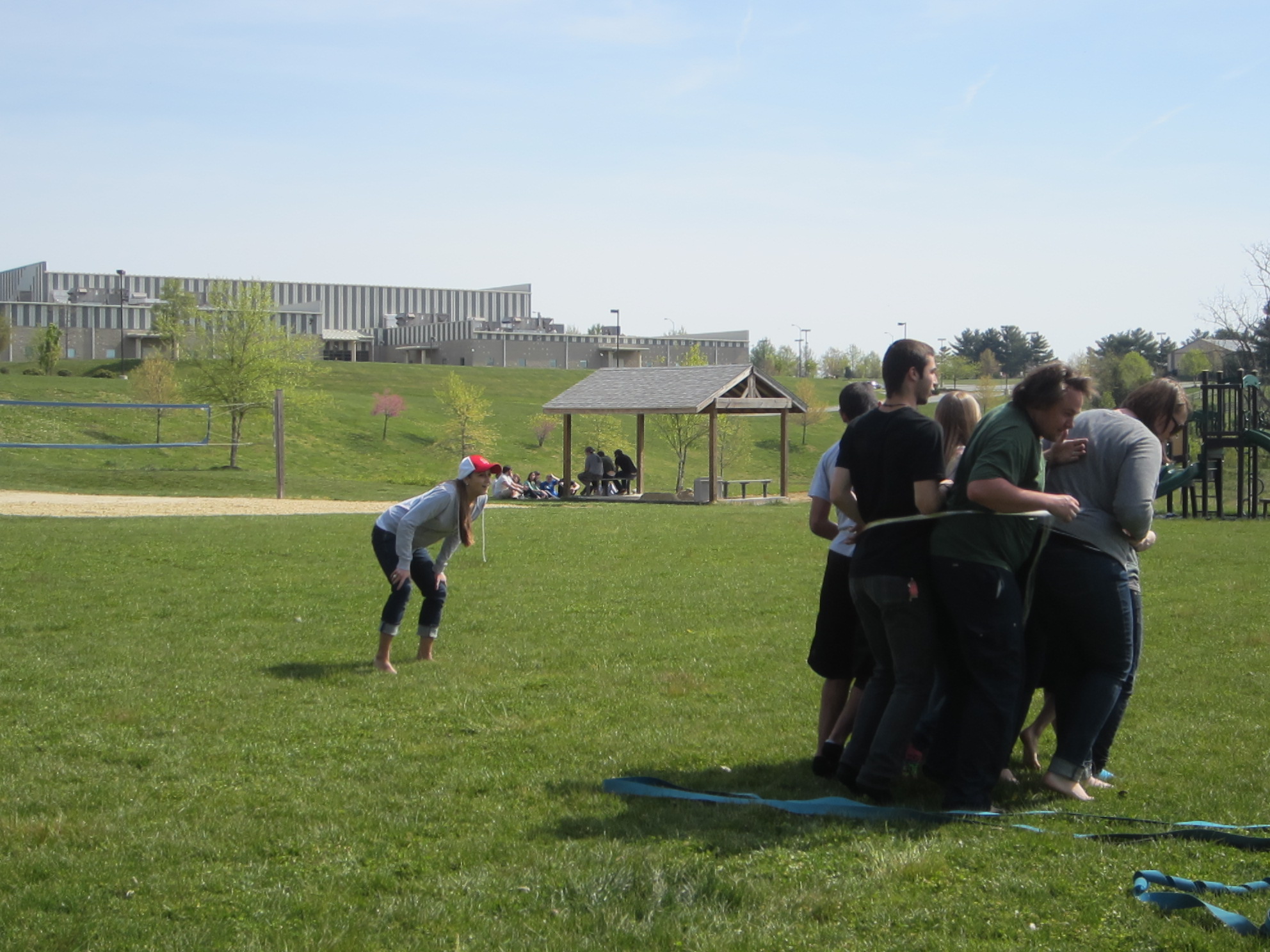
Photo: Decompression, Philly, Nov 2011.
Yesterday, we said goodbye to our sweet little dog Phoebe. She was such a great personality, really. The dog I always wanted.
I'm traveling to Belgium in late June on a vision team with some global strategy leaders with GRACE. Our purpose is to scout out some faith communities, ministries and social enterprises for some potential long term partnerships as part of GRACE's efforts to in Europe. This partnership also has some specifics like focusing on the emerging generation, being involved in a church planting movement and helping us learn about post-Christian culture. I'm excited to both go there and to participate on a team like this - I've never been on a vision team before but read lots of vision team reports. It's a unique purpose that requires some interesting skills so I'm looking forward to learning a lot.+ When we put a high school student into a leadership role that could be tenuous, we lean towards more, not less, risk and we communicate that to student.
+ Guides are given honest, relevant feedback about their performance right after a project they have been involved in. This feedback is meant to be near real time and is saved as lessons learned.
+ All leaders involved in a project decompress a project right when it is over. We remind everyone about the concept of unfiltered debate before the conversation - so we talk about the good, bad and the ugly on purpose and without making it personal. [Jim Collins]
+ Sometimes our Guides lead people who are much older. Sometimes they will be lead by someone much younger.
I'm more convinced than ever that the organization structure and values of a team are just as important as the character and passion of the people involved. I have the privilege of helping define a culture for an organization that I would want to work for.
Related: Ember ethos part 1
Henry Kaestner
God centered organization - faith, family, work, fitness in that order - Bandwidth.com has those very public values.
Important traits of leaders: why they do it and can they articulate the reasons why
Managing growth and scaling and organizational culture:
It is one thing to acquire and retain customers
another issue to retain employees
employee retention speaks directly about the culture of the org
how committed are the founders to creating the culture of the org - this is done with input and intention
culture is defined at the early steps of an org
Steve Graves
scalability - better reason to scale than 'just because i can'
launch -> prove -> scale
you can skip the prove step with lots of resources - money, network, etc.
why do we scale? should we scale?
we must prove the right things, especially as people of faith
feed and nurture the person and the org
there is a composite score of life - husband, father, employee, neighbor
you must manage and lead yourself in multiple roles
live a life of healthy grace - juggle - realistic expectations
Josh Kwan
past investing has been based on guilt or feeling good about ourselves
calling, purpose, accomplishing impact - asking tough questions
social entrepreneurs are the 21st century missionary <<-- this is why I went
Short term mission teams are notoriously under prepared. They don't understand how to navigate cultures, they don't know their teammates well enough and they wear the same t-shirts in the airport. Some say that 50% of short term mission teams do detriment to the visibility of long term missionaries - I believe that to be true. I also believe this is easily fixed.Read more of my entry here.
We've had a great deal of success in focusing on three concepts when helping missions teams prepare: serving, movement and awareness. And when you work on these three, you get a team, not just collection of people going somewhere together.
For the Sawi, treachery was their highest value. Judas emerges as a hero.Also, there were probably 50-60 people there, lots of different ethnicities. The average age was probably 50, there were maybe 5 high school or college students, I brought 3 of them.
When people live as tribes, tribialism prevails. You only care about yourself.
Cultural compasses:
Indian prophecy of an upside down tree.
Chinese encoding of characters.
Extended family - peace through a new birth.
Abstract concept of new birth.
Jesus spat - nothing related to Jewish culture. He didn't have to use saliva to heal. Marilyn Lazlo - Wycliffe translator and the tribe that related to Jesus healing with saliva. Did God look 2000 years in the future to this tribe?
Could there be some details in the Scriptures not for you but for someone else.
People say missionaries shouldn't go to unreached tribes because they ruin a culutre. This assumes no one else will go - evil corporations, political commercial etc.
87 tribes went extinct in 57 years.
Survivor International - anti missionary organization.
Polygamy - older men sacrifice their daughters to increase their harem. Young men take daughters and leave to different villages. 90% of violence within clans are due to polygamy.
Tribes were addicted to soap and salt.
Missionarys are the object of novelty. Young single men gravitate towards the missionary, while older men feel slighted. Missionary becomes a bad influence in the eyes of elders. Must find a way for the elders to know they matter.
Animistic societies - if people die, its witchcraft. Someone needs to be blamed, who is guilty. Quota of pain - antiBiblical.
Natural symbols suggesting eternal life. Lizard sheds skin. Caterpillar into butterfly.
3 measures of exponential growth - 1st 250 years after Pentecost, the early church
# of believers
# of ecclesia - households
# of culturs in which there were churches
The creeds are missionless. They were written during a dead time for the Church.
Our team heard some teaching about the context of Darley Park, one of the most at risk communities in Baltimore, and go to work with Dorothy, one of the most senior residents of this community that decided that she was going to stay, even in the midst of the community being overtaken by bad people. Our big task, chosen by Dorothy, was to clean all the trash from two alleyways. In and of itself, the actual task would have been pretty good. Knowing that it was chosen by someone who is indigenous to the community [Dorothy] and hearing about the context of Darley Park made it a great project.Christianity is fundamentally a communication event. The religion is predicated on God revealing himself to humanity. God has a habit of letting his people know something about his thoughts, feelings, and intentions. God wants to communicate with us, and his media are many: angels, burning bushes, stone tablets, scrolls, donkeys, prophets, mighty voices, still whispers, and shapes traced in the dirt. Any serious study of God is a study of communication, and any effort to understand God is shaped by our understand - or misunderstanding - of the media and technology we use to communicate.
The erosion of memory is, in fact, a downside of the invention of writing; however, there is also an upside that Thamus [king of Egypt, debated on the value of writing versus knowledge] failed to perceive. Reading and writing have an incredible capacity to expand consciousness and advance the common good. Consider the Reformation, which challenged the corruption and abuse of the medieval Catholic church. This would not have happened without a rise in literacy among the masses.... Or consider the fact that free democratic forms of government have a tendency to take root and thrive in cultures with high literacy rates. Democracies demand that citizens have access to information in order to make informed decisions. Literacy provides this on a scale that a purely oral culture does not.
The belief that media are neutral tools is only half right. Marshall McLuhan, the oracle of the electronic age, reveals that error of this assumption when he says that "the medium is the message." If the first truth is that our methods necessarily change, the second truth is that whenever our methods change, the message automatically changes along with them. You can't change the methods without changing your message - they're inseparable. [Large ramifications to the idea of contextualization - the Gospel stays the same but is communicated differently in different contexts. This premise says that is not true.]
The broad introduction of literacy into an entire culture completely alters the way that culture thinks. Writing restructures the worldview of entire civilizations.
The printing press had been in existence in China for nearly 800 years prior to its European debut in the 1400s, and yet it had none of the same liberating intellectual effects it had in the West. The simple explanation is efficiency. The Chinese language just wasn't every efficient. Because each symbol in the Chinese language represents an entire word or idea, a dizzying number of characters are required for communication. In fact, that number could be equal to the number of words in the language - the Chinese dictionary has more than 80,000 characters and is still growing. The idea of using the printing press for mass communication in China made about as much sense as creating a computer keyboard with 80,000 keys.
The linear arrangement of pews in churches didn't exist before the printing press.
Printing makes us prefer cognitive modes of processing while at the same time atrophying our appreciation for mysticism, intuition, and emotion. It can make us suspicious or fearful of feelings, especially as they interact with our 'logical' faith.
The Bible presents us with at least two different understandings of conversion, and yet, depending on the cultural context, one understanding is always emphasized at the expense of the other.
The printed word creates fissures in the mind. It makes us prefer distinctions between things. Printing breeds a strong preference for categories.
The radio returned our culture to the experience of the tribal campfire with its shared stories, songs and banter.
If oral culture is tribal and literate culture is individual, the electronic age is essentially a tribe of individuals.
I find it troubling that so many communities of faith are in hot pursuit of these [social networking] technologies. The Internet is seen as the Holy Grail of 'building community.' However, churches will find the unintended consequences of this medium coming back to bite them. The Internet is a lot of things, but it is emphatically not a neutral aid. Digital social networking inoculates people against the desire to be physically present with others in real social networks - networks like a church or a meal at someone's home. Being together becomes nice but nonessential.[This reminds me of The City, which I have some reservations about. Maybe another post.]
To many adult minds, the digital land is a foreign country with strange languages, norms and practices. Parents are undocumented immigrants, while their kids are native citizens of the land and serve as interpreters and gatekeepers.
This shift marks the first time in the history of the world that parents have limited access to the world of teens and children. Go back five hundred years to the dawn of the print age and the situation was reversed. Printing empowered adults. It led to a more pronounced elevation of adults over children. It shrouded the adult world in mystery, leaving children on the outside straining to look in. A child wanting to access adult information was required to learn a complex code - phonetic literacy - which could take decades to master.
The electronic age changed all this by dissolving the information barriers of the print age. … This means even young children can have access to the same information that adults have.
[remarkable chapter Getting Younger on digital generations]
Here's a pretty recent report on church planting in Europe. Dig into it a bit and you'll see lots of different kinds of models of church as well as lots of different kind of leaders involved in these kinds of things. This is valuable for you and I - we are on the verge of the same kind of secular, post-Christian environment. Add to that the mix of the emerging generation that you and I are trying to prepare and a report like this gives us lots to learn. Keep digging and ask yourself how you would do this kind of research and put this kind of report together.3 Realities
1. Teen church engagement remains robust, but many of the enthusiastic teens so common in North American churches are not growing up to be faithful young adult disciples of Christ.
2. There are different kind of dropouts, as well as faithful young adults who never drop out at all. We need to take care not to lump an entire generation together.
3. The drop out problem is, at its core, a faith development problem. It's a disciple-making problem.
Even though the childhood and early adolescent years are the time during which spiritual and moral compasses are calibrated, the experimental and experiential decade from high school to the late twenties is the time when a young person's spiritual trajectory is confirmed and clarified.
Access - unprecedented access to information, analysis, opinions, relationships and worldviews.
Alientation - unprecedented levels of disconnection from relationships and institutions.
Authority - new questions about who and what to believe and why.
All things considered, a young Christian has about 1:9 odds of losing his or her faith entirely. While this is a rare outcome, it is a very high number when you think about the estimated five million eighteen to twenty nine year old ex-Christians encompassed by this statistic.
When you have a child, you open up a grave. - Gary Kinnaman
I suggested earlier in this book that we have a mass-production approach to faith development. Taking our cues from public education, among other sectors of society, we have created a conveyor belt of development that industrializes the soul formation of young people - who eventually become adults with inch deep, mile-wide faith. The outcome is adult Christians who were not transformed by their faith as children, as teens or as young adults. [This paragraph should pain most of us.]
Youth group teens who aspired to science-related careers = 52%
Youth pastors/workers who have addressed issues of science in the past year = 1%
[Also think about the projected gap in Science, Technology, Engineering and Math students]
In 1960, one of out every twenty births was to unwed mothers. Now that percentage is 42%.
Jesus was in close enough contact with his disciples that he was able to shape the rough-hewn edges of their faith and ministry. Jesus knew his followers. If your churches are too large to cultivate this type of knowing, then our ministries are likely too large to disciple as Jesus did.