Monday, April 28, 2014

3 Days in Nashville

We spent 3 days in Nashville over the weekend, a new city to us as a family, and had a blast. Our older daughter was there for a school band trip so the other 3 of us decided to make a road trip out of it. We were in town at the same time as the Q conference and I thought their write up about why they chose Nashville this year was pretty instructive, as far as strategic cities go:
In 2013, Nashville was on the top end of many lists. Forbes ranks it number three as the next big boom town. A recent Gallup poll ranked Nashville in the top five regions for job growth. This country start-up town was also recently listed as one of the "5 best places to go in 2013" by Conde Nast Traveler. Infamous as "Music City," with more than 180 recording studios and 5,000 working musicians it comes as no surprise that Rolling Stone called Nashville "the nation's best music scene.

Music may be the reason people go to Nashville, but it's not the only reason they stay. In the 1990's the renovation of the Country Music Hall of Fame and Museum, downtown Nashville Public Library, the Bridgestone Arena and LP Field began an urban renewal of the city. In 2001, Mayor Karl Dean was elected and then re-elected in 2011 because of his determination to make neighborhoods safer and bring higher quality jobs to Nashville. The city's unemployment rate is currently below the national average and its job growth has been predicted to rise 18 percent within the next few years. His efforts to revitalize the city have not gone unnoticed, as titled in a recent article by the NY Times,"Nashville's Latest Big Hit Could Be the City Itself."
Besides the normal tourist stuff, we also visited with good family friends Sean and Kari. Sean works in the music industry and Kari has a horse - both were topics they taught us a ton about. I also had the great fortune of having breakfast with Kyle Goen. Tell you more about him later this week.

3 days was not enough.

Wednesday, April 23, 2014

2014 Missions Support Metrics - 1

We are just at about 50% of our support raising for Ember 14X and we now have enough to purchase our airfare - it's a phenomenal milestone that our team has met.

I'll post some more metrics in early May, which will actually be the half way point between the time we started raising support and our departure date. So according to that timeline, we are a little ahead since we are at 50% of budget now before getting to 50% of time. The chart shows us being ahead of last year for a bit and then being a little bit behind. The two spikes both years were from a large donation from a family - very appreciative of every dollar. Yeah math details aside...

Kids who have a future as missionaries, church planters, or nonprofit leaders need to be able to to fund their ventures and support is one piece of that. Like my friend Ben Arment says, "Nonprofit is a tax strategy, not a business strategy."

Monday, April 21, 2014

Ember Mantras - 3

"Leadership identification and engagement is 25% of your job." [adapted from the research of Bobby Clinton]

Most people that talk about leadership development do not spend a quarter of their time looking for and assessing emerging leaders. It came seem counter productive, too risky to spend lots of energy on, and we've already got solid leaders to invest in.

Meet the potential leaders of the emerging generation - the ones who are cause driven, the ones who doesn't wait for institutions to say yes after lots of red tape, the leaders who are ready now, those that may not know how to do it today, but have the audacity to figure it out by tomorrow.

You will never have enough leaders. Begging, stealing and borrowing them will work for a short while. Instead, identify and create them.

Friday, April 18, 2014

Friday Burn

::: The Countries Where Youth are Doing the Best and Worst
Link


::: American Teens - Restaurants Instead of Malls
Link


::: How Americans Die
Fascinating read - beautiful charts.
Link


::: Jesus More Popular than Mao
Link


::: One Thing Mark Zuckerberg Thinks Every Silicon Valley Exec Should Do
My life is so different from the person who's going to be getting Internet in two years. One of the things that we do is ask product managers to go travel to an emerging-market country to see how people who are getting on the Internet use it. They learn the most interesting things. People ask questions like, "It says here I'm supposed to put in my password — what's a password?" For us, that's a mind-boggling thing.
Link


::: The Most Important Leadership Trait You Shun
And yet, few business people actively strive to grow in vulnerability, wanting instead to project strength and confidence to the people they lead, work with and serve. Ironically, they are limiting their potential for success. That's because it's not the smartest or most competent leaders, teammates and service providers that are the most successful ones. If that were the case, success would be much easier to predict than it is. In reality, the most successful people are those who achieve a required or minimum level of competence, and then enhance that with as much trust-inspiring vulnerability as they can.
Link


::: If the members of UPGs living in Metro NY were collectively counted as a city, they would form the 2nd largest city in the US. - @ethneCITY

Photo: 14X, in person and remote. Columbia, Merryland, April 2014. Dup picture when originally posted. Downtown Aix. July 2013.

Wednesday, April 16, 2014

Visioning

"The quality of a culture may be changed when 2 percent of its people have a new vision." – Robert Bellah
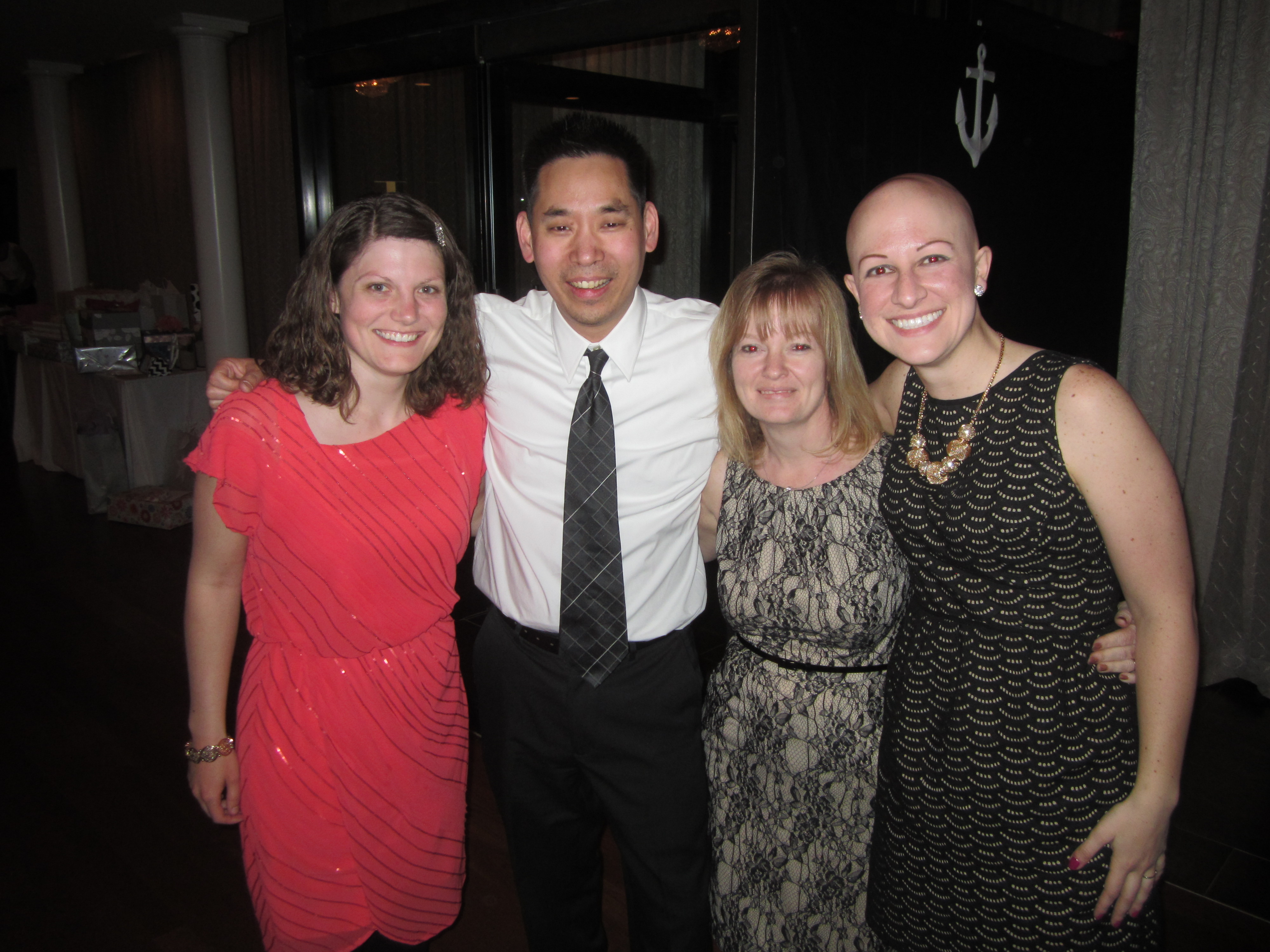
At a wedding this past weekend, [of some of the most missional people I know...] Emilie to my right and Leslie to the left of Deanna. Between 2003 and 2008, we traveled on teams together some 15 times, to destinations including New York City, Orlando Florida, Londrina Brasil, Yaounde Cameroon, Paris France, Vienna Austria, and Sopron Hungary among other places. I counted roughly being on 26 flights with these two.

Emilie is starting medical school in the Fall and was THE student that suggested we explore running an internship in global missions. Leslie is a social worker in Capitol Hill in DC and serves on the board of directors for The Ember Cast. Both were students that erupted into leaders in the very ministry that they grew up in and continue to live on mission right now. Countless students even today are benefiting from a student missions leadership culture that these two helped create and shape and mold.

One of the joys of my life has been seeing Emilie and Leslie grow up and sacrifice all of their being to serve humanity. We are all better because of them.

Monday, April 14, 2014

Ember 14X - Meeting #3

Team meeting #3, included:
- dessert at La Madeline. Yeah you know its authentic. Actually though, talk to some of the people that work there and you'll find that they are from all over the francophone world. And when we were leaving, there was a whole 10 person table of people speaking French.
- discussion about the concept of a person of peace and why they are important when dealing with the unengaged and unreached and who might some of those examples be.
- illustration of the diffusion of innovation principle and why that is important for leaders.

Unfortunately, not the greatest picture and a few of our team members weren't there.

Friday, April 11, 2014

Friday Burn

::: Hook Of Mormon: Inside The Church's Online-Only Missionary Army
In what marks a new phase in the evolution of one of the fastest-growing religions in the world, which has doubled in size since the 90s, the Mormon church is doing for religion what Amazon did for stuff: embracing the web to make shopping for a new faith easy, convenient and accessible 24 hours a day, seven days a week.
Link


::: A Rwanda Genocide Survivor
This past week marked the 20 year anniversary... this is a beautiful story.
Link


::: You are Doing It Wrong If...
Great read on the tools of disruption today and how they drive the culture of organizations. Make sure to read the list at the bottom.
Link


::: People don't resist change....people resist loss. - @willmancini via @ToddAdkins

Photo: Ember 14X, Columbia MD, Pleasanton, CA and Harrisonburg VA. April 2014.

Wednesday, April 09, 2014

Our 2014 Support Letter

Our 2014 support letter [pdf version] - having written and helped teams write these for years.... maybe I'll tell you what I really think of them one day...
+++
It is a privilege and honor for us to work with such passionate and talented young people and it is our hope that this summer's experience launches them on a trajectory for this kind of catalytic, entrepreneurial, creative ministry in any culture and any context.


[Related: My missions support letters - 2005, 2006, 2007, 2008, 2010, 2011, 2012,
2013]

Monday, April 07, 2014

Ember 14X - Mtg #2


- Finance update - we are around 11% of total funding, with 18% of that being creative revenue.
- Myers Briggs - we almost always take teams through it and then fill in the matrix together.
- Personal sharing - either how you came to being a Jesus person or a missions moment in your life - what Lencioni calls vulnerability-based trust
- Watched this video about 50 years after the Peace Child[vimeo link]

And... John joined us for a few minutes with Skype on my phone and MK joined us for the whole time on a google hangout. Remote teams are not easy but in this case, these two are worth it.

Friday, April 04, 2014

Friday Burn

::: Poverty is a Moral Problem
Link


::: The First Year of Texting - Human Trafficking Help
Link


::: Communication Patterns Around the World
Link


::: How Twitter Has Changed in 12 Years
Link

Photo: TRapp and moi, Aix, July 2013.

Wednesday, April 02, 2014

Perspectives Spring 2014

Fantastic time teaching and connecting at Perspectives last night. One of the best missions mobilization tools out there.

Here is some of what I found there: a guy who rents out his basement via AirBnB and gives a discount for people in ministry, the class host is an epidemiologist, one of the class attendees ran a very successful small business and sold it and is now thinking about the next phase of his life. And of course, I loved having some of our Ember tribe there and telling stories about them.

Here are the slides - as always steal or borrow what you want.

Monday, March 31, 2014

Ember Mantras - 2

"Catalyst is the primary paradigm."

A catalyst is something that comes into a situation that sparks a reaction and the reaction continues after the catalyst has left. We use this paradigm for almost everything that we do - service projects, facilitating and hosting teams, missional experiences, leadership coaching and more. If you can't do it yourself after we have left, we have failed. This paradigm requires us to think critically about dependency, ensures we view a long term perspective and keeps us future and action oriented.

You will never have enough leaders. Borrowing or stealing them is not the solution. Instead, view yourself as a catalyst and perhaps leaders will erupt from those you are already working with.

Friday, March 28, 2014

Friday Burn

::: This Flashlight is Powered by the Touch of Your Hand
Here's a little known fact: The human body, at any given moment, produces energy equivalent to a 100 watt light bulb. In that sense, we're always wasting our energy—energy that can be used to, well, power a light bulb. It's this line of thinking that led a 16 year old to invent the first flashlight powered entirely by body heat.
Link


::: Why Snapchat is Valuable
Believe me, I've read all the stuff about how Snapchat is only around to make money off those kinds of pictures. But this is a great read in terms of helping to articulate why it's popular for other reasons.
In a digital world where everyone's flicking through headshots, images, and text without processing any of it, Snapchat asks you to stand still and pay attention to the gift that someone in your network just gave you. As a result, I watch teens choose not to open a Snap the moment they get it because they want to wait for the moment when they can appreciate whatever is behind that closed door. And when they do, I watch them tune out everything else and just concentrate on what's in front of them. Rather than serving as yet-another distraction, Snapchat invites focus.
Link


::: Are the Suburbs Making People Live Paycheck to Paycheck?
Link


::: The organizations that best adapt to a changing world first & foremost know what should NOT change - Jim Collins via @ToddAdkins

And today.... I celebrate following Jesus for 30 years.

Photo: dugout canoe, lifeguard shirt, not such a great swimmer... outside of Kribi, Cameroon, July 2006.

Wednesday, March 26, 2014

Raising Missions Finances as a Leading Indicator

The first amount of support that comes in is always exciting. It's a good milestone to have.

What's even more important - who is the first one to get support in and how fast did it come in? That's what tells you who is all in, who is a sponge that is soaking up everything you can give this team, who is driven and called to see it succeed. Raising support is not the easiest thing to do and if they can do it, and do it fast, that is a significant accomplishment. This tells you who, in the words of one of my mentors, is a person that must.

In this case, it was Tess and it took 10 days for it to start coming in. Yes, that is fast. Our experiment with Tess didn't work out, but she's on Ember 14X now and as you can see, this is the right place for her and the rest of us.

Monday, March 24, 2014

14-15 ProtoGuides

Last weekend, I had lunch with the upcoming Ember ProtoGuides. This is the next iteration of ProtoGuides that start officially this coming September. It's an amazing group of ladies [all girls, the boys will come around eventually...] - one is traveling to Kenya this summer, another one started a Christian club at her high school, and the third is on my France team as well as working on a project with Appalachia Service Club this summer. I think there is at least one cross cultural missionary and/or church planter in the mix, but more on them later. For lunch, my purpose was just to listen to them - to hear what they were interested in learning, how Ember could launch them and what kinds of projects they wanted to be involved in. It was a fascinating conversation and touched on ideas such as:

+ Global Women's Rights.
+ The growth of churches or spiritual communities.
+ Experiencing and learning from different expressions of Church.
+ Connecting and building relationships with different missions-type people around the world.
+ How to plan missional experiences.
+ Sustainable community development and dependency issues like what is covered in Toxic Charity.
+ Social movements, demographics and context like what is covered in Church in the Making.

The ProtoGuide experience is at the core of what Ember does and what makes us unique. And of course, working with students like these is a huge privilege for us.

Friday, March 21, 2014

Friday Burn

::: In the Future Your Church Won't Need Volunteers
Yet churches that increase in favour and change the future of the city are thinking differently about volunteers. The Church of the future will move from recruiting volunteers to releasing trusted rulers. Volunteers meet the needs of the church. Trusted rulers serve/fuel the dreams of the city. Trusted rulers know their identity, understand their spiritual authority and introduce life to the city. According to scripture every believer is a trusted ruler, called by God to lead the earth into life. This is the original mandate that has never been rescinded (Genesis 2). Volunteers work for the church. Trusted rulers work for the city.
Link


::: Student Run Business Provides Low Cost Prom Dresses
Link


::: The Biggest Nonprofit Mistake of All Time
Adam Braun, incidentally, is the brother of Scooter Braun, American talent manager.
But for years I've been troubled by something that I consider the biggest mistake in the non-profit space: that 501(c)3 companies have allowed themselves to called "non-profit."
Link


::: We finally have a secret weapon to cut teen birth rates. It's the MTV show "16 and Pregnant"
Link


::: What separates young leaders is less about how, more about when (ie, when to step forward, and when to be the team player) - @richlyons via ‏@JoshuaSymonette

Photo: God is calling you but not on your cell phone.... Sopron, Hungary. July 2008.

Wednesday, March 19, 2014

Ember Spawn Proposal

Last fall, my older daughter expressed a desire to do something a little different this summer. She wasn't sure about an Ember experience and wanted something that was a little longer in duration, some deeper learning in a specific culture and perhaps more cultural distance.

If you know Katie, you know that she is a strong P, which is pretty much at odds with both her parents who are strong Js, and with that in mind, our answer was, "Give us a proposal. On paper." And she did. And it's good. Really good. So this is a little something that she is working on with a friend and one of those 'throw it and see if it sticks.' We all would be thrilled if it worked out the right way.

But don't miss reading between the lines either - this is a good representation of the emerging generation. They want something deeper. They are willing to sacrifice to get the experience. And they want someone to invest in them.

Monday, March 17, 2014

Book Notes - The Hard Thing About Hard Things

This will be the best book I will have read in 2014. In 1994, after finishing a masters degree in computer science, I went to work for a small technology consulting firm here in Merryland. It was during that time that the Internet became consumer worthy [I know to some of you, that seems ridiculous.] I remember the afternoon that some of us nerds got the corporate network connected to the Internet and fired up the NCSA Mosaic browser, the very first web browser, ever.

Since then, I've been following Marc Anderseen, the inventor of that paradigm shifting tool. And then I started reading the blog of his business partner, Ben Horowitz. Horowitz writes a blog about being a CEO, entrepreneurship, leadership and creating culture. It is fantastic and highly relevant for someone starting something from nothing. Highly recommended for people in my circles who do these same kinds of thing in various different domains - you know who you are. Lots of what I read in here applied to Ember too - although on a smaller or different kind of scale.

When I heard about Horowitz's book, I instantly pre ordered it. Herein are notes from it.
Former secretary of state Colin Powell says that leadership is the ability to get someone to follow you even if only out curiosity.

The simple existence of an alternate, plausible scenario is often all that's needed to keep hope alive among a worried workforce.

In my weekly staff meeting, I inserted an agenda item titled "What Are We Not Doing?" Ordinarily in a staff meeting, you spend lots of time reviewing, evaluating, and improving all of the things that you do…. Sometimes however, the things you're not doing are the things you should actually be focused on.

Early in my career as an engineer, I'd learned that all decisions were objective until the first line of code was written. After that, all decisions were emotional.

Startup CEOs should not play the odds. When you are building a company, you must believe there is an answer and you cannot pay attention to your odds of finding it. You just have to find it. It matters not whether your chances are nine in ten or one in a thousand; your task is the same.

In any human interaction, the required amount of communication is inversely proportional to the level of trust...As a company grows, communication becomes its biggest challenge. If the employees fundamentally trust the CEO, the communication will be vastly more efficient than if they don't. Telling things as they are is a critical part of building this trust. A CEO's ability to build this trust over time is often the difference between companies that execute well and companies that are chaotic. [Love this concept. My system is my weekly staff email.]

Being a good company doesn't matter when things go well, but it can be the difference between life and death when things go wrong.
Things always go wrong.
Being a good company is an end in itself.

From Andy Grove
Training is, quite simply, one of the highest-leverage activities a manager can perform. Consider for a moment the possibility of your putting on a series of four lectures for members of your department. Let's count on three hours preparation for each hour of course time - twelve hours of work in total. Say that you have ten students in your class.
Next year they will work a total of about twenty thousand hours for your organization. If your training efforts result in a 1 percent improvement in your subordinate's performance, your company will gain the equivalent of two hundred hours of work as the result of the expenditure of your twelve hours.

Running a large org versus creating and building an org:
When you are building an organization, there is no organization to design, there are no processes to improve, and communicating with the organization is simple. On the other hand, you have to be very adept at running a high-quality hiring process, have terrific domain expertise (you are personally responsible for quality control), know how to create process from scratch and be extremely creative about initiating new directions and tasks.

The most important difference between big and small companies is the amount of time running versus creating.

Screening for the right kind of ambition - a me or team prism.

Perhaps the CEO's most important operational responsibility is designing and implementing the communication architecture for her company. The architecture might include the organizational design, meetings, processes, email, yammer, and even one-on-one meetings with managers and employees. Absent a well-designed communication architecture, information and ideas will stagnate, and your company will degenerate into a bad place to work.

The primary thing that any technology startup must do is build a product that's at least ten times better at doing something than the current prevailing way of doing that thing. Two or three times will not be good enough to get people to switch to the new thing fast enough or in large enough volume to matter. The second thing that any technology startup must do is to take the market.

The first rule of organizational design is that all organization designs are bad. With any design, you will optimize communication among some parts of the organization at the expense of other parts.

Choices like these cause migraine headaches. Tip to aspiring entrepreneurs: If you don't like choosing between horrible and cataclysmic, don't become CEO.

In all the difficult decisions that I made through the course of running Loudcloud and Opsware, I never once felt brave. In fact, I often felt scared to death. I never lost those feelings, but after much practice I learned to ignore them. That learning process might also be called the courage development process.

Every time you make the hard, correct decision you become a bit more courageous and every time you make the easy, wrong decision you become a bit more cowardly. If you are CEO, these choices will lead to a courageous or cowardly company.

Over the past ten years, technological advance have dramatically lowered the financial bar for starting a new company, but the courage bar for building a great company remains as high as it has ever been. [Amen.]

High quality company cultures get their cue from data networking routing protocols: Bad news travels fast and good news travels slowly. Low-quality company cultures take on the personality of the Wicked Witch of the West in The Wiz: "Don't nobody bring me no bad news."

The first thing to understand is that just because somebody interviewed well and reference-checked great, that does not mean she will perform superbly in your company. There are two kinds of cultures in this world: cultures where what you do matters and cultures where all that matters is who you are. You can be the former or you can suck.

But what about being loyal to the team that got you here? If your current executive team helped you grow your company tenfold, how can you dismiss them when they fall behind in running the behemoth they created? The answer is that your loyalty must go to your employees - the people who report to your executives. Your engineers, marketing people, salespeople, and finance and HR people who are doing the work. You owe them a world-class management team. That's the priority.

Friday, March 14, 2014

Friday Burn

::: Farewell Franchise Ministry
The multi-site model is basically ministry franchising. It's the Starbucks model of "local" church. Now the good thing about Starbucks is you get the exact same cup of coffee everywhere in the world. I was in England recently (not known for good coffee), and seeing the green Starbucks sign was like finding an oasis in the desert.
But the bad thing about Starbucks is that their conformity flattens the creativity of individual baristas or shop owners. It's an a-cultural expression. It all tastes the same. So whether you're in downtown Portland or in Mumbai, India, you get the exact same cup of burnt-tasting coffee.
Link

And related ...
::: But in multi-site, I don't know the pastor
Here is the heart of my response: Why is the Senior Pastor the one expected to administer all the pastoral care? Doesn’t that presuppose the very “cult of personality” for which multi-site churches are often criticized? “I need to be known by my pastors” is a legitimate request. “I need to be known by that pastor because he is special” is not.
Link


::: How to Identify An Apostolic Leader
These 5 are great. Yes on #1 and #3.
Link


::: Inside the Pixar Braintrust
Fantastic read about candor - or we call it unfiltered debate.
Candor could not be more crucial to our creative process. Why? Because early on, all of our movies suck. That's a blunt assessment, I know, but I choose that phrasing because saying it in a softer way fails to convey how bad the first versions really are. I'm not trying to be modest or self-effacing. Pixar films are not good at first, and our job is to make them so--to go, as I say, "from suck to not-suck."
Link

Photo: CDG, July 2006.

Wednesday, March 12, 2014

Ember 14X Mtg 1

I love the process of assembling teams - the personalities, the talents and interests and gifts and watching them all come together to form one cohesive team. Ember 14X is no different and in this case, we are dealing with kids that have lots of cross cultural experience and have lots of experience in this missions trip kind of thing.

Our first meeting was going over some basic logistics about our distributed team, the idea of Aix and their kids outreach and getting started with support letters/creative revenue.

My challenge to them - make someone say wow when they see your support letter. As you know, the support letter paradigm is broken and could use some disruption. At a minimum, it should begin with some kind of design in mind.

[Related: 2013X team mtg #1, 2012AZ team mtg #1, 2010AZ mtg #3, 2008Hungary mtg #3, 2007Hungary mtg #3, 2006Cameroon mtg #3, 2005Brasil mtg #1]

Monday, March 10, 2014

Highly Distributed Teams in 2014

Some of the students on Ember 13X still maintain regular contact with people that they met last year in Aix - the physical distance being over 4000 miles. Not to mention that SAnderson is here in DC and has had to fly back to France to take care of some paperwork twice already in her 6 months of being here. This is our global hyper connected world today, thanks to the Internet and the ease of world wide travel and the emerging generation has not known anything else.

In January of 2008, I met Rachel J, she was hanging in Maryland with her good friend Emilie, who was one of our core leaders. After a weekend traveling to NYC with a student team, I invited Rachel to join us on the leadership team of a summer experience based in Hungary. One slight caveat - she went to school and lived outside of Seattle. The other caveat, her friend Emilie, who had already signed on as one of our leaders, would eventually meet us in Vienna, Austria, flying in with her brother Sven, coming in from Norway. Despite not having both of these leaders present during all the pre-field team training and some very challenging logistics for who would arrive when and where, Rachel was a fantastic leader and we made the right decision bringing her on board to help with the large task of leading a 26 person team.

In the summer of 2012, Olivia joined our AZ2012 team. We had befriended her family in 2007 - their two daughters were the exact same age as our girls. In 2007 and 2008, at the same staff missions conference, our two sets of girls had hung together during the conference, doing all the kids conferencey things together. Having Olivia join the AZ team was great - a missionary kid going on a missions trip. One slight caveat - she lived in Austin. Olivia was a great addition to our team, eventually helping lead kids in the outdoor water games as well as helping lead worship. I loved being able to make it work and that summer continued to lay the groundwork for what Ember did last summer and is doing this summer.

This summer MK is coming from California. She was on our team last summer and returns and we are thrilled that she is a part of it again. John comes from Virginia where he is finishing up his senior year of college. And of course, we are going to France, in another part of the world.

If we are going to embrace these ideas of virtual connections, friendship via technology and today's ease of travel, what you do with student missions might need to reflect this as well. You might have passionate, qualified, fantastic team members that need to be engaged over some physical distance. The extra trouble in logistics and connecting and timezones might be well worth it to get the right person on your team.

Friday, March 07, 2014

Friday Burn

::: Atlanta Bench Works
Run by my friend Jesse Phillips, they build outdoor furniture using scrap materials while helping employ some of the neighborhood's homeless.
Link


::: They keystone of Apple's design process - the ANPP
Every business is different, but ... selectively imposing seemingly rigid structures on even the most creative enterprise frees employees from having to worry about whether they're getting all those little steps right, so they can concentrate on being creative with the parts of their work that are different from all the other times they've done it before.
Link


::: How Can We Plant 1000 Churches by 2050?
Some of the math behind church reproduction from the Summit Church.
We knew from the beginning that to reach 1,000 churches in one generation would require more than just planting churches from the Summit, but planting churches that, in turn, would plant churches. So we asked a few of our staff to chart what it might look like, assuming that we continued to plant at our current rate (3 churches per year), and that our daughter churches would plant a church every 5 years.
Link


::: Why Blogs Still Matter for Social Entrepreneurs
Link


::: If you cannot be accused of exclusivity, you are not discipling. #HowardHendricks - @bradbridges

Photo: Pavillion Vendome. I got lost 50 feet outside of the gates to this place. Aix-en-Provence, July 2013.

Wednesday, March 05, 2014

Ember Board of Director Notes - February 2014

Some rough notes from the last board of directors meeting for The Ember Cast. Maybe this helps some of you that are in leadership in the small-fledgling-bi-vocational-nonprofit space.

+ Review of Summer and Fall 2013.
+ Anticipating Spring and Summer 2014.
+ Connection Economy
+ Financial Big Picture - although there should have been more metrics about Creative Revenue Plans.

I've got some specific actions from the meeting as well, which include:
+ Building a dashboard and outlining what metrics do we measure that tell us how successful we are. And I loved how one of our board members prayed about this, that it would be 'measured like how God measures it.'
+ A better financial summary - Excel graphs, big picture, high level one page.
+ Mark Batterson tweeted a few weeks ago, "If you are planting a church in dc, ncc wants to be a shareholder." In the same vein, we want Ember to be a part of launching lots of students.
+ Over the past few months, I re-listened to Seth Godin's Startup School as well as watched his New Business Toolkit class and these questions came out of thinking about that stuff. Some of this is also related to the dashboard item at the top.
How do we define entrepreneur versus freelancer and is my role mutually exclusive to each?
How does what we do redefine the idea of scale?
How is the Ember CEO successful?
+ I outlined a very rough financial model based on income versus expense. I have one item of research to do regarding whether we can charge for one of our specific offerings based on some of it's context.

Monday, March 03, 2014

Toxic Charity Seminar Notes

In late 2011, a college student we had been working with told me that I should read the book Toxic Charity. Her recommendation was right on and the book has been a vital part of Ember's ethos.

I was thrilled when I heard the author was coming to our town to do a little afternoon seminar. Dr. Lupton was fantastic, sharing insights from the book with stories, principles and reflections from decades of urban community development experience. His time was such a gift to us, access to this kind of content is not normal and I'm thankful that some of our Ember people could attend as well.

We were also able to host a smaller group for some debriefing over dinner. This crowd included Ember guides and ProtoGuides, some college kids highly invested in various community projects around their city via Wendy, and the IllumNation folks. Great crowd.

In short, if you are any kind of nonprofit/missional/charity leader, having any influence in that sphere at all, this should be required reading for you.

A subset of my notes are below with some various edits.
Change our outlook on our neighbors. See them as people with resources, image of God, having talents, everyone has something to contribute.
Homebound seniors = crime watch.
They are always looking out the window and on the phone with their friends.

Never do for others what they could do for themselves.
'proof of poverty'
Universal truth - everyone loves to find a bargain. Even poor people.
Fair rate on a desired commodity - the market. God's fabulous gift to us.

Food pantry -> food coop
someone wanted specific kind of food - she became the buyer
someone had to deal with accounting - who pays what, what about if they need credit/borrow
inventory
decisions as an org - what are the rules
peoples talents and giftings start to emerge
community cooking and sharing
someone wanted to start a restaurant -
church staffer connected them to a restauranteur and a grant writer
Tummy and Soul - an outgrowth of the Georgia Street Food Coop
** I absolutely loved this whole story. Beautiful.

Service Projects
people in community initiate
doing planning - community led
supervising
people in the community share about what is happening - evangelism both directions

We are in a key moment in history - time honored practices of charity are now being questioned
When Helping Hurts
Toxic Charity
Dead Aid
now talking about outcomes in ways we have never felt comfortable about before
downturn in charity as we shift

It's bad when you get kicked out of a poor country.
The community must be the first investor.
What the poor need is a connected, compassionate neighbor.
You can't do community development well unless you know people connected to city systems.
The poor are isolated and this perpetuates poverty.

Pastors/church leaders - get out of the one way giving business - church benevolence funds, etc. If you have extra money, start an employment training center.
Church subsidy systems are far less effective than government subsidies.

A rising economic tide raises all the boats.
All social issues can be addressed by connected neighbors.
Nothing more demoralizing for police when they arrest someone and the accused walks because they could not get any witnesses to come to court.
Healthy bodies/communities can isolate disease. Save or expel it.

The most strategic thing churches can do today - develop/preach a theology of the redeployment of the saints.
Does God have an opinion of where you live?
We have to become neighbors.
'Where we buy a house' is a sacred cow.
Spiritual gifts discernment.
Talents abilities calling strategic deployment
** spot on. talents, abilities, calling, vocation.

You cannot serve a community out of poverty.
The one thing that moves a community out of poverty is a job.
People that go on mission trips are people that serve. What we need are people that can create jobs to go on these trips.
The spiritual gift of wealth creation. Never heard a sermon on that.
Business people feel unspiritual because they can only create wealth. They haven't heard the affirmation that God has entrusted them with this.
America is full of entrepreneurs - it is in our DNA.
** He is so right. And the recent stat I read somewhere that 59% of Mils believe they are entrepreneurs.

Friday, February 28, 2014

Friday Burn

::: Paul Graham's advice after helping over 600 startups
One of my favorites - "Start with a small, intense fire."
Link


::: Summit Church in Raleigh sends high school juniors and seniors for 5 week missional experiences in SE Asia.
Link


::: A Fascinating Look at Facebook and Social Relationships.
This is really well worth the read, much like a lot of the Facebook Data Science notes. It's especially relevant if you have ever felt like you needed to create your own social network exclusively for your community [I'm looking at you, people that have wanted to implement the popular church networking platform, The City...]
Link


:::Are Selfies Spreading Teen Lice
Link


::: Every State's Favorite Band
Link


::: Every leader should remember that he is the least permanent element in the church. - Roland Allen @Ben_Hardman

Wednesday, February 26, 2014

Welcome back JT

John Timmons joins us this coming summer on Ember 14X. Long time readers will remember him from 2009-2010, when he was an Ember intern, the very first year that Ember existed. He also helped us run 2010AZ.

John has since spent time in Mozambique [twice] as well as helping with various small Ember projects here and there. During his time in college at JMU, he discovered he was an artist and has used art as a creative revenue plan twice so far to help fund some of his global projects.

I'm thrilled to work with John again - his passion for the world and his laidback demeanor are vital components to a potent global leader. And he prays like no one I know and that is going to be fantastic.

Monday, February 24, 2014

Announcing Ember 14X

In June of 2007, this comment was left on my blog [was using an older commenting system back then so this is a pic of the exported data...]. Later that summer, we were taking a team to serve some missionary kids at a missions orgs staff conference and Megan was the mom of a family who were going to be there too. Since then, we have continued to be in touch with the Rapps, including serving again at the same conference in the summer of 2008, attaching one of their kids long distance with us for AZ 2012, and working together last summer for Ember X13.

Today, I'm proud to announce that Ember launches Ember X14, a second year experience working with the International Christian Community of Provence and Teal and Megan and their family centered around ICCP and their summer kids outreach for the kids in the city of Aix-en-Provence.

Ember X14 represents a second round of some of the best preparation for our emerging global leaders - students who come from a context that is suburban, high achieving, and affluent. Europe and Aix and ICCP specifically provides a spectacular environment for our students to learn from some passionate church planters and missionaries - some of the best innovators in a post-Christian, postmodern, secular society.

I'm excited to get this team started and thanks in advance for your support for The Ember Cast.

Friday, February 21, 2014

Friday Burn

::: The Problem With Little White Girls (and Boys)
I don't want a little girl in Ghana, or Sri Lanka, or Indonesia to think of me when she wakes up each morning. I don’t want her to thank me for her education or medical care or new clothes. Even if I am providing the funds to get the ball rolling, I want her to think about her teacher, community leader, or mother. I want her to have a hero who she can relate to — who looks like her, is part of her culture, speaks her language, and who she might bump into on the way to school one morning.
Link via Hope


::: American Teens Are Even More Stressed Than Adults
Link


::: 10 Projections for the Global Population in 2050
Link via Alex McManus


::: 30 Key Movements Happening in the Christian Community
Link


::: How Support Raising Keeps Parachurch Ministries White
Link

Photo: Recruiting lunch. Laurel, Merryland, January 2014.

Thursday, February 20, 2014

Happy

On July 3, 2013, my wife Deanna had the ridiculous experience of flying across the Atlantic all night long, running through the airport terminal with a team of 10 to catch our next flight, and having all of her insulin for her insulin pump run through an xray machine because nobody could try to explain to the French only speaking official that insulin shouldn't go through there. Not the best first morning in France.

I post that story today in honor of my wife - today is her birthday. And I think the story is symbolic of her life. Her history is one that routinely sacrifices for others - sometimes with great hardship. Most of you know that she has dealt with diabetes for the past 2 years. When she got an insulin pump last year, she decided that yes, she will go with Ember to France, despite not knowing exactly how all the travel will work, including switching time zones, figuring out ratios with different kinds of food and knowing how tough international travel can be for your body.

All of that mattered, but not enough. What mattered more was that there was this team of students who were called to this vision of coming alongside a church community that wanted to bless the kids in their city. To Deanna, all of that sacrifice was worth it.

You and I are better for her sacrifice. Happy birthday Deanna. LOVE.

Wednesday, February 19, 2014

Ember Mantras

"We throw fire."

We believe that there are lots of young leaders that could be resourced, empowered and sent to do lots of good in the world. So the energy never ends with us and it didn't begin with us either. Hopefully we are a vital part of getting them out there and helping them prepare to do amazing jobs as well as start throwing fire themselves.

Monday, February 17, 2014

More 2014 Application Questions

Like in this post about our missions baseline questions, it seems like all great application questions - whether it's for a job at Taco Bell or for a spot on a missions team - are borrowed [or stolen.]

Here are a few more questions from our application:
What are you learning from Jesus recently?
Tell us about a recent leadership experience and what you learned from it.
Describe something you birthed from nothing.*
Describe how the next 500 years will be different because of you.*
Describe all cross cultural experience you have had in the past. Also describe how these experiences changed you.
Describe the riskiest - but not necessarily successful - endeavor you have ever attempted.*
Of course, no right or wrong answers on these. But these are some of my absolute favorite questions to ask because the types of people Ember engages have experience with this kind of stuff and their answers will always be so interesting.

I'm looking forward to sharing more soon about some of the people we will work with this summer and their answers.

*Borrowed these questions from the IMN.

Friday, February 14, 2014

Friday Burn

::: Not Just Seating Capacity but Sending Capacity
Great stuff here about a sending culture:
Without sending people out, you won’t continue to draw people in.
The more leaders we send out, the more leaders step up to take their places, because pushing out leaders creates more leaders.
Link


::: What Are the Hardest Languages to Learn
Link


::: 5 Things that Turn off a Potential Child Predator
Link


::: The Self Aware Leader
Author and psychiatrist Scott Peck wrote that one of the ways you can divide the world up is to put everyone in one of two categories: either a "neurotic" or a "personality disorder."
This is the mental health version of the doctrine of total depravity.
Link

Photo: We met these four young people in the picture on July 4 when we tried to get into town and no one else on the public bus spoke English. July 2013, Aix-en-Provence, France.

Wednesday, February 12, 2014

2014 Baseline

Below is a sample of some of the questions on Ember's 2014 application, from a section called 'Missions Baseline.' This app is used for all of our 2014 stuff - ProtoGuides, summer experiences, etc. And this section is intended to see how well our applicants understand these concepts.

Describe what a person of peace is.
Describe what an indigenous leader is.
Why are these leaders so important?
Describe the tension between social justice and evangelism.
What is cultural distance and provide an example.
Describe an example of contextualization.
Name a modern day example of a movement.
Who are you discipling right now?
Who is discipling you right now?
The fabulous original idea for a 'baseline' was from Trevin Hoekzema and really, the idea is fantastic. Much of what we intend to do is to help prepare our students for global leadership, potentially navigating lots of different cultural contexts and jumping in to missional leadership. We think the questions above cover some pretty core concepts. If we don't know what they know before they begin with us, then we don't know what kind of job we have done.

We have a pretty detailed application but I like it that way. Answering these kinds of questions helps you - it aligns what you are trying to do with what we are trying to do. It also helps us - if someone doesn't finish it, they didn't fit us in the first place. And of course, we ask these questions at the end of our summer to really see if it worked.

* I heard of someone screaming when they were in the middle of our app and their little brother closed their browser.
** I save off almost every great missions application I find in a google drive folder. Weird I know.

Monday, February 10, 2014

Ember's Board of Directors - Everything You Wanted to Know

I've had a few people in the past few months ask me lots of questions about my board of directors: who did you invite to the board, how do you interact with them, what is their role...and questions along those lines. This post is to try and answer most of these kinds of questions all about the Board of Directors for The Ember Cast.

As soon as Ember was approved by the IRS for its 501C3 status, I knew that I needed to put together a board - it's actually required if you are a nonprofit. I took about 6 months in thinking through it and going through a list of people that I knew well and was interested in. At the core, I chose individuals for the board who had a proven history of being advocates and patrons for student missions. They all have experience in this niche area and almost all of these people worked with me during my time with SPACE, a missions component of a student ministry for a local suburban megachurch.

As a side note, you might think that Ember 'started' in 2009. The reality is that what is now Ember was seeded in 2003 when SPACE started and even somewhat before. Lots of pivotal experiences helped me launch Ember and sometimes things start long before you think they did.

The Characters
Leslie was a student when I worked with SPACE and eventually was one of our first students turned into leaders. She gravitated towards our vision and goals and eventually helped me lead four different teams. She works full time in the social sphere.
Greg is a serial technology entrepreneur whose 3 kids we know well and 2 of whom traveled with me around the world. Greg brings an invaluable startup mindset as a small business founder and owner.
Matt is a technology professional and was involved with student small groups for 12 years - in a row. He has multiplied dozens of leaders whose full impact is still yet to be felt.
Dale is a certified StrengthsCoach - combine that with being a maximizer and a soccer coach and he pushes us to be better than we were and to unearth potential that we might not see. He works full time in the construction management field.
Joyce was at a breakfast at the beginning of when our church decided to get serious about involving students in local and global service. That meal together was the beginning of a long arc of impact. Joyce works full time in finance so she brings a financial perspective to us.

How they were chosen
Most conventional thinking about boards is that they bring influence and cash. They are supposed to have lots of connections and in turn can create lots of financial backing. I didn't care for much this advice. Instead I chose two principles that I wanted our Board to be chosen around. First I wanted people that I trusted and people that were passionate about student missions and the impact that could have in the world. Second, I wanted a personal board of advisers. Putting the board together takes intention and thought - I thought of it like a dinner party where you want the best talents and passions of your friends to mingle together through a grand evening. Each guest and what they bring to the table matters.

For more insight into these ideas, read the following articles. I don't agree with everything written in these posts, but there is a lot of wisdom in all of them.
Wanted: A Great Board Chair
The Three Stages of Board Development
A Personal Advisory Board

Board Responsibilities
Responsibilities of this Board are minimal. We have board meetings twice a year [although last year we only had one] and that's the forum where I communicate what we have done and where we are going on a broad scale.

The Board has an open invite to anything that we do. Some of the members have jumped in to various events. There is a wide spectrum on what each of them personally wants to be involved in - some want to stay at the advisory level and some want to jump in here and there. And of course, this is only one small sliver of their lives and leadership. Getting them engaged outside of Board meetings is a topic that I think about a lot.

On certain occasions I have engaged specific members of the Board for specific time bound projects, seeking to leverage their experience and expertise. Dale has done some Strengths coaching for our ProtoGuides. Leslie has connected and given advice to people interested in human trafficking due to working at IJM for a season. Joyce helps me set up archaic accounts in Quickbooks. Greg has listened to me over lunch when I gripe about people saying they are interested but never committing - a common complaint when you are starting something new. Matt has joined teams on community service experiences and joined us in 2012 in AZ for a week with a team.

Although I report to the Board, they give me wide latitude about running The Ember Cast. We have not, until now at least, ran into any issues where the Board has to reign me in. We might get there one day. They are Ember's best advocates and although we don't interact day to day, I know they take the responsibility very seriously.

Communications
During the first two years of Ember's existence, my communications during our board meetings were, shall I say, mediocre at best. They were simple bullet points on a piece of paper. In the midst of that, I started to realize that the Board, even as my biggest fans, deserved my very best. And during one board meeting, I found myself clammy and sweaty as I was going through our notes. I was legitimately nervous speaking to friends that I had known for, in some cases, a decade. Later on, I understood this simple truth: Your board deserves your absolute best and I was sweaty because I was not delivering.

To that end, I now put together a PowerPoint deck with images that serve to tell our story. This deck gets professionally printed and bound and each Board member gets their own copy. If they spend their attention on Ember, they deserve more than a printed Word document. Pay attention to the details and go out of your way to make their time matter. I also print a few extras and have given those to other people who are interested in what they do. Financial details are given out on a separate handout.

During the school year, I also write a staff email almost religiously every Sunday. This email goes to our Board as well as ProtoGuides and Guides and serves to over-communicate to everyone. It is broken up until Past, Upcoming and Future sections and I try to list everything and more. Just this week, I added a Prayer section too, something that I have been personally lacking in on our orgs behalf - hopefully this changes that. Sometimes I throw in something good to read or a provocative quote too. The decision to write a consistent email every week was one of the best decisions I have made in the past few years.

Conclusion
It seems like most people that ask these types of questions about the Board of Directors are in the midst of starting some kind of nonprofit project themselves. What I hear from them is that the task of filling out 501C3 paperwork is daunting and assembling a board is insurmountable. Let me tell you instead, first, that filling out IRS paperwork is easier than doing your taxes. If you know your mission and vision, if you have some clarity on your offerings, and if you have some things you have actually executed, the paperwork will be easy for you. Give lots of thought to those things and that will lead to you finding the right Board.

What is harder than IRS paperwork and the assembling of a board is your great task of changing the world. Articulating your passion, leading your tribe and igniting those around you is the real challenge. But the world needs you doing this. So worry about those things. And one fine evening, your Board will be delighted sitting at the table with you, marveling in the different courses and offerings and tastes of how you have changed the world.

Friday, February 07, 2014

Friday Burn

::: State of the World's Kids in Numbers
Link


::: 6 Ways to be a Kick A** Mentor
Link


::: Speaking IO
Great resource on speaking, because "imagine everyone's naked" is terrible advice. I've been digging into some of this and it is really great.
Link


::: Young Bankers Seek Good Yield with Their Own Nonprofits
Link via Steven Dilla


::: National Community Church's 2013 report
Last year, they had 22 short term mission teams and they gave away 25% of their budget to missions.
Link

Wednesday, February 05, 2014

In 500 Years...

God has called me to preach the gospel to unreached people groups. I am going to go wherever he calls me. I am part of His greater story so that ALL people will be able to bring him glory. By going to people who have never heard the gospel, I will be demonstrating Jesus to them. Individual lives will be changed, which will change the community, which will change a people group, a nation, a continent! The kingdom of God, overflowing with peace, love, and kindness will be manifest on the earth because God has called me.
I will tell you who wrote this soon...

Monday, February 03, 2014

Why We Go Where

Ember's filter for where we go is unique. We don't go to certain places primarily because the need is great or our skills could be put to good use or the demographic is strategic. Granted, these certainly do fall into play, but they are not the primary filter for our decision making.

That primary filter is finding global leaders that can invest in our people. These leaders are catalytic - they are known to cause reactions. These leaders are entrepreneurial - sure they can start things, but they also have a mindset that expands with talent, opportunities and people. These leaders are available to invest - they spring to life when given an chance to speak into someone's life, especially a person a few years younger than them.

This is a bit contrary to popular global missions thinking and that's okay. Lots of good, God honoring people help others go to certain places because of a strategy, a need or a skill and if you are thinking about a missions experience, you are the only one that can discern why you are going where. We are still about 450 years too early to decide if our filter really works. But that's part of the fun of it.

Friday, January 31, 2014

Friday Burn

::: Food Preferences of Millennials
Link


::: 2 Teenagers Run the Twitter Feed for History in Pics
Link


::: 5 Questions with Don Richardson
Many mission agencies now recognize the wisdom of sending out workers with a heart to take the Gospel and help plant churches, via professions desired by the "host" countries.
Link


::: 7 Hard Lessons about Calling
Link


::: A church that avoids the culture can't be expected to shape it. @ryanmeeks

Photo: airplane mode. summer 2008, i think.

Wednesday, January 29, 2014

Toxic Charity Seminar, March 1

If you've been around here a bit, you know that I loved the book Toxic Charity by Bob Lupton. After reading the book, we started to be even more selective about the kinds of projects we work on and it's helped give us even more filters around potential projects. It's also where we got the mantra "self->service->systems."

Turns out, Bob Lupton will be here in Columbia giving a seminar on the book. I'd highly encourage anyone involved in the nonprofit or charity or global missions space to come to it. I'll be there with some of our Ember staff and would love to
see you, so let me know if you are attending.

[Related: Toxic Charity book notes and discussion.]

Monday, January 27, 2014

Meet IllumaNation

I recently had coffee [or in my case, orange juice] with Susan and Bill. Susan is the founder and CEO of a small information technology training firm located here in Howard County called /training/etc [yes they use the slashes]. They've been in business for over 20 years and if you are in technology around here, you have probably heard of them. They have recently stepped up energy and attention on a nonprofit arm of the business that they are calling IllumaNation and it's a great case study on a-for-profit business giving exposure to a nonprofit segment. I love what they are doing as well as how they are doing it.

I learned a ton of things from our short conversation, including:
+ /training/etc has a number of staff volunteer days - days where the whole staff goes and serves somewhere with a community service partner. Yes, the whole staff. They open up these days where others can come and serve as well and they utilize their staff to be 'guides' for the day.
+ They highlight a community impact partner once a month - students that come to their classes get a 5 minute overview and there is a display area with more info. Students can come serve and get a tuition credit.
+ Part of the picture is giving information and exposure to students that take training classes from them about possibilities to be involved in their community, both locally and globally. There is a niche demographic they are trying to engage - the technology professional who might not otherwise be exposed to these ideas and opportunities.
+ Some of their partners have included Academy of Hope [GED and basic computer skills], The Samaritan Women [they have plans to help network their campus], and World Computer Exchange [teaching people how to refurbish computers].

IllumaNation is one to watch. They are doing a great job executing along the spectrum of self -> serve -> systems.

Friday, January 24, 2014

Friday Burn

::: Must read - The Bill and Melinda Gates Annual Letter
3 myths that block progress for the poor:
- Poor countries are doomed to stay poor.
- Foreign aid is a big waste.
- Saving lives leads to overpopulation.
So so good.
Link


::: Grading the B and MG annual letter
Link


::: The smart contact lens project by... of course... Google.
As the husband of a diabetic, this would be incredible.
Link via my friend Travis


::: 19 hard things you need to do to be successful
Link via Ben Arment


::: Tracking the Church Planting Class of 2010
Link

::: Rule 169: People collectively have an unlimited amount of free time. - @pmarca

Photo: Sheng girls on the move, Munich, July 2007.

Wednesday, January 22, 2014

Book Notes - Sacred Roots: Why the Church Still Matters

In January of 2005, I traveled to Orlando to participate in a Mosaic LA regional Origins experience held at Discovery Church. The host and emcee was an Australian guy named Jon Tyson. I continued to track his ministry after he left Orlando to land in NYC. Fast forward to today when Jon pastors Trinity Grace Church, a church I have yet to visit but have admired from afar. So when he wrote a book called Sacred Church: Why the Church Still Matters, it became a must read.

That and the fact that sometimes, I'm left thinking that so many expressions of our local churches could be so much more. Be it organizational architecture, mission and values, cultural relevance or the unleashing of the priesthood of all believers, I'm frustrated more than I want to be. So this book pushes back on my skepticism and tells me that yes, the local church does still matter. If you are involved in local church leadership or are a bystander to it, you should give this book a read. Not only because of the content but because I believe Jon and his team are proving that the local church still does matter and they are proving it in one of the most postmodern cities in the world.
Christy still loved Jesus, still loved people, and still believed the gospel was good news. She just wasn't sure the church we had created was producing the kind of disciples Jesus had in mind. Sure, we had become successful in the Christian subculture, but meanwhile, we were becoming irrelevant to the rest of the world.

The growth of the early church is arguably the most remarkable sociological movement in history. The numbers are staggering. In AD 40 there were roughly one thousand Christians in the Roman Empire, but by AD 350 almost 30 million.4 A remarkable 53% of the population had converted to the Christian faith.

The early church leaders didn't have the things we now consider essential for our faith. They didn't have official church buildings, vision statements, or core values. They had no social media, radio broadcasts, or celebrity pastors. They didn't even have the completed New Testament. Christ-followers were often deeply misunderstood, persecuted, and some gave their lives for their faith. Yet they loved and they served and they prayed and they blessed, and slowly, over hundreds of years, they brought the empire to its knees. They did it through love.

I believe two major factors have negatively shaped people's expectations of what it means to be the church in our time: the entertaining church and the individualistic church.

The impact of consumerism on American culture has been repeatedly discussed. From documentaries, the rise of Occupy Wall Street, and our media exposure on how the rest of the world lives, we understand the concept of consumerism and wonder about its implications for our culture. But we rarely ask how it forms our longings and expectations as disciples of Jesus. When we apply these same consumer standards to church, we end up approaching our Sunday worship with an attitude that can be summed up in this one simple phrase: "I want experts to put on exciting events that meet my expectations."

We expect brilliance from the pulpit, but often accept mediocrity in our souls. What is presented up front is often exceptional, yet most of us live average lives. ** so so good.

In fact, most of Jesus' invitations were not simply personal invitations to personal salvation; they were invitations to communal salvation — ​and shared responsibility as a result. Jesus made this clear when he said in John 13:34 – 35.

Yet the reality is that relationships take time to form. To love our neighbor means we have to know our neighbor. Beatrix Tafoya, one of our leaders at Trinity Grace Church, often says, "In other times of history the great commission was to go, but maybe the great commission in our generation is to stay." For those of us called to serve God in a Western context, these are words worth considering. ** this is a pretty significant idea, especially for the emerging generation

What would the church look like if the members chose to buy homes in the same neighborhoods or subdivisions, lived in the same apartment buildings or blocks, and sent their children to the same schools? What would love look like if it showed up dozens of times a week in small but profound ways: meals cooked, prayers prayed, songs sung, Scripture studied, games played, parties thrown, tears shed, reconciliation practiced, resources given? What if we stopped attending community groups and became groups of communities? What if our homes stopped being the places we hid from the world but havens to which the world comes for healing?

Monday, January 20, 2014

Seeing What Sticks

January and February are typically the months where we 'see what will stick.' In other words, we are throwing some stuff out there and seeing what gets traction. I love the variety, the process of these things coming together, the potential.

Along with the tossing projects into the air, I spend some time doing some recruiting. Brainstorming who will work great with what project is a way my StrengthsFinder developer gets put to good use and it is truly generative for me. Then it's writing a dramatic description of what we are trying to do and with whom.

People routinely ask me what I've got planned for Ember coming up or what a protoguide year looks like. I tell them that every year is always different because we have crazy, interesting, and different opportunities every year. In just about 10 years of doing this student missions thing, God has always brought us the best ideas. I'm excited to tell you about them pretty soon.

Friday, January 17, 2014

Friday Burn

::: The Collateral Damage of a Teenager
The subtitle says it all: "What adolescence does to adolescents is nowhere near as brutal as what it does to their parents." Great read, lots of it resonates with me.
Link


::: 5 Things That Will Never Be The Same Again
4. Young adults will not flock back to church when they have kids.
5. Loyalty to the institution will no longer motivate people.
Link via Ben Kolarcik


::: A World Map of Aspiring Tech Hubs
Link


::: The average Briton has visited seven countries.
The research, published today, found that almost one third (31%) of Brits have visited 10 or more countries, with one globetrotter claiming an impressive tally of 42.
Link


::: A $100 3D Printed Prosthetic Arm in Sudan
Link

::: It is impossible to give thanks and simultaneously feel fear. -Ann Voskamp via @boSEEcah

Photo: student missions teams praying for their summer. May 2013, Fulton, MD.

Wednesday, January 15, 2014

Six Months Later...

we asked the Ember X team:
- what was your best memory?
- how did the experience change you?

It is almost never too late to ask these questions of students that travel on your teams. Six months or six years, they will remember the experience and hopefully it will serve as a pivotal time to change their trajectory so they can serve the world better. Ask them.

And you should really ask. Lots of teams come and go but seldom dig deep within the lives of the students to erupt passion, calling and vocation. If you are going to spend all the energy to take students somewhere, it only takes a little bit more to follow up with them once they come home.

Photo: not such a great one... Ember 13 X.... Columbia MD.

Monday, January 13, 2014

Why We Exist 2014

2013 has been the best year of my life thanks to the Ember Cast. And I am not just saying that to make Tony Sheng happy. Nope. It’s the absolute truth. I’ve been able to have so many experiences this year, completely unique to Ember. I’ve made new friends from all over the world. I’ve had cross-cultural experiences this year that I never thought I’d be able to have. When I went overseas, I was equipped with the knowledge I needed to adapt to new cultures. My friend from France moved in with my family and I learned how to live alongside someone from a completely different culture. And lastly, and probably most importantly, I have strengthened my faith upon deep roots and solid soil which will not falter when I go to college. - Hope Koumentakos, Ember ProtoGuide 2013-2014.

500 years from now, you can say you read about Hope. This is why The Ember Cast exists.

Friday, January 10, 2014

1-3

Dear Em --

Happy birthday and welcome to officially being a teenager. You've already realized a little bit, I daresay, that the teenage years can be filled with angst, chaos and confusion. These past few months have not been easy for you. Mommy and I have been so proud of you though - you have persevered, believed the best and acted better than we would have. We will always stand up for you even if people hate us for it.

Even with all of that, you have had a great year. In Aix, we saw you contribute to an idea bigger than yourself. It was a team that you jumped in to, and not just because your dad was in charge. I'm confident that 500 years from now, you will see the impact of your investment there. In Oreo, you have found a middle school girls best friend. Truly that dog loves you to pieces - rolling over only for you is proof enough. Don't worry though, no one else in the house is bitter than he only listens to you.

We love you. Keep following the Light that shines in the darkness. Remember to come visit me and Mommy with your dogs when we are old.

Wednesday, January 08, 2014

Who God Is versus Where God Is

I've encountered this conception of God countless times over the years, a perspective that isn't as much about who God is as where God is. I've heard people pray and ask God to be with them; I've heard songs inviting God to come near; I've heard a good event described as a God thing - all of these undergirded by the subtle yet powerful belief that God is somewhere else and then comes here to this world from time to time to do God sorts of things.

The problem with this as one's only conception of God is that it raises questions about when and where and why God chooses to act.

Or not act.
- Rob Bell, What We Talk About When We Talk About God

Monday, January 06, 2014

Ember Advance

Over the past ten years, a conviction we have held has been that most student mission teams could be better prepared. As we've been fortunate to be involved in helping fix this, we've worked with some amazing individuals, teams and leaders. It's been a joy to interact with them months before they leave, track them while gone, and hear about how well their teams did after they come home.

Some of you are probably putting final touches on your summer plans. Our plans are not quite there but we wish we were. In either case, let me implore you: don't forget about the vital task of preparing your teams. Even though our plans are not quite final, we are already thinking about Ember Advance, a weekend with all of our Ember tribe preparing for summer experiences.

If you need some ideas or help along these lines, get in touch, we would love to help.

Friday, January 03, 2014

Friday Burn

::: God's Broad Canvas of Calling
If you don't have the broad canvas of calling, you have a highway with signs that read, "God calls these few people to these few tasks." If you get the broad canvas of calling, the exits on that highway are limitless, and both the individual journey and the national landscape are transformed because of it.
Link


::: A Nonprofit takes on Poverty by Bringing Digital Jobs to Emerging Markets
Samasource creates living-wage digital jobs for women and youth in emerging markets, including sub-Saharan Africa, southern Asia and the Caribbean. It collaborates with in-country partners to recruit prospective employees and tackle client needs such as data augmentation, digital transcription, image tagging for SEO and machine learning.
Link


::: Can do vs Can't Do Cultures
Big companies have plenty of great ideas, but they do not innovate because they need a whole hierarchy of people to agree that a new idea is good in order to pursue it. If one smart person figures out something wrong with an idea–often to show off or to consolidate power–that's usually enough to kill it. This leads to a Can't Do Culture.
Link


::: Developing Special Teams
One of the most helpful things you can do as an organizational leader is look for ways to stretch staff without completely upending the organizational chart. My favorite way to do this is by creating special teams or task forces for unconventional projects.
Link

Photo: train BRU, June 2012.

Tuesday, December 31, 2013

2013 in cities

1 - NY, NY, USA
2 - Fairfield, CT, USA*
3 - Annapolis, MD, USA
4 - Durham, NC, USA
5 - Cocoa Beach, FL, USA
6 - Orlando, FL, USA
7 - Lake Anna, FL, USA
8 - Aix-en-Provence, France
9 - Marseille, France
10 - Queen Creek, AZ, USA
11 - Virginia Beach, VA, USA
12 - Rehoboth Beach, DE, USA

The map is below. Travel this year was a lot of fun.
* multiple times


View 2013 in cities in a larger map

[2012, 2011, 2010, 2009, 2008, 2007, 2006 in cities]

Monday, December 30, 2013

2013 in Books

Western Christians in Global Mission, Paul Borthwick
The Catalyst Leader, Brad Lomenick
Renegade, Vince Antonucci
Tradecraft : For the Church on Mission, Larry McCrary [Notes]
Overcoming Five Dysfunctions of a Team Field Guide, Patrick Leincoini [Notes]
The Meeting of the Waters: 7 Global Currents That Will Propel the Future Church, Fritz Lang
Creating a Missional Culture, JR Woodward
Multipliers, Liz Wiseman
Strengths Based Leadership, Tom Rath
David and Goliath, Malcolm Gladwell
All In, Mark Batterson
Girls Like Us: Fighting for a World Where Girls are not for Sale, Rachel Lloyd
Shark Tales, Barbara Corcoran
The Sending Church, Pat Hood
Youth Ministry in a Post Christian World, Brock Morgan [Notes]
The $100 Startup, Chris Guillebeau [Notes]
Redefining the Role of the Youth Worker, April Diaz [Notes]
What We Talk About When We Talk About God, Rob Bell

[2012, 2011, 2010, 2009, 2008, 2007 in books]