Showing posts sorted by relevance for query toxic charity. Sort by date Show all posts

Monday, March 03, 2014

Toxic Charity Seminar Notes

In late 2011, a college student we had been working with told me that I should read the book Toxic Charity. Her recommendation was right on and the book has been a vital part of Ember's ethos.

I was thrilled when I heard the author was coming to our town to do a little afternoon seminar. Dr. Lupton was fantastic, sharing insights from the book with stories, principles and reflections from decades of urban community development experience. His time was such a gift to us, access to this kind of content is not normal and I'm thankful that some of our Ember people could attend as well.

We were also able to host a smaller group for some debriefing over dinner. This crowd included Ember guides and ProtoGuides, some college kids highly invested in various community projects around their city via Wendy, and the IllumNation folks. Great crowd.

In short, if you are any kind of nonprofit/missional/charity leader, having any influence in that sphere at all, this should be required reading for you.

A subset of my notes are below with some various edits.
Change our outlook on our neighbors. See them as people with resources, image of God, having talents, everyone has something to contribute.
Homebound seniors = crime watch.
They are always looking out the window and on the phone with their friends.

Never do for others what they could do for themselves.
'proof of poverty'
Universal truth - everyone loves to find a bargain. Even poor people.
Fair rate on a desired commodity - the market. God's fabulous gift to us.

Food pantry -> food coop
someone wanted specific kind of food - she became the buyer
someone had to deal with accounting - who pays what, what about if they need credit/borrow
inventory
decisions as an org - what are the rules
peoples talents and giftings start to emerge
community cooking and sharing
someone wanted to start a restaurant -
church staffer connected them to a restauranteur and a grant writer
Tummy and Soul - an outgrowth of the Georgia Street Food Coop
** I absolutely loved this whole story. Beautiful.

Service Projects
people in community initiate
doing planning - community led
supervising
people in the community share about what is happening - evangelism both directions

We are in a key moment in history - time honored practices of charity are now being questioned
When Helping Hurts
Toxic Charity
Dead Aid
now talking about outcomes in ways we have never felt comfortable about before
downturn in charity as we shift

It's bad when you get kicked out of a poor country.
The community must be the first investor.
What the poor need is a connected, compassionate neighbor.
You can't do community development well unless you know people connected to city systems.
The poor are isolated and this perpetuates poverty.

Pastors/church leaders - get out of the one way giving business - church benevolence funds, etc. If you have extra money, start an employment training center.
Church subsidy systems are far less effective than government subsidies.

A rising economic tide raises all the boats.
All social issues can be addressed by connected neighbors.
Nothing more demoralizing for police when they arrest someone and the accused walks because they could not get any witnesses to come to court.
Healthy bodies/communities can isolate disease. Save or expel it.

The most strategic thing churches can do today - develop/preach a theology of the redeployment of the saints.
Does God have an opinion of where you live?
We have to become neighbors.
'Where we buy a house' is a sacred cow.
Spiritual gifts discernment.
Talents abilities calling strategic deployment
** spot on. talents, abilities, calling, vocation.

You cannot serve a community out of poverty.
The one thing that moves a community out of poverty is a job.
People that go on mission trips are people that serve. What we need are people that can create jobs to go on these trips.
The spiritual gift of wealth creation. Never heard a sermon on that.
Business people feel unspiritual because they can only create wealth. They haven't heard the affirmation that God has entrusted them with this.
America is full of entrepreneurs - it is in our DNA.
** He is so right. And the recent stat I read somewhere that 59% of Mils believe they are entrepreneurs.

Wednesday, January 29, 2014

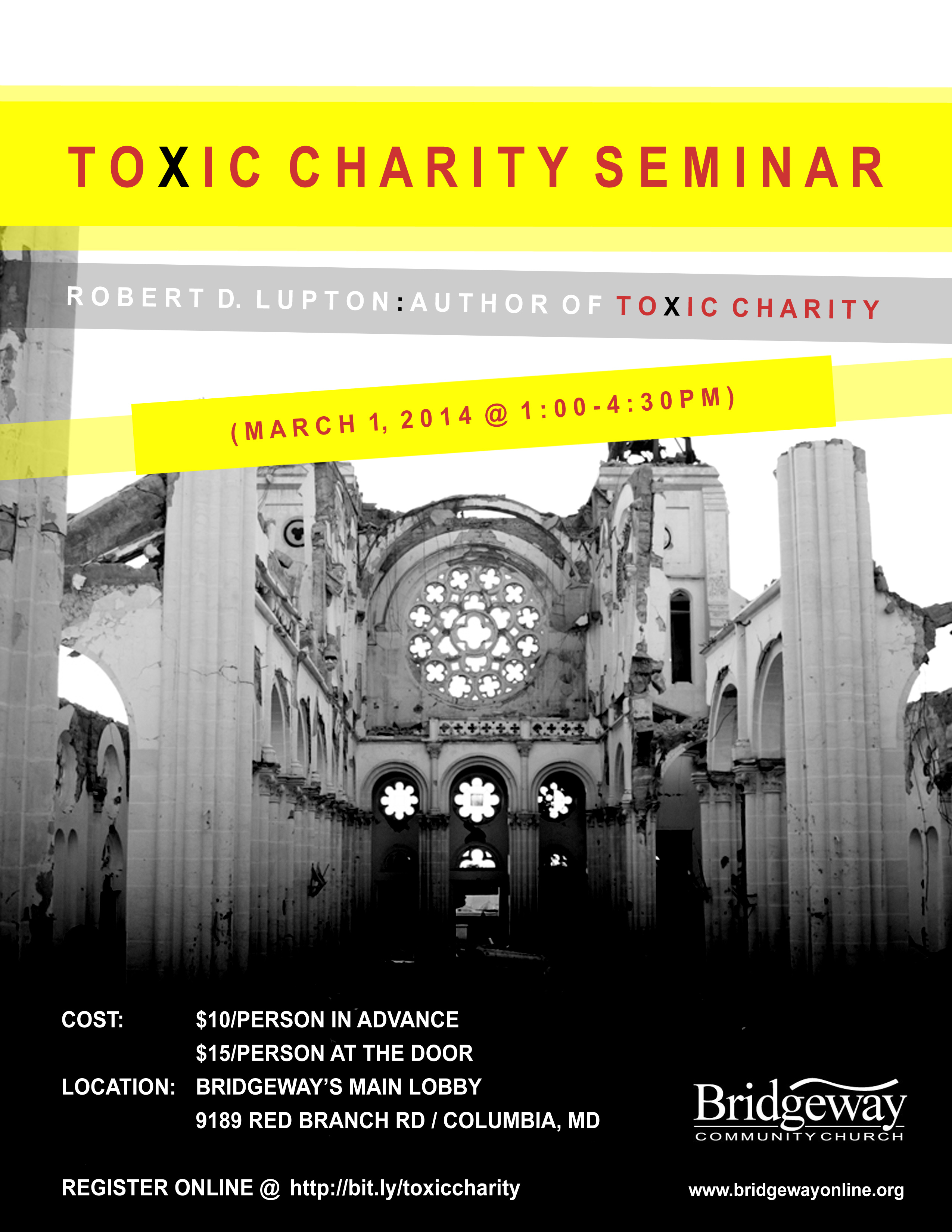
Toxic Charity Seminar, March 1

If you've been around here a bit, you know that I loved the book Toxic Charity by Bob Lupton. After reading the book, we started to be even more selective about the kinds of projects we work on and it's helped give us even more filters around potential projects. It's also where we got the mantra "self->service->systems."

Turns out, Bob Lupton will be here in Columbia giving a seminar on the book. I'd highly encourage anyone involved in the nonprofit or charity or global missions space to come to it. I'll be there with some of our Ember staff and would love to
see you, so let me know if you are attending.

[Related: Toxic Charity book notes and discussion.]

Wednesday, January 11, 2012

Discussion Notes - Toxic Charity

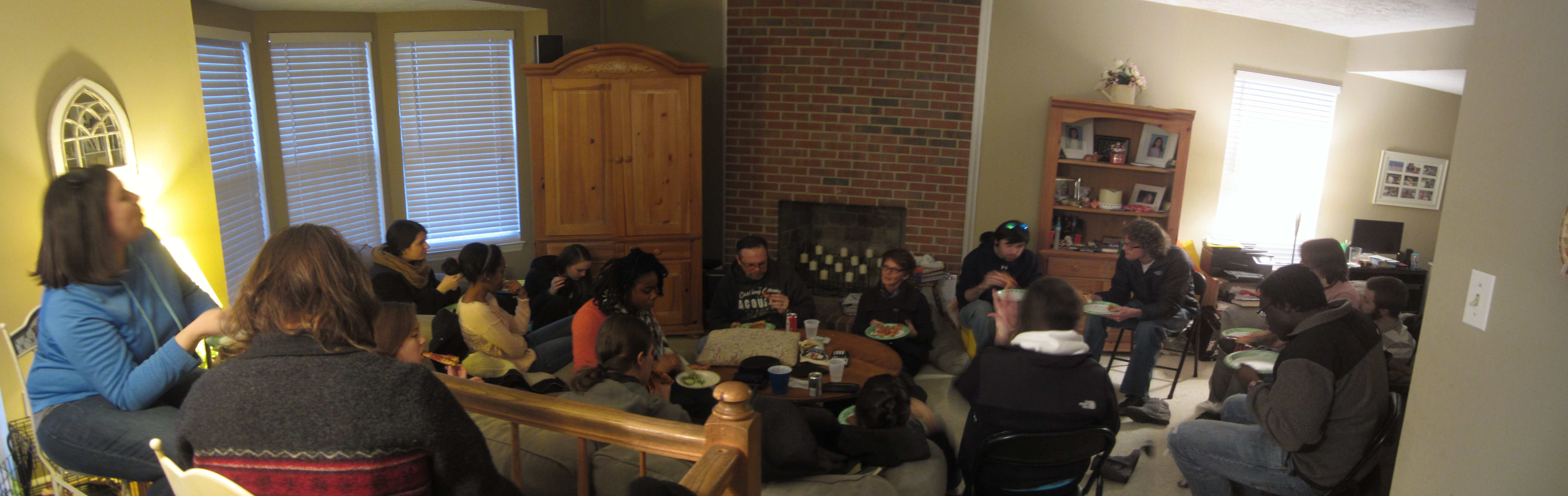
A few months ago, Tayest, one of our Ember guides, recommended the book Toxic Charity to me. Since then lots of other people in my circles have also been talking about it. And Taylor asked if Ember would host an evening discussion on the book, specifically to talk about the ideas and her context of a team of college revolutionaries. Here are some rough notes to the conversation:

+ Participants
Tony, Trevin, Clancy - Ember guides, Lauren - Ember intern
Taylor, Dylan, Rachel, Brooke, Jenny, Wendy, Jack, Nathan - Salisbury students
Glenn - Nathan's dad, professional in intl comm dev

+ Context
Salisbury Uni - core team of about 10 college students who are serving the fringe via off campus ministries
three venues:
God's kitchen - a soup kitchen model
HALO - a womens and childrens shelter and homeless day center
Salisbury Urban Ministries - a soup kitchen model

+ Intro
"Giving to those in need what they could be gaining from their own initiative may well be the kindest way to destroy people."
examples from the book:
free church food pantry transformed into a food co-op
giving Christmas gifts to needy families versus a discount toy store
affluence - this topic may be more intense because we have so much
those who have been given much, much will be required
unique to us gathered here in this room
see more notes on the book here

+ Initial Thoughts
most everyone agrees with the basic premise of the book
difficult to generalize - but most seems very valid
attentive to the spirit - tension of helping and giving in the right way but also being attentive to how God is leading
requires change - not everyone will want to change what they are doing because it makes them feel good
sometimes we are not in charge at the places we serve. not easy to make this kind of organizational change

+ Glenn B, special guest [seriously, read his resume]
agriculture and intl development
peace corps - Guatemala
missionary
a do no harm approach
'we facilitate opportunities for people'
accompanying them, training microgrants, design and implement together
base principle - we don't know what is best for them
physical and spiritual components have to be done together
relief and development

measurement and indicators are important but you can't be driven by them - 'best effort' stewardship

counterpart contribution - onwership, dignity, value,
donor results can erroneously drive a free gift, quota approach

+ Idea Models
[this was totally stolen from Ben Arment, see this and this]
The question is really how to bring some of these ideas back to your context at Salisbury so lets play around with some idea models based on the idea of sustainable charity.
resume writing
cooking in a soup kitchen
toy store versus food co-op [from the book]
church partnership - big clothes swap
CVS or Wal Mart store
addiction counseling/Christian counseling
PAC access center - paradigm for church community development - better practices
survey the population - methodical strengths/skills assessment - value clusters, evaluate the demand in the community for the skills - don't want to train them in skills that are not in demand by the market
skills job training mentoring
homeless paper in DC - Streetsense
lots of resources in the university
someone at God's kitchen thinks the college kids are all actors. can't believe people actually serve like them.

My biggest impression after this group left was that I'm excited to see what they come up with. I think it's going to be an idea model that is completely out of the box.

Wednesday, March 06, 2019

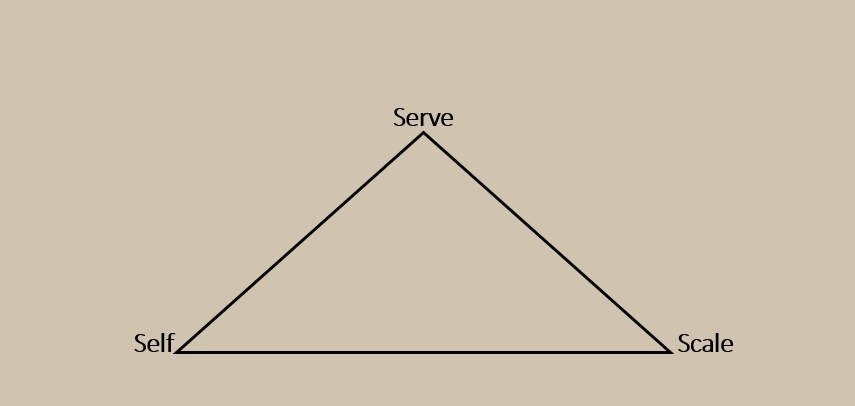
Self -> Serve -> Scale

[We've talked about Self->Serve->Systems with lots of Ember people in the past few years. It's not quite a complete thought and after sharing it with a workshop this past weekend, I think Self->Serve->Scale makes the idea more complete. This is what I would have said if I had thought of it in time. The idea of 'Scale' has also come up in a few recent conversations related to this topic and this excellent article, Scale or Bail, continues to make an impression.]

When the affluent serve the less fortunate, there are lots of dynamics at play, many that we need to take care with. We need to specifically be careful of doing something for someone else that they could do for themselves. This premise - that we should never do something for someone that they could do for themselves - is well outlined in two fantastic books, When Helping Hurts, and Toxic Charity. The image here represents a progression from Self to Serve to Scale and portrays one mental model which might help us think through some of these ideas.

Everyone of us starts out only thinking about self. At some point in our journey, for most of us here at this conference, we move from thinking about only ourselves to thinking about someone else - we want to serve someone less fortunate. This is, of course, a good thing.

But there are lots of us that stop at that point, when there may be one more step to go. We continue to serve when we really should think about scale. What do I mean when I say scale? It means the ability to grow and multiply your efforts. Take a simple idea and use it to affect a ton of people. If our great passions and actions stop at serving, we might be serving at the same soup kitchen for the next 10 years. If we scale something, we could be helping hundreds, thousands, that same community as well as many others.

You can only scale when you get the people you are serving involved. Your service project will never grow and multiply if you are doing for them what they could be doing for themselves. Not only will you stagnate the growth of your passion, you'll cripple those less fortunate than you. Scaling requires you to listen, it requires you to think about the assets in the people you serve, it requires you to uncover talent.

I'd like to highlight two quick examples of this. The first one is outlined in Toxic Charity by Bob Lupton. Dr. Lupton spent thirty some years working in the inner city in Atlanta. At his church, they had a food pantry and he suggested a slight tweak to it - turning it into a food cooperative. Instead of hand outs, they actually now had members and a small monthly income. They used this income to employ food buyers, who were actually from the community they were serving. Now they had insiders who bought food the less fortunate actually wanted to eat. People started sharing recipes, they started throwing community dinner parties. At one point, someone suggested the idea of starting a restaurant with all their culinary skills and passions, and they eventually did it. The restaurant is still in existence today. Someone had to think about scale as part of this whole project though - when they need a commercial kitchen, someone helped to find it. When they needed seed funding, someone helped write a grant. Lots of thinking about assets and talents.

The second example comes from the world of housing and construction. New Story Charity has a vision to end global homelessness. Last summer, they unveiled a solution to use a 3D concrete printer to print a home in less than 24 hours and at less than $4K. Scaling means they do this for a whole community, not just one house. Scaling also means that they have developed a robust pattern for partnership with locals as well as a people-centric design process - thinking about local culture and involving those they serve in the design stage. The vision of New Story is not building homes - it is ending global homelessness. In their own words: "One billion people live without a basic human need: shelter. Linear improvements will never reach this market. We need a quantum leap in affordability, speed, and quality to reach families exponentially faster."

This is an experimental mental model that we talk about with Ember kids and I'm optimistically expectant - one day soon, one of our Ember kids is going to make this happen and I will be thrilled. So come on Ember peeps, no pressure. Actually just kidding. Lots of pressure - the world needs you.

In the meantime, self to serve to scale. Dig in and take your passion past just serving. Scale it to really change the world.

Wednesday, October 30, 2013

Latest ProtoGuide Posts

Part of the ProtoGuide experience is reading.... and most of the reading is about current issues in global missions and writing reflection blog posts about those readings. We make them read because.... well... you know reading is good for you. And we make them write because you have to be able to clearly articulate your ideas, no matter what you do for a living. This year, we took a little different path and are working through a few of my favorite books.

Here's some of the latest and greatest posts from the ProtoGuides, in no particular order:

That being said, Lupton's book is about exactly what the title suggests. It argues that a good percentage of the charity work being done by Americans is actually toxic to those being "assisted," rather than being legitimately helpful. When I first read this opening argument, I was shocked. "How?" I demanded. "How can you say that charity work is bad?" Lupton explains, saying that charity is "almost universally accepted as a virtuous and constructive enterprise" but its “outcomes are almost entirely unexamined." - Toxic Charity

The Word of God grows best in fertile communities, just like how it does in fertile hearts. Arment refers to some situations he's watched happen where churches with the same outreach ideas completely fail in one area and flourish in others. This concept of spiritual fertility is one I've been exposed to for so long, but never actually realized till reading about this concept. - Fertile Soil

This church is, in some ways, very similar to the church that I attend regularly, but in other ways, it is very different. This makes sense though, because these two churches are surrounded by completely different demographics of people. As I've done more and more with Ember, I've begun to fully embrace the idea that not every church will work for every person. - DC Metro Church

I remember talking to one my friends and asking her where she was from. It was such a casual and straightforward question in my head, but I had failed to grasp what a third culture kid was because this friend of mine froze. She explained that she didn't really know where she's "from" because she had been born in one place, raised in another, and ready to move to a totally new location. - What is a Third Culture Kid

Monday, March 07, 2016

Ember Balt 8

In January of 2012, a group of college kids from Salisbury Uni showed up at my house to participate in a discussion about the book Toxic Charity. This gathering was actually planned by one of these kids and she forced me to host it. Not that I wasn't a willing participant - quite the opposite. It was a super discussion and most of what I remember was my suggestion at thinking about idea models [credit to Ben Arment] and how that could be related to charity being non-toxic.

Fast forward about three years and some of these students start a mentoring project where college kids devote at least one evening a week to an elementary or middle school aged child in one of two low income neighborhoods. Most of it gets started by Jake and Wendy going door to door to families they sort of know asking if they might be interested.

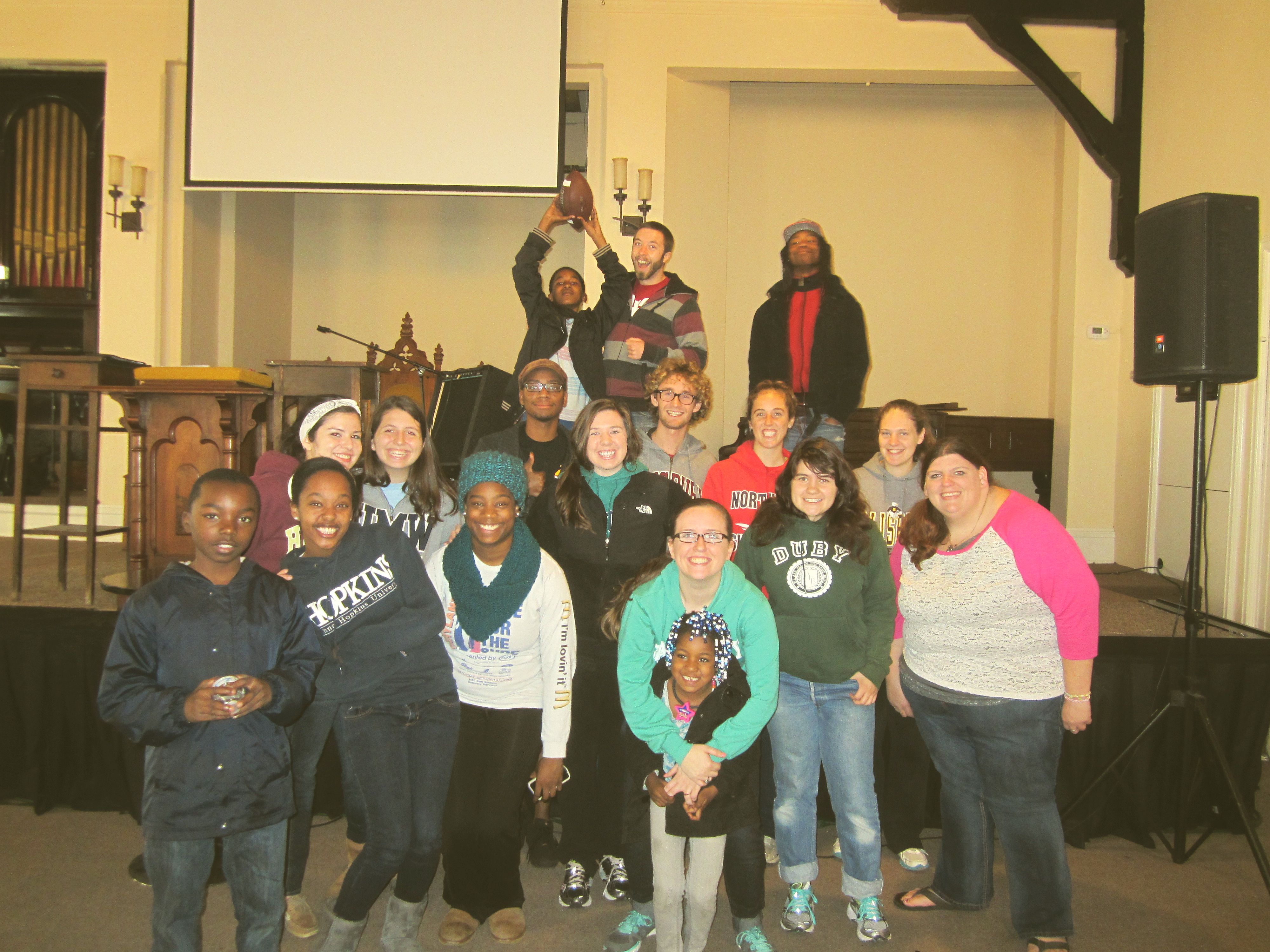
This past weekend, four years later, The Ember Cast had the privilege of hosting the Community Mentoring Program for a little service project in Baltimore. The big idea was that providing an experience for these kids who have been served to serve someone else might be a phenomenal time and it was. So impressed with the volunteers with CMP and have loved tracking with them for the past seven years or so.

Special thanks to Erin Preshoot and Serve the City Baltimore for helping connect us with the Believe in Tomorrow house.

Monday, December 19, 2011

Book Notes - Toxic Charity

Recommended to me by one of Ember's guides, this is an important book and you need to read it if you serve around the nonprofit, church outreach, or missions arenas. Much of the premise of the book lies in this statement: "Giving to those in need what they could be gaining from their own initiative may well be the kindest way to destroy people."

Two early examples in the book grabbed me. First was the notion that every time the author was involved in delivering Christmas gifts to needy families, the father in those families left the room. The experience sapped their hope and dignity. The second example was his church's transformation of a food pantry into a food co-op. This cooperative actually 'employed' the people that it served with roles ranging from managing the budget, to deciding which food to purchase to manning the 'storefront'.

I first learned of this dependency/sustainability issues with regard to global missions and poverty in the Perspectives class. When I ran student missions for a megachurch, we never engaged with a building project precisely because I wanted us to stay away from projects that might create dependency issues. This book is helping Ember get an even sharper focus when it comes to poverty and the poor and the projects we help facilitate.

Dr. Lupton also touches on controversial ideas such as whether short term missions is effective and African economist Dambisa Moyo's claims that aid to Africa pushed it into poverty. [See this for sharp contrast between this idea and Jeffrey Sachs, The End of Poverty author.] Although there probably isn't a black and white answer, understanding the tension in both of these issues is part of being a global leader today and in the future. Neither short term missions or the relationship between aid and the economic ladder will be going away anytime soon.

I agreed with a lot of what this book said, especially in terms of Ember's work with students. After reading this, I'm more convinced than ever about our primary paradigm of 'catalyst'. This paradigm seeks out the indigenous, helps people do what they are already capable of doing and tries to minimize dependency on us. Ember's also going to be hosting a discussion session on this book with some of our guides and students because, like with all important concepts, it's all about executing and contextualizing those ideas. Maybe tell you more about that later.

Here's some other quotes:

The Bahamas, it is estimated, annually receives one short-term missionary for every fifteen residents.

And unlike clothes closets that place limits on the number of visits and garments a recipient is allowed, a thrift store relies on attracting paying customers to purchase as many clothes as they are able. When the customer is necessary to ensure the business's survival, there is equity of power. And parity is the higher form of charity.

Food in our society is a chronic poverty need, not a life-threatening one. And when we respond to a chronic need as though it were a crisis, we can predict toxic results: dependency, deception, disempowerment.

If we cared about, for instance, seeing human dignity enhanced, or trusting relationships being formed, or self-sufficiency increasing, then we could employ proven methods known to accomplish these goals. We know that trust grows with accountability over time. we know that mutual exchange and legitimate negotiating is energizing (people of every culture love to bargain!) And we know that employment starts people on the path to self-reliance. We know these things. And we have the capacity to accomplish them. But the will to change our traditional charity systems - now that is the real challenge.

Dead Aid:
- get off aid
- promote entrepreneurship
- promote free trade
- invest in infrastructure
- secure reasonable loans, not grants
- encourage stable homeownership

Questions for community building work
- who are the producers
- where is the energy
- what is the win and is it achievable
- who are the principal investors
- whats the organizing mechanism

The oath for compassionate service
- never do for the poor what they have (or could have) the capacity to do for themselves
- limit one way giving to emergency situations
- strive to empower the poor through employment, lending, and investing, using grants sparingly to reinforce achievements
- subordinate self-interests to the needs of those being served
- listen closely to those you seek to help, especially to what is not being said - unspoken feelings - may contain essential clues to effective service
- above all, do no harm

Don't presume that because an area is poor and run down it is devoid of leadership and resources. In every community, there are leaders who exercise influence - informal leadership perhaps or elected officers of a not-so-well-organize neighborhood association, but leaders nonetheless.

Getting to know community leaders first requires us to listen and respect indigenous leadership and learn the dreams of the people.

The best investments, however, are not the program volunteers initiate but the capacity and connections of committed partners.

Does the proposed activity strengthen the capacity of neighborhood residents to prioritize and address their own issues?
Will the proposed activity be wealth-generating or at least self-sustaining for the community?
Do the moneys generated for and/or by the local residents remain at work in their community?
Does the proposed activity have a timetable for training and transfeering ownership to indigenous leadership?

Need does not constitute a call. [**Someone needs to unpack THIS]

Betterment does for others. Development maintains the long view and looks to enable others to do for themselves.
Betterment improves conditions. Development strengths capacity.
Betterment gives a man a fish. Development teaches a man how to fish.

Indices for measuring community health [could this be how we measure effectiveness of churches?]
- public safety
- educational improvements
- economic vitality
- homeowner/renter retention
- neighborhood associations
- spiritual vitality

The best service projects are joint ventures where the need is real and the vision compelling, the work is organized and productive, and the interests of both groups are satisfied.

If there is one take-away message that this book can offer to those in service work or supporting it, it is this: the poor, no matter how destitute, have enormous untapped capacity; find it, be inspired by it, and build upon it.

Wednesday, October 15, 2014

Instagram in Bathrooms

I've been having fun with Instagram for a few weeks now - it was birthed by someone who suggested an idea for Creative Revenue as well as me being intrigued with the platform after reading this presentation on the emerging global web. [And... yes you should check out the deck, right now.]

I'm always looking for someone who has gone from the transition from self->service->systems, an idea we talk a lot about with Ember people based on the book Toxic Charity. It's a helpful progression when we visit the ideas of better ways to help people in poverty, how to make our charity sustainable and giving dignity to those we serve. In essence, I'm on the lookout for someone who has created systems that have helped those less fortunate. And I have no doubt that someone is already doing this with a platform like Instagram.

It's another example of how easy it is to connect with others today [like Firn Howard County or this kid from the high school who sells shoes on it to over 25K followers.] Starting something from nothing is difficult work, but never been easier. Even better when someone builds a system to help others. Let me know if you know of something like this.

Photo: Brent Lutz, GCC middle school pastor, in one of my bathrooms.

Tuesday, May 10, 2016

Working - Erupting Talent: An Antidote to Toxic Charity

Working notes for an upcoming workshop. Comments and feedback welcome. Still emerging.

1. Dependency - doing something for someone that they could do for themselves
Do this enough and it becomes toxic - it doesn't help them anymore.
Interact with examples

2. Assets - something that is useful or valuable
It's easy to identify material assets
Not so easy to identify non material assets
Gifting talent skills
Interact with examples

3. Erupt
Discover -
what were you created to do?
SF/MBTI
Potential - high invitation/high challenge
Map - who do you do this with? how are they interconnected?
How - self -> serve -> systems
Missional imagination - the power of imagining

4. You could get really good at this and it would be a big value for missions.
Get good at coaching people with discovery, mapping and walking them from vision through execution.

Thursday, March 22, 2012

Serving the City - Baltimore

Ember will be participating in Serve the City Baltimore this coming Saturday for their Spring serve event. It should be a lot of fun seeing some old friends in the context of working with some on-the-ground nonprofits doing good work. It's not too late to sign up if you are free and have an interest in Baltimore.

Lots of interesting social and spiritual dynamics moving in Baltimore, including a number of high energy church plants and STC is part of a strategy for one of these plants, which is fun to see. I'm grateful for some connections we have - we will be working with a team of kids from Salisbury again and specifically learning and serving with a community development organization. Sustainable community development has been on a lot of our minds after our Toxic Charity discussion night.

There is a progression from self to serving to systems. At first, we only think about ourselves. Then we develop a habit of serving others, both in terms of events like this one, and in our lifestyles. After having a lifestyle of service, we'll start to look at the systems that can propagate certain social, economic or spiritual issues. Most of our team on Saturday is all the way on the right side of this threshold and I'm excited to see what we all learn.

If you are going to be a STC this Saturday, let me know.

Tuesday, November 27, 2012

Ember Core Curriculum - Nov 2012

Here's a draft list of our latest Core Curriculum that we attempt at walking students through - picture this list as topics that could and/or should get visited during a missions experience that Ember facilitates. This is of course within the context of mission, leadership and world cultures. There is larger set of topics within our internship, since there is more time and interaction.

1 - contextualization

2 - indigenous

3 - cultural distance

4 - person of peace

5 - redemptive analogy

6 - universal anthropological constant

7 - ethnography

8 - toxic charity

9 - creative revenue

Disclaimers:
1 - I just put these onto a document. We already used most of them in different experiences here and there but now they are on one central place.
2 - I stole #6 from this post that I read today.

Like always, steal what you want.

[Related: Missions Concepts Baseline ]

Wednesday, November 20, 2013

Ember Baltimore

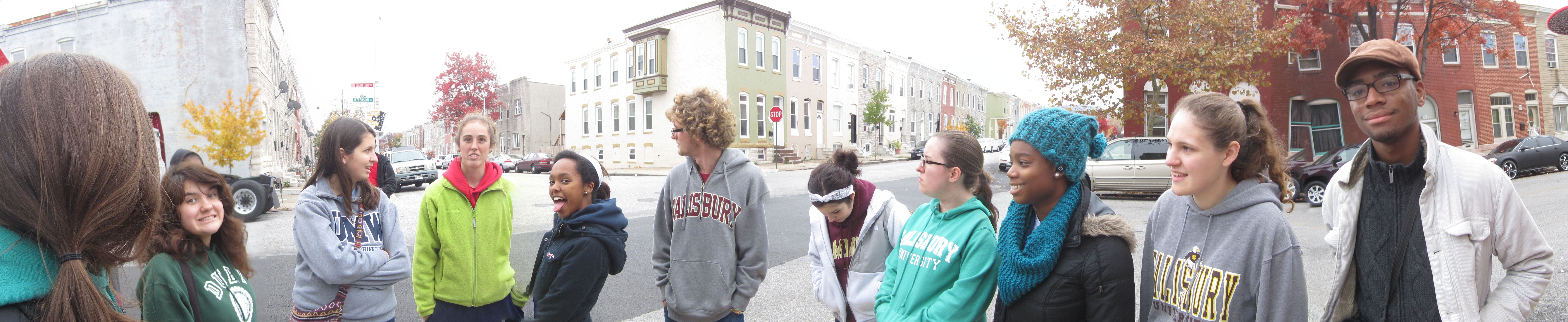
Ember facilitated a short leadership service experience last weekend based in Baltimore with some of our friends from Salisbury. If you've followed along here for a little while you know about Wendy and us sending her to AZ last summer. She's the current ring leader for a group of college kids at Salisbury who are deeply invested in a bunch of different community impact projects. Wendy approached us a few months ago about setting something up around the theme of churches with unique impact to their communities.

There seems to be a groundswell of stuff happening in Baltimore - lots of recent new churches starting and some interesting under the covers service stuff. If you follow any of this, you probably know the name Colleen Smith. She is a Baltimore legend. We first met many moons ago when she was Kt's Sunday school teacher. Fast forward through her journey with the inner city, serving at Charm City Church, hosting block parties for Mission Advance and her most recent move to work with Captivate Church. [Read the story about their inner city property.] When we thought of the theme, Colleen certainly came to mind.

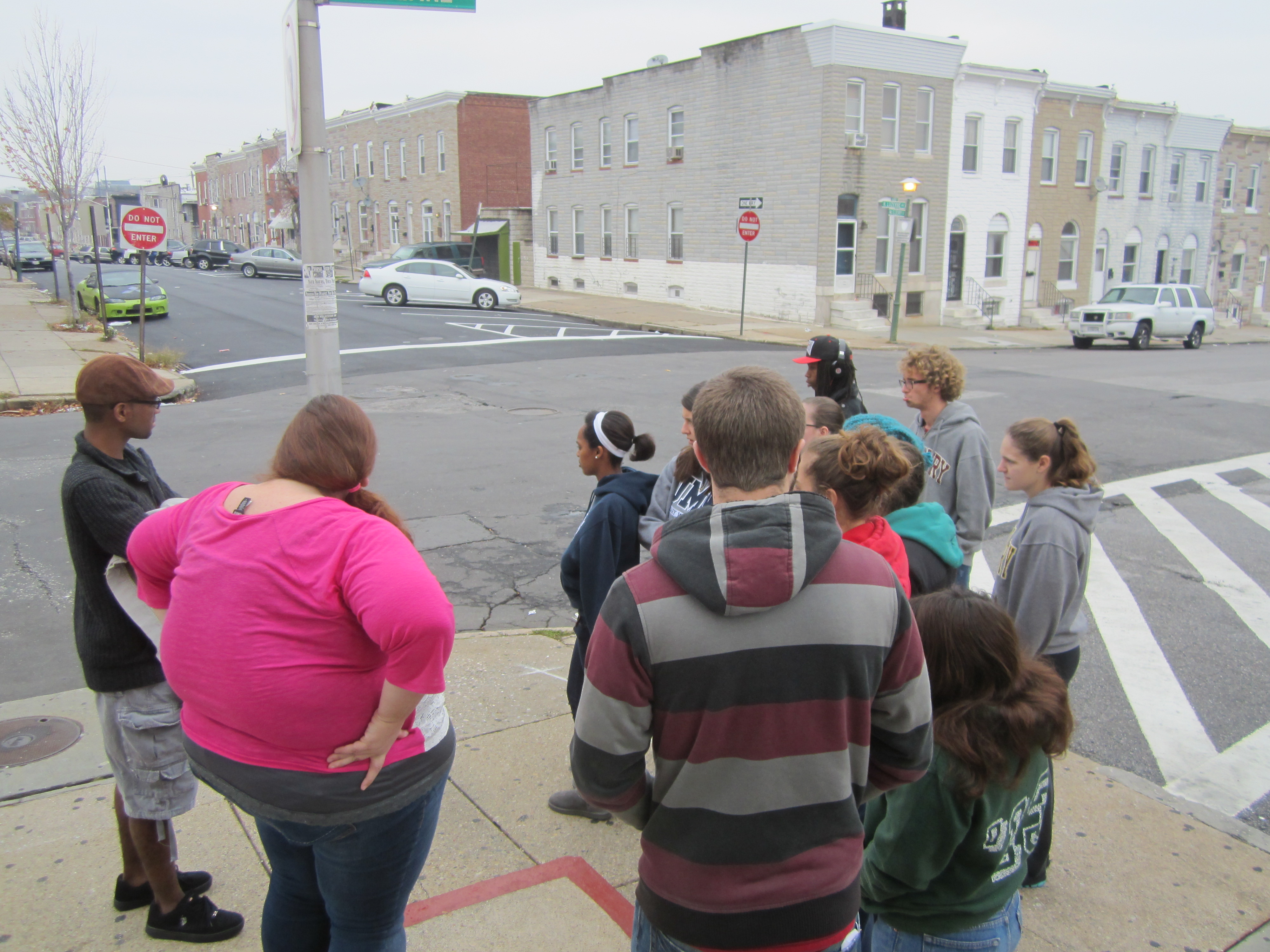
We spent the morning with Colleen and some of her kids club kids, walking with her around her community and listening to her stories, like: the police raiding her house multiple times, her now babysitting the kids of the first homeless man she ever met, and executing a bedroom makeover for one of the teenagers in her neighborhood. If you ever get a chance to walk her community with her, you'll see that she literally knows everyone and everyone knows her. Just so you know, this is her life pattern and it's amazing to see.

Around lunch time, we took some pre-made lunches to a spot where lots of homeless people gather. The original plan was that each of our team would give out 3 lunches and actually eat with homeless people. Instead, we ran out of food and spent a little time having conversations with some of the people there. Interestingly, most of our team felt a little awkward about the whole exchange. That's healthy to see because it certainly was an inequity of power [a la Toxic Charity.] It's also healthy because a number of years ago, young people I served with would have been fully satisfied by this - now, they want to serve the less fortunate while caring about their dignity. Of course, trusting your local host is one great step towards the right balance in this tension.

After lunch, we distributed some flyers around the neighborhood for Freedom Church, whose staff is in the midst of starting up a Sunday night church service. Instead of actually starting a gathering, they have hosted a number of community open forum nights to hear from people about what is good and bad about where they live and how could a church help with some of those issues. The flyers we distributed were to publicize another one of these coming up that Sunday. Absolutely love that approach.

Be encouraged about the emerging generation. They desire to connect and learn from legendary practitioners like Colleen. When they execute on their passions and principles from those that have come before them, the world will be a better place.

Thursday, December 01, 2011

DecEmber Kindling

+ Been spending a good amount of energy in getting some infrastructure up for 2012. Including recruiting meetings with some guides, getting an application process together and setting our guides up for success.
+ Tayest highly recommended Toxic Charity to me. Her words: "make the guides read this." First time getting book recommendations from college kids. Love it.
+ In July 2007, a group of high school kids traveled with me to Hungary. We went to NYC in January 2008. Traveled back to Hungary in July 2008. This spring, they finish college and a majority of them are doing missional stuff. Most fruit of your youth ministry doesn't show up for at least four years. Edit: I don't know what I was trying to say here. See Michelle's comment below.
+ The career list includes applied economics, nursing, international development, education. Whatever your field of study, missions can use it.
+ We've had a house guest for the past few months but only during the week and he's graciously donated some funds to Ember. One part of my Creative Revenue Plan. This was a nice surprise that just landed in our lap.
+ Trevin and I hang out next week with the middle school kids from Ember Ocean City. Looking forward to meeting them face to face. This student ministry has gone through 11 months of transition.

Thursday, March 01, 2012

March Kindling

+ Working on notes for an upcoming Ember Board of Directors meeting this weekend. We'll review the past few months, talk about future plans and go over finances. And have a healthy snack.
+ Been trying for months to launch some summer projects - global leadership mission trips per se. Getting a ton of 'nos' and not a lot of 'yes'. It's pretty discouraging and the momentum just doesn't seem to be there for one reason or another. The emotional rollercoaster tied to something you started is really fun.
+ Reading Toxic Charity threw us. In many, many ways. Probably intertwined with the above.
+ The girls finished 2 months of playing basketball in Upwards. They had a great time and the level of 'competitive' play fit our family very well [read: we don't do sports]. I think it's funny that it's meant to be an 'outreach' ministry.
+ Deanna is still doing well navigating diabetes. She has almost lost 30 pounds and continues to be diligent about what she eats and getting exercise. So proud of her.
+ Been thinking a lot about church, extended family, reproduction and discipleship - in connected and discrete ways. Must be the people I follow on twitter.
+ Loving the team that is helping out with a student missions team prep experience taking place in April. So much talent and passion.
+ A college student told me last night that she declined a summer missions trip with a standard college ministries because she didn't want to be led, she wanted to lead. Did you catch that?

Monday, December 14, 2015

The Well's Annual Christmas Toy Store

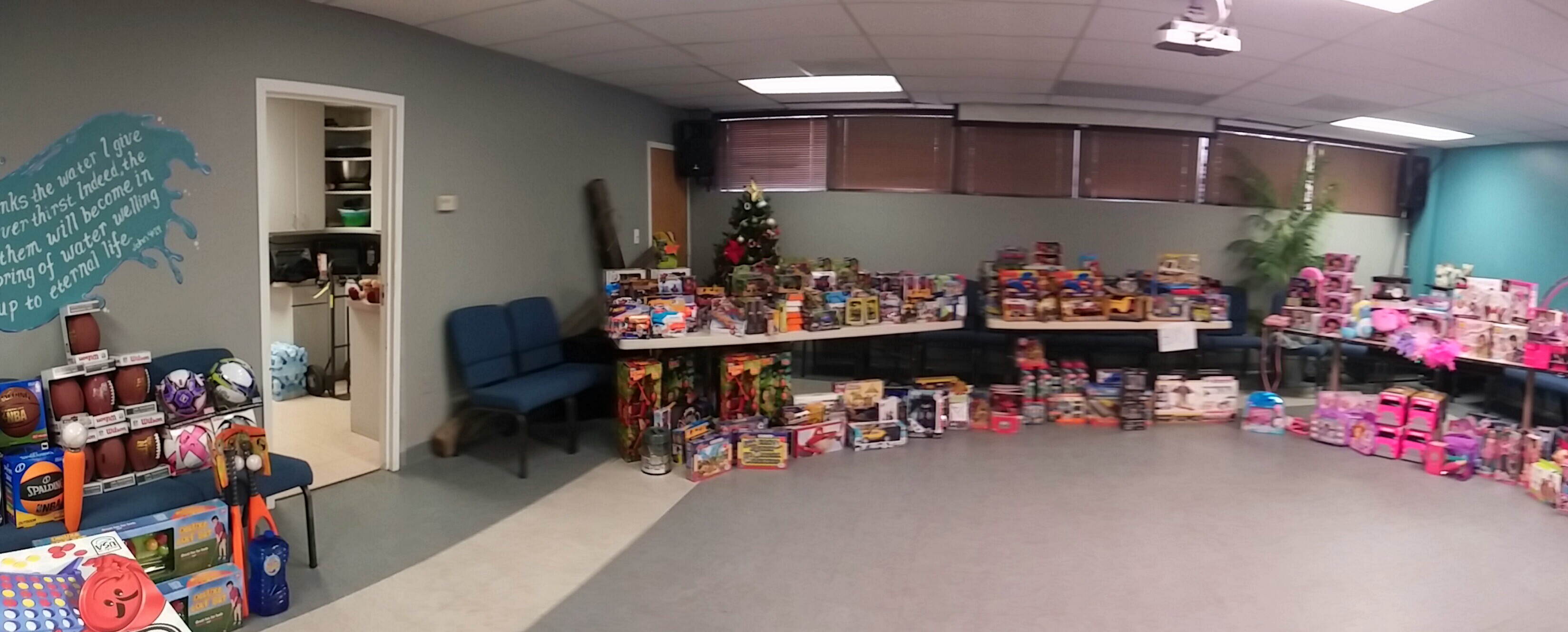
This is the before view of the annual discount toy store hosted by The Well in Curtis Bay. As part of the Christmas season, we served there as a family this past Saturday. I've been continually impressed by Mandy and her team at The Well - they've hosted two service experiences for us so far, and Saturday's toy store was no exception.

If you've read either Toxic Charity or When Helping Hurts but need to see it in real life, The Well has lots of good examples. The toy store is a textbook example - it is a discount store, people don't get the toys for free. They register their information, which includes their children and ages, pay for the toys, get assigned a personal shopper and go shopping. Once they have their toys, they get them gift wrapped. It's an annual tradition eight years running now and this year, when we got there 2 hours before it opened, there were already 15 people in line. They also have a small set of people that help out with preschool to middle school kids in case parents don't want to shop with them.

Lots of different church teams were there too to help out and I loved meeting some of those leaders - these are the like-minded people you want to hang with. My favorite part of the day was walking around the neighborhood with a local pastor - that story is for another day.

Monday, March 24, 2014

14-15 ProtoGuides

Last weekend, I had lunch with the upcoming Ember ProtoGuides. This is the next iteration of ProtoGuides that start officially this coming September. It's an amazing group of ladies [all girls, the boys will come around eventually...] - one is traveling to Kenya this summer, another one started a Christian club at her high school, and the third is on my France team as well as working on a project with Appalachia Service Club this summer. I think there is at least one cross cultural missionary and/or church planter in the mix, but more on them later. For lunch, my purpose was just to listen to them - to hear what they were interested in learning, how Ember could launch them and what kinds of projects they wanted to be involved in. It was a fascinating conversation and touched on ideas such as:

+ Global Women's Rights.
+ The growth of churches or spiritual communities.
+ Experiencing and learning from different expressions of Church.
+ Connecting and building relationships with different missions-type people around the world.
+ How to plan missional experiences.
+ Sustainable community development and dependency issues like what is covered in Toxic Charity.
+ Social movements, demographics and context like what is covered in Church in the Making.

The ProtoGuide experience is at the core of what Ember does and what makes us unique. And of course, working with students like these is a huge privilege for us.

Wednesday, November 07, 2012

Self - Serve - Systems - Capacity

In November of 2009, Rob Wegner was gracious enough to connect with me over the phone and share some of what Granger was doing with their global strategy. I've tracked with them ever since and always been impressed with their culture, strategy and way they measure success. Not to mention their new normal.

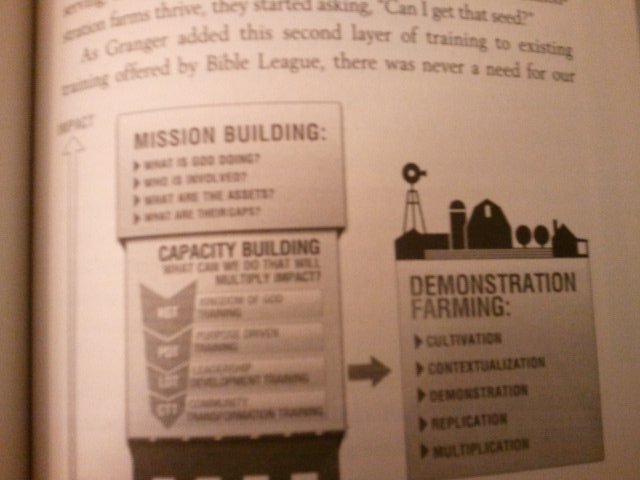
Back then, Rob sent me a prototype diagram of their idea for mission/missions and how it relates to the ideas of dependency, paternalism and toxic charity. This image to the right is what they just published in the book Missional Moves.

The points under Mission Building:
What is God doing?
Who is involved?
What are the assets?
What are the gaps?

The points under Demonstration Farming:
Cultivation
Contextualization
Demonstration
Replication
Multiplication

Think through the diagram deep enough and you'll find that it gives some great filters and perspective on doing mission and trying not to create bad dependencies with the people you are trying to serve. Even as an computer engineer living in the suburbs, I love the farm example. Farmers can't grow the seed but they can do their best to create an environment for growth.

At Ember, we've thought a lot about the spectrum of "self -> service -> systems." We've also thought about how do to best teach this to students, how to get them involved in thinking about systems and what filters we can use to determine projects that fit this paradigm. Maybe the last piece of that spectrum is 'capacity.'

Monday, July 03, 2017

Italy Monday

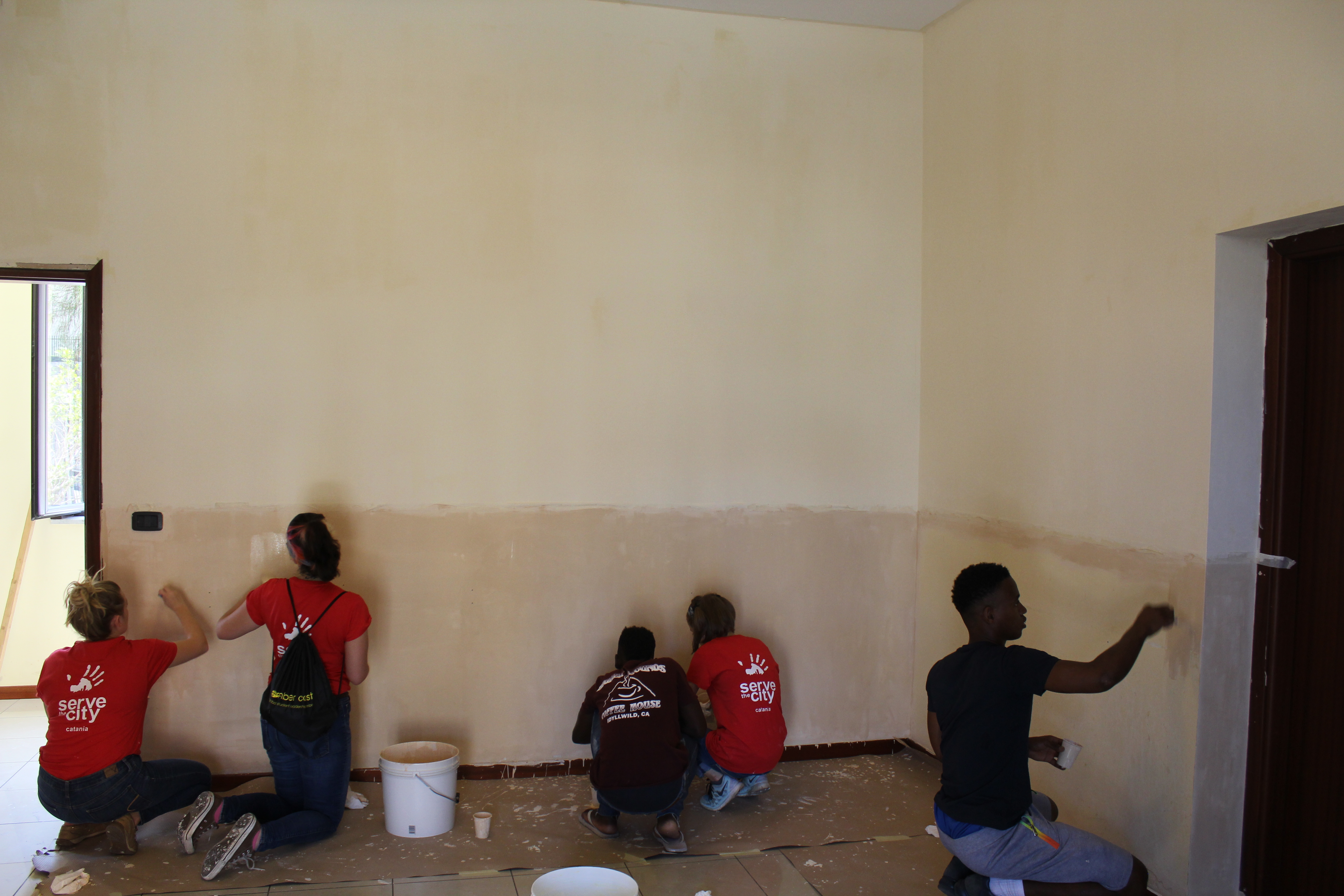
We spent a lot of time on Monday at one of the refugee 'camps' on the north side of the city. In this specific situation, the camp is not a campsite with hundreds of tents like you see in the news. Instead, it typically is an older hostel or similar building with a kitchen, dorms and common areas. Today, our task was to paint at least a few of the rooms, putting a fresh coat in rooms that needed a bit of freshening up.

+ This camp was spotless, meaning that they guys that live here take a lot of pride in where they live.
+ These kinds of projects - painting, building a church, carving a basketball court out of a rock field, etc. - are done a lot in the student missions realm. You could make the case that some or most of these projects are done just to give student teams work to do. There are also a myriad of issues dealing with dependency, ownership and economic models. This was not the case today and I should be more thoughtful about my opinions about this kind of thing, maybe.
+ In our case, once we got started, a ton of the guys that lived here jumped in and wanted to do it themselves. So we actually painted a little and helped the guys do it on their own.
+ If your worldview doesn't include the idea that poor or marginalized people actually want to do things for themselves, either read Toxic Charity or come to Italy to see it for yourself. Be warned though, once you see it, you'll never look at serving people in the same way.
+ Every guy here has a smart phone and a ton of music on it. Both are staples of their culture. Sidebar: There was music playing all day and at one point, a guy from Ivory Coast and I traded choosing what to play - I played some country music. A Chinese man sitting with guy from the Ivory Coast, in Italy, listening to Tim McGraw.

Monday, March 26, 2012

Ember Darley Park

The Ember Cast helped facilitate a service and leadership experience last Saturday for some students at Salisbury Uni via Serve the City Baltimore's Spring service day. If you've been reading along, you know that we've worked with TayEst and her clan of college students for a few years and that they've been doing some pretty remarkable things at school. A few months ago, Taylor asked if Ember could put together a service and leadership experience where they could learn about sustainable community development, based on a desire to learn more about these kinds of principles like outlined in Toxic Charity. I asked my good friend Patrick Donohue if there was a possibility that this could work out for the Serve the City Spring service day and we got Saturday, which worked out perfectly.

Our team heard some teaching about the context of Darley Park, one of the most at risk communities in Baltimore, and go to work with Dorothy, one of the most senior residents of this community that decided that she was going to stay, even in the midst of the community being overtaken by bad people. Our big task, chosen by Dorothy, was to clean all the trash from two alleyways. In and of itself, the actual task would have been pretty good. Knowing that it was chosen by someone who is indigenous to the community [Dorothy] and hearing about the context of Darley Park made it a great project.

Here's some other items of note:
::: Our host, besides Dorothy, was one of the leaders of The Transformational Team, a partnership between the police department, local congregations and local nonprofits. Take special note at the Indicators for Transformation section. Perhaps this is how we should measure effectiveness of our churches.
::: Darley Park context
+ 1 church for 300 people in Baltimore. More pastors and deacons in the city than drug dealers but the mindset of the city is still owned by evil.
+ The level of darkness is greater than the level of prayer.
+ Push back the dark, then minister to needs.
+ Spiritual and cultural initiatives this summer in Darley Park:
art project
jazz on Friday nights
a prayer alter on a porch on every block
+ Is 62:4 The idea of married to the land.
::: There was a police car with us the whole day. I was told later this was by intention.
::: Two key concepts for next generation global leaders: systems and people of peace.
+ Systems - think systemic and systematic. Apply change to the system instead of just the circumstance.
+ People of peace - Dorothy was one of 6 elderly ladies that had a lot of influence in the community. Dorothy is a Christian so that one aspect of a person of peace doesn't quite fit her.
+ Neither of these concepts is taught enough to our high school or college kids.
::: Patrick Donohue, who runs Serve the City Baltimore and is planting Mercy and Grace for the City, is a phenomenal leader.
::: Grace Church used this service day as a launching point for their student teams as part of an overall preparation plan. Mission teams are stereotypically underprepared. This event helped teams grow together before they reach the field.
::: My 11 year old smelled pot for the first time. It didn't go unexplained.

More pictures

Monday, September 17, 2012

Vision Team Prep - Team 1006

I spent about an hour late one evening last week with 3 people who comprise a missions vision team headed to East Asia [vague details on purpose] early next month. From my experience observing global strategies and reading vision reports, vision teams function best when they are prepared slightly differently than your normal missions trip [although we all know there is no normal missions experience.] Vision teams are responsible for communicating how a partnership will work, what teams going can expect, determining how the partnership will be successful, and being advocates and liaisons for their overseas hosts - no big deal right.

We centered around three paradigms for their team.
1 - be a mapmaker - the mapmaker role gives you clarity for understanding context.
2 - empower the indigenous - how can the whole partnership empower the people best to reach their culture.
3 - find the people of peace - the best influencers.

These fun topics, and more, also came up:
Perspectives was a major catalyst - growing a heart for the world.
Sending versus going.
Relational versus task oriented missions experience.
Toxic Charity.
Travel logistics - like always scan an image of your passport and then email it to yourself.