And we love Jesus
Futuristic
"Wouldn't it be great if . . ." You are the kind of person who loves to peer over the horizon. The future fascinates you. As if it were projected on the wall, you see in detail what the future might hold, and this detailed picture keeps pulling you forward, into tomorrow. While the exact content of the picture will depend on your other strengths and interests -- a better product, a better team, a better life, or a better world -- it will always be inspirational to you. You are a dreamer who sees visions of what could be and who cherishes those visions. When the present proves too frustrating and the people around you too pragmatic, you conjure up your visions of the future and they energize you. They can energize others, too. In fact, very often people look to you to describe your visions of the future. They want a picture that can raise their sights and thereby their spirits. You can paint it for them. Practice. Choose your words carefully. Make the picture as vivid as possible. People will want to latch on to the hope you bring.
Action Items
- Choose roles in which you can contribute your ideas about the future. For example, you might excel in entrepreneurial or start-up situations.
- Take time to think about the future. The more time you spend considering your ideas about the future, the more vivid your ideas will become. The more vivid your ideas, the more persuasive you will be.
- Seek audiences who appreciate your ideas for the future. They will expect you to make these ideas a reality, and these expectations will motivate you.
- Motivate your colleagues with things that can be done in the future. For example, include some Futuristic ideas in each of your group meetings, or write your vision for the future and share it with your colleagues.
- Find a friend or colleague who possesses this theme. Set aside an hour a month for "future" discussions. Together you can push each other to greater heights of creativity and vividness.
Be ready to:
- When you have an opportunity to describe the future in a speech, an article, or a presentation, use as much detail as possible, because not everyone can intuitively fill the gaps like you can.
- Partner with someone with a strong Activator theme. This person can remind you that you do not discover the future; you create it with the actions that you take today.
Woo
Woo stands for winning others over. You enjoy the challenge of meeting new people and getting them to like you. Strangers are rarely intimidating to you. On the contrary, strangers can be energizing. You are drawn to them. You want to learn their names, ask them questions, and find some area of common interest so that you can strike up a conversation and build rapport. Some people shy away from starting up conversations because they worry about running out of things to say. You don't. Not only are you rarely at a loss for words; you actually enjoy initiating with strangers because you derive satisfaction from breaking the ice and making a connection. Once that connection is made, you are quite happy to wrap it up and move on. There are new people to meet, new rooms to work, new crowds to mingle in. In your world there are no strangers, only friends you haven't met yet -- lots of them.
Action Items
- Choose a job in which you can interact with many people over the course of a day.
- Deliberately build the network of people who know you. Tend to it by checking in with each person at least once a month.
- Join local organizations, volunteer for boards, and find out how to get on the social lists of the influential people where you live.
- Learn the names of as many people as you can. Build a card file of the people you know and add names as you become acquainted. Include a snippet of personal information -- such as their birthday, favorite color, hobby, or favorite sports team.
- Consider running for an elected office. You are a natural campaigner. Understand, however, that you might prefer the campaigning more than holding the office.
- Recognize that your ability to get people to like you is very valuable. Do not be afraid to use it to make things happen.
- In social situations, take responsibility for helping put more reserved people at ease.
- Practice ways to charm and engage others. For example, research people before you meet them so you can find the common ground.
Be ready to:
- Find the right words to explain to people that networking is part of your style. If you don't claim this theme, others might mistake it for insincerity and wonder why you are being so friendly.
- Partner with someone with a strong Relator or Empathy theme. This person can solidify the relationships that you begin.
 I've followed the International Mentoring Network for a while now. It "is a custom-made mentoring process and peer network. The Mentoring Process is designed to both offer a full-bodied foretaste of mission and ministry in the 21st century and to create ongoing conversation and partnership in mission and ministry," the brainchild of Alex McManus. One of the cool things they have done is a series of online conversations [another way Alex has leveraged the medium of blogs and comments for immediate feedback and dialog.]
  I'm going to start a series of posts [I think] that outline my specific StrengthsFinder strengths with some thoughts about them. Feel free to chime in if you know me.
Developer
You see the potential in others. Very often, in fact, potential is all you see. In your view no individual is fully formed. On the contrary, each individual is a work in progress, alive with possibilities. And you are drawn toward people for this very reason. When you interact with others, your goal is to help them experience success. You look for ways to challenge them. You devise interesting experiences that can stretch them and help them grow. And all the while you are on the lookout for the signs of growth -- a new behavior learned or modified, a slight improvement in a skill, a glimpse of excellence or of "flow" where previously there were only halting steps. For you these small increments -- invisible to some -- are clear signs of potential being realized. These signs of growth in others are your fuel. They bring you strength and satisfaction. Over time many will seek you out for help and encouragement because on some level they know that your helpfulness is both genuine and fulfilling to you.
Action Items
- Make a list of the people you have helped learn and grow. Look at the list often and remind yourself of the effect you have had on the world.
- Seek roles in which your primary responsibilities will be in facilitating growth. Teaching, coaching, or managing roles might prove especially satisfying for you.
- Notice when your associates grow, and tell them. Be specific about what you saw. Your detailed observations of their growth will enhance their growth.
- Make a list of the people you would like to help develop. Write what you would consider to be each person's strengths. Schedule time to meet with each of them regularly -- even if for only 15 minutes -- and make a point of discussing both their goals and their strengths.
- Identify the mentor or mentors who recognized something special inside you. Take the time to thank them for helping you develop, even if this means tracking down a former schoolteacher and sending him or her a letter.
- Make a plan to develop your own strengths based on a detailed understanding of your talents, knowledge, and skills.
Be ready to:
- Partner with someone with a strong Individualization theme. This person can help you see where each person's greatest strengths lie. Without this help, your Developer instincts might lead you to encourage people to grow in areas in which they lack real strength.
- Carefully avoid supporting someone who is consistently struggling in his or her role. In such instances, the most developmental action you can take is to encourage him or her to find a different role -- a role that fits.
 Friday night at the Warehouse.
Erwin: We have very unashamedly gone after what's called the innovators and early adopters on the adoctored categorization. Are you familiar with that grid?Oh... and here is another...
Infuze: No.
Erwin: There's a sociological grid - not created by Christians, just a part of normal sociology - that says that 2.2% of the population are the Innovators and 12.4% are Early Adopters. 34.1 are called Early Majority. 34.1 are Late Majority and 12.4 are what are called Late Adopters. 2.2% are called Laggers, but that sounds mean so we call them Nostalgics. It's just a natural bell curve.
Now, I think one of the cultural dilemmas in Christianity is that for the last 50 years, Christianity has been dominantly led by people on the far right end of the spectrum - the Nostalgics and Late Adopters. I just met with Larry King. I mean, I didn't meet with him but I was at an event where I got to talk with him. And the first thing he says to me is, "John MacArthur. He can't decide whether it's 1936 or 1937." And I thought here's a guy who's like eighty years old. You know, it's Larry King.
But I was so embarrassed because that's the reality that the Christian leadership is the Late Adopters or Laggers. So all we tend to reach are up to this Late Majority. Megachurches tend to reach this 70% - the middle Early Majority to Late Majority. These are the people who love clustering in big groups and they want to feel they are a part of the majority or they're not safe. Does that make sense?
Infuze: Absolutely.
Erwin: So what happened is that this movement of Jesus Christ, which started at the far left end... I mean, the book of Acts was the Innovators and the Early Adopters. These guys were risking everything. They shifted the sacred day from Saturday to Sunday. These guys were not connected to tradition or the past. They walked away from everything.
So they may have been fishermen, tax collectors and doctors but they had a certain connectedness. They were all willing to begin the new before anyone else thought that was right. So what's happened is that the church has lost this front 15% because, for one, it hasn't called people to vocational ministry who are at that end, who are willing to reach those people because they're hardest to reach. They disproportionally cluster in major cosmopolitan cities, which is why I'm in L.A. because L.A. is the capital of the future.
Erwin: I was just in South Africa and in some of the largest churches in the whole country. The largest is 18,000 people and they just built an exact replica of Willow Creek's sanctuary with 7,200 seats.
Infuze: Seriously?
Erwin: Yeah, they hired Willow Creek's architects and a frisbee throw away, you have informal settlements of people living in cardboard boxes and in bushes. So they're translating the wrong part of what we're doing well. I just thought, "Oh what a metaphor for the dilemma we have and the Western influence in the world."
 Ok so most of you know the deal around here - we plan mission experiences mostly in light of strategic connections we have from the mother church already. Meaning that for student teams, our travel preferences take a back seat and we give a really strong preference to a connection with someone GCC has already partnered with in another area of the world. I'm proud to say in the last three summers, 100% of our overseas student teams have served with GCC families. [Well its only been three teams but still. 100% baby!] The benefits for this kind of partnership make it a no-brainer.
...told me about a church in Germany that applies the biblical concepts of sabbath and jubilee. Every 7th year they have a sabbatical, during which the community refrains from starting new projects. In the 50th year or their existence they shut down the whole church, sell everthing they have (building, music equipment), and release these resources into new start-ups. Cool. Dissolving your own structures is one way to guarantee sustainability and prevent traditionalism.
- 98% of Italians claim Roman Catholicism as their faith/religion (though far fewer attend mass), but perhaps the true religion of Italy is the Occult.
- Italy is steeped in the Occult and Satanism. There are over 100,000 full-time consulting magicians (Occult) in Italy. That is three times the number of Catholic priests and 600 times the number of trained pastors in this nation.
- Evangelicals make up less than 1% of the population; there is only one trained pastor for every 350,000 people. The Italian church is weak and divided.

As we’ve seen in each of these roles, the critical skill is not balance, but its inverse, intentional imbalance. The great manager bets that he will prevail by magnifying, emphasizing and then capitalizing on each employee’s uniqueness. The great leader comes to a conclusion about his core customer, his organization’s strength, its core score, and the actions he will commit to right now, and then, in the service of clarity, banishes from his thought and conversation almost everything else...
It takes insight to focus in this way, and discipline, and since lopsided bets can be scary, courage.
Yunus is the father of microlending, one of the most potent tools of ours or any other times. Microlending was long dismissed by the powers that be (the World Bank among them) as being a peanuts idea. Big Loans for Big Projects was the ticket. Yup, big loans for big projects was the ticket for a few good things ... and an unimaginable amount of corruption.Related : News article, Wikipedia entry.
Yunus started Grameen Bank in Bangladesh. A typical first loan is $15. After many a trial and many an error, Grameen ended up granting over 90% of its loans to women. (Women = Reliable. Men = Unreliable.) Lending primarily to women in a Muslim country was, to say the least, no mean feat. Yet Yunus persisted.
A few Yunusisms, from his marvelous 1999 book, Banker to the Poor:
"It's not people who aren't credit-worthy. It's banks that aren't people worthy."
"Conventional banks ask their clients to come to their office. It's a terrifying place for the poor and illiterate. ... The entire Grameen Bank system runs on the principle that people should not come to the bank, the bank should go to the people. ... If any staff member is seen in the office, it should be taken as a violation of the rules of the Grameen Bank. ... It is essential that [those setting up a new village Branch] have no office and no place to stay. The reason is to make us as different as possible from government officials."
"The Grameen loan is not simply cash. It becomes a kind of ticket to self-discovery and self-exploration."
And this from a Client's husband:
"There is one thing [I don't like about Grameen]. I used to enjoy beating my wife. But the Group came to me and argued with me and shouted at me. Who gave them the right to shout at me? The borrowing group threatened they will get really mean if I beat my wife again."
When we arrived at 5:30 they were just setting up plastic chairs on the sidewalk out in front of their house. Cars, buses and people were rushing by. The noise level was incredibly high and distracting. I kept wondering how do they have "church" in that kind of environment? Well that is their environment, their world. They live in a constant state of noise and have learned to live their lives without becoming distracted by what is to me a high noise level.
Once I began to get over the noise I was introduced to a new believer, Jessenia, who was just baptized a week ago. While waiting for things to get started, I asked her to share with me how she came to know the Lord. With a big smile on her face she related to me that she had had a dream where a beautiful Jesus was calling out to her and saying "come to me..." She awoke and gave her heart to Jesus overwhelmed by the love she had sensed in her dream. I have long ago stopped trying to figure out the mysteries of God's dealings with a world He loves so much. It seems He refuses to fit inside all the little boxes I have for Him!
By then a sufficient number of youth had gathered to be able to start. Right as we were cranking up, part of a gang of 5-6 rough-looking youth walked through the middle of our meeting. The hairs on my head stood up thinking we would be held up, but they apparently had better things to do with their time than interupt a church meeting, so they moved on without incidence.
Two large speakers were set up in a window and loud music began to pour out of them from inside the house sound system. This is what we sang to and believe me we were louder than the street noise! With the music cranked up and our "off key" singing, it was enough to attract the attention of quite a crowd of people in the area. There were about as many by-standers as there were 'church people' present. Talk about a seeker-sensitive service--this defines the term!
And he's concerned with one more thing: the fact that more than 850 million people around the world can't read. Wood is the founder of Room to Read, a nonprofit group that builds schools and libraries for children in Asia. "There are nearly 1 billion illiterate people in the world," says Wood. "My goal is to help 10 million children achieve literacy by 2010."Link.
Without question, he has a long way to go. But it's hard to argue with the results so far. In just three years, Room to Read has established 300 school libraries, built 25 schools, donated more than 140,000 books, set up 11 computer rooms, and awarded 100 scholarships to fund the education of young girls. Most of this work has taken place in Nepal, but Room to Read is also building schools and libraries in Vietnam, and there are plans to expand into Cambodia and India. As Wood speaks, a cargo ship steams from San Francisco to Ho Chi Minh City, carrying more than 30,000 books such as Clifford the Big Red Dog, Mary Had a Little Lamb, and Math in Action. In a few weeks, Nguyen Hoai Nam, Room to Read's program director for Vietnam, will meet the ship and, in partnership with the city's Department of Education and Training, deliver books to schools.
Still, 10 million children? Wood is unfazed. Achieving that goal means doubling the number of kids his organization reaches every year for the next eight years. "Why is that not possible?" he asks. "Microsoft doubled every year in its early days. Cisco more than doubled every year. I worked in a lot of different organizations at Microsoft that doubled year to year, and none of us thought it was incredible."
In the midst of the financial carnage and heartaches of the airline business, there’s one company that keeps growing, keeps creating jobs, and keeps generating wealth. And that, of course, is Southwest.
Southwest didn't achieve these results because its fares were a little lower than Delta's or its service was a little friendlier than United's. It achieved those results because it re-imagined what it meant to be an airline. If you ask Herb Kelleher what business he’s in, he won’t say the airline business or the transportation business. He’ll say Southwest is in the freedom business.
The purpose of Southwest is to democratize the skies-to make it as easy and affordable for rank-and-file Americans to travel as it is for the well-to-do. That’s a pretty commonplace idea today-but largely because Southwest fought the entrenched conventions of the industry so doggedly in pursuit of that purpose. Its unrivaled success is based on its unique sense of mission rather than any breakthrough technology or unprecedented business insight.
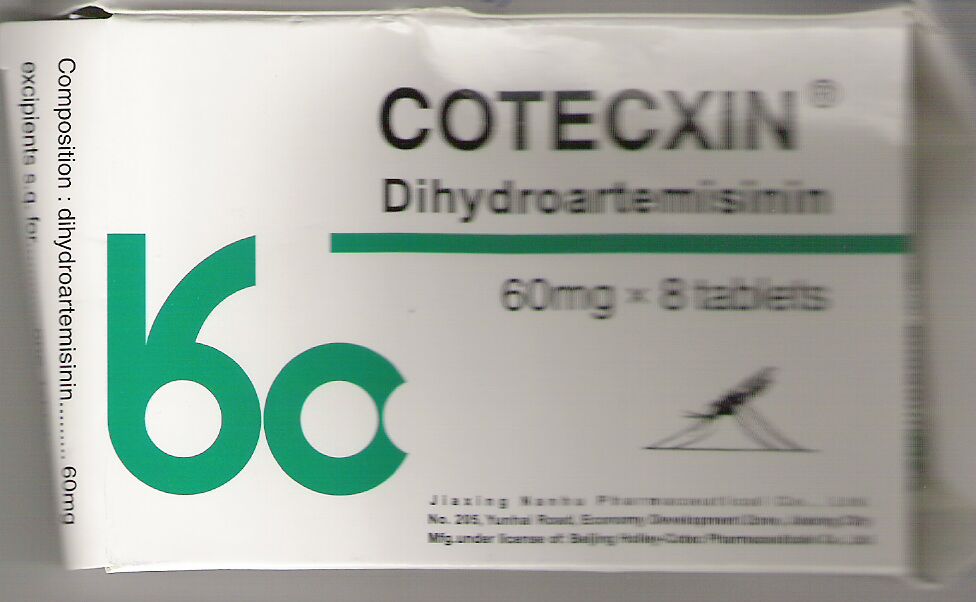 The Washington Post has an interesting article in today's [Sunday the 8th] Magazine section talking about the US Army's recent efforts to treat malaria.
 - claims more than 1 million lives globally each year, 90 percent of them in sub-Saharan Africa, the vast majority children. Young survivors are frequently left with cognitive damage that can cause them to fail at school and work. African adults, while having lived long enough to gain some immunity against malaria's worst effects, often lose weeks of work while recovering from the disease. Western economists estimate that malaria results in an economic loss of $12 billion annually in Africa, the continent least able to foot the bill for fighting the disease.
- In Kenya, the most reliable antimalarial drugs cost about $6, or about four days' earnings for the average Kenyan. The drugs are generally unavailable in shops. Accessible antimalarials in Kenya generally mean cheap antimalarials -- usually ranging from 10 to 30 Kenyan shillings, or roughly 15 to 40 cents -- but they are also the least effective treatments, as the disease has become wholly resistant to many of these drugs once famously effective.
- Heppner [the Army researcher] and his Army colleagues remain serious players in the vaccine research field only because of the largess of other groups. His department received $2.7 million last year from the U.S. Agency for International Development and $1 million from its vaccine collaborator GlaxoSmithKline. But his most critical source of funding in recent years has been the private nonprofit Malaria Vaccine Initiative, created with a grant from the Gates Foundation in 1999.
- Worldwide funding for malaria, last calculated by the research group Malaria R&D in 2004, stood at $323.4 million. Columbia University economist Jeffrey Sachs estimates it would take $3 billion to vaccinate every African child who needs it.
 In the spirit of last year's State of the 03 post and implementing this idea of a core score....Chapter 4 – The One Thing You Need to Know: Great Leading
Great managers discover what is unique about each person and capitalize on this uniqueness. Great managers serve as intermediaries between the individual and the company, and like all intermediaries, they perform their role well only when they perform it one on one.
Great leaders must play a different role. Their job is to rally people toward a better future, and as such, they are not intermediaries. They are instigators. Driven by their compulsion for a better future, their challenge is to do everything in their power to get other people to join together to make this future comes true. So, by definition, they will perform this role well only when they find a way to make many people, regardless of each person's uniqueness, excited by and confident in this better future. If, through their words, actions, images, pictures and scores, they can tap into those things we all share, they will succeed as leaders. If they can't, they will struggle.
Discover What Is Universal and Capitalize On It.
Anthropologist Donald Brown – Human Universals
1. Fear of death – the need for security
2. Fear of the outsider – the need for community
3. Fear of the future – the need for clarity
We are aware that the future is unstable, unknown and therefore potentially dangerous.
This is why, in every society, we give prestige to those people who claim to be able to predict the future.
4. Fear of chaos – the need for authority
Two universals reveal this fear – first, every society has devised its own story of how the world came to be and in each story, in each creation myth, the world was created out of chaos. Second, one of the most universal of human traits is our need to classify things. Out of our desire for order springs out need for authority. Every society has a word for leader.
5. Fear of insignificance – the need for respect
Usually the need for respect is attended to by an intermediary, by someone who deals with people one-on-one. Today, in the world of work, this intermediary role is played most effectively by the manager, not the leader.
The job of a leader is not to win people's loyalty. The job of a leader is to rally people toward a better future. Winning people's loyalty should be a means to this end, not the end itself. If you have grappled with our fear of the future and somehow neutralize it, even turn it into something positive, you will have positioned yourself to pull off something truly significant as a leader.
[The job of a leader is not based on universal 1, 2, 4 or 5. It is about #3 - leading is about the fear of the future.]
The problem for you, the modern-day leader, is that you traffic in the unknown. All of your conversations concern the unknown, the future, and the possibilities you see there. If you are going to succeed as a leader, you simply must find a way to engage our fear of the unknown and turn it into spiritedness. If great managers are catalysts, speeding up the reaction between the individuals talents and the company's goals, then great leaders are alchemists. Somehow they are able to transform our fear of the unknown into confidence in the future.
By far the most effective way to turn fear into confidence is to be clear; to define the future in such vivid terms, through your actions, words, images, pictures, heroes, and scores, that we can all see where you, and thus we, are headed. Clarity is the antidote to anxiety and therefore clarity is the preoccupation of the effective leader. If you do nothing else as a leader, be clear.
This doesn't mean that you describe in precise detail all of your tactics and plans and deadlines. On the contrary, as we'll see, to keep your followers challenged and engaged, you must allow them plenty of white space to invest, create and experiment. But it does mean that your ability to be clear and your followers feelings of confidence are causally linked.
1. Who Do We Serve?
You the leader must be clear about whom you are choosing to serve because we, your followers, require it of you. When you do this with clarity, you give us confidence – confidence in our judgment, confidence in our decisions, and ultimately confidence in our ability to know where to look to determine if we have fulfilled our mission.
A leader must not be clear on all points and that one of the areas in which he should allow significant ambiguity is in the strategies and tactics selected by his employees. Yes, he should be clear about whom he is trying to serve, but then he must actively encourage his employees to devise novel and as yet unproven ways of serving them. This is the only way to keep the organization alive.
2. What Is Our Core Strength?
3. What Is Our Core Score?
By zeroing in on one core score leaders brought clarity to their people.
Ideally, this score will be a leading indicator of success, such as employee engagement or employee safety or crime, rather than a trailing indicator, such as sales or profit or tax revenues, but from the perspective of your followers, what matters most is that it's clear.
4. What Actions Can We Take Today?
Two distinct types of actions – systematic and symbolic
Systematic action – interrupts our day-to-day routines and forces us to become involved in new activities. It disrupts us.
Symbolic action – doesn't alter what we do, it just grabs our attention. It distracts us, thereby giving us something new and vivid on which to focus.
1. Take time to reflect
2. Select Your Heroes with Great Care
You must remember that the employees you choose to celebrate will reveal the future you are trying to create. When you bring an employee up onstage and praise her performance, this has a management impact. It will make this particular employee feel appreciated and will motivate her to do even better. However, it will also, if you do it well, have a leadership impact. If you can tell us, your followers, exactly what she did to deserve this recognition, if you can show us the people she served, or the strength she embodies or the scores she achieved, or the actions she took, you will make everything much clearer.
3. Practice
Effective leaders don't have to be passionate. They don't have to be charming. They don't have to be brilliant. They don't have to possess the common touch. They don't have to be great speakers. What they must be is clear. Above all else, they must never forget the truth that of all the human universals – our need for security, for community, for clarity, for authority, and for respect – our need for clarity, when met, is the most likely to engender in us confidence, persistence, resilience and creativity.
Show us clearly whom we should seek to serve, show us where our core strength lies, show us which score we should focus on and which actions must be taken today, and we will reward you by working our hearts out to make our better future come true.
 From the article entitled "How Many Lightbulbs Does it Take to Change the World? One. And You're Looking At It."
What that means is that if every one of 110 million American households bought just one ice-cream-cone bulb, took it home, and screwed it in the place of an ordinary 60-watt bulb, the energy saved would be enough to power a city of 1.5 million people. One bulb swapped out, enough electricity saved to power all the homes in Delaware and Rhode Island. In terms of oil not burned, or greenhouse gases not exhausted into the atmosphere, one bulb is equivalent to taking 1.3 million cars off the roads.
Swirl bulbs don't just work, they pay for themselves. They use so little power compared with old reliable bulbs, a $3 swirl pays for itself in lower electric bills in about five months. Screw one in, turn it on, and it's not just lighting your living room, it's dropping quarters in your pocket. The advantages pile up in a way to almost make one giddy. Compact fluorescents, even in heavy use, last 5, 7, 10 years. Years. Install one on your 30th birthday; it may be around to help illuminate your 40th.
A year from now, chances are that you yourself will have installed a swirl or two, and will likely be quite happy with them. In the name of conservation and good corporate citizenship, not to mention economics, one unlikely company is about haul us to the lightbulb aisle, reeducate us, and sell us a swirl: Wal-Mart.
In the next 12 months, starting with a major push this month, Wal-Mart wants to sell every one of its regular customers--100 million in all--one swirl bulb. In the process, Wal-Mart wants to change energy consumption in the United States, and energy consciousness, too. It also aims to change its own reputation, to use swirls to make clear how seriously Wal-Mart takes its new positioning as an environmental activist.
In 2003 there were nine ordinations for the whole of Ireland, eight in 2004 and eight in 2005. In 2005, for the first time in its history, the Archdiocese of Dublin, with of over 1 million people, didn't have a single candidate for ordination, and in the whole Archdiocese there was a single priest under the age of 30. In a country that once used to export thousands of priests and nuns and brothers, African and Vietnamese priests are now a familiar sight.Related - Leslita B's post of her notes from The Celtic Way of Evangelism.
So now, instead of a thrift shop, imagine a big, clean, homey neighborhood laundromat, where everyone gets welcomed by name, with good machines and a nice little coffee bar, comfortable furniture, books and toys for kids, and really good music. The kind of place where they'll drive you home if you don't have a car, or pick up and deliver your laundry if you're too sick or frail to carry it, and where the attendant is always ready to listen to your troubles and pray for you. The kind of place where anyone might stop by anytime to talk sports, movies, or politics, where the bulletin board is worth looking at, and where on Thursday nights you get invited to the big family dinner upstairs.
 Mark Batterson, lead pastor at National Community Church - the church that meets in Union Station in DC, as well as two other locations - has a new book coming out today entitled In a Pit with a Lion on a Snowy Day. Sounds like it's going to be a good one.
 Your greatest regret at the end of your life will be the lions you didn't chase. You will regret the risks not taken, the opportunities not seized, and the dreams not pursued. Stopping running away from what scares you most and start chasing the God-ordained opportunities that cross your path.NCC has been a church I've been following on and off for a few years. Being from the DC area, it's very cool to hear how they are impacting the city. Innovation, risk and fun are all terms that come to mind when I think about them. Also, when we took a day team to serve in DC in the summer of 2005, NCC sent us a whole bunch of contact cards in case we met anyone that wanted to connect with a church in the city. I've read the first chapter and I think most of you readers would enjoy the book as well. Click on the graphic to order from Amazon.
In a Pit with a Lion on a Snowy Day is inspired by one of the most obscure yet courageous acts recorded in Scripture: Benaiah chased a lion down into a pit. Then, despite the snow and slippery ground, he caught the lion and killed it (II Samuel 23:20-21).
Unleash the lion chaser within!