I went to our Missions Task Force meeting tonight. That's that thing that I'm supposed to be a part of but don't really go - unless I need some kind of approval. Tsk tsk tsk. Anyway, they changed the nights of the meetings which works a bit better for me and tonight they were having a few visitors - people that signed up in the latest round of getting people involved in different ministries at GCC. So I thought it would be nice that I go - and it was nice.
After some of the introduction about what the MTF does [budget, missionary care, short term trips, admin, education and promotion] for the visitors, we went around and everyone shared some quick information about our missionaries and what is going on with them. It was kind of a quick tour around the world - India, Cameroon, Brasil, Italy, the UK, Asia - after talking about these families, one person would pray for them. Pretty cool stuff.
It is vital that any student missions activity be linked with what the local church is doing around the world. Strategy and synergy with the adults - and your church's missionaries will love the connection with students.
Tuesday, October 10, 2006

Tuesday Potpourri
** You've heard of cell church, house church, skate church, - how about a street church? Guy Muse writes about it here.
** John Wood, ex-Microsoft director and the nonprofit he started called Room to Read:
** Polly LaBarre on Southwest Airlines and its sense of mission [during an interview on the book "Mavericks at Work: Why the Most Original Minds in Business Win"]
When we arrived at 5:30 they were just setting up plastic chairs on the sidewalk out in front of their house. Cars, buses and people were rushing by. The noise level was incredibly high and distracting. I kept wondering how do they have "church" in that kind of environment? Well that is their environment, their world. They live in a constant state of noise and have learned to live their lives without becoming distracted by what is to me a high noise level.
Once I began to get over the noise I was introduced to a new believer, Jessenia, who was just baptized a week ago. While waiting for things to get started, I asked her to share with me how she came to know the Lord. With a big smile on her face she related to me that she had had a dream where a beautiful Jesus was calling out to her and saying "come to me..." She awoke and gave her heart to Jesus overwhelmed by the love she had sensed in her dream. I have long ago stopped trying to figure out the mysteries of God's dealings with a world He loves so much. It seems He refuses to fit inside all the little boxes I have for Him!
By then a sufficient number of youth had gathered to be able to start. Right as we were cranking up, part of a gang of 5-6 rough-looking youth walked through the middle of our meeting. The hairs on my head stood up thinking we would be held up, but they apparently had better things to do with their time than interupt a church meeting, so they moved on without incidence.
Two large speakers were set up in a window and loud music began to pour out of them from inside the house sound system. This is what we sang to and believe me we were louder than the street noise! With the music cranked up and our "off key" singing, it was enough to attract the attention of quite a crowd of people in the area. There were about as many by-standers as there were 'church people' present. Talk about a seeker-sensitive service--this defines the term!
** John Wood, ex-Microsoft director and the nonprofit he started called Room to Read:
And he's concerned with one more thing: the fact that more than 850 million people around the world can't read. Wood is the founder of Room to Read, a nonprofit group that builds schools and libraries for children in Asia. "There are nearly 1 billion illiterate people in the world," says Wood. "My goal is to help 10 million children achieve literacy by 2010."Link.
Without question, he has a long way to go. But it's hard to argue with the results so far. In just three years, Room to Read has established 300 school libraries, built 25 schools, donated more than 140,000 books, set up 11 computer rooms, and awarded 100 scholarships to fund the education of young girls. Most of this work has taken place in Nepal, but Room to Read is also building schools and libraries in Vietnam, and there are plans to expand into Cambodia and India. As Wood speaks, a cargo ship steams from San Francisco to Ho Chi Minh City, carrying more than 30,000 books such as Clifford the Big Red Dog, Mary Had a Little Lamb, and Math in Action. In a few weeks, Nguyen Hoai Nam, Room to Read's program director for Vietnam, will meet the ship and, in partnership with the city's Department of Education and Training, deliver books to schools.
Still, 10 million children? Wood is unfazed. Achieving that goal means doubling the number of kids his organization reaches every year for the next eight years. "Why is that not possible?" he asks. "Microsoft doubled every year in its early days. Cisco more than doubled every year. I worked in a lot of different organizations at Microsoft that doubled year to year, and none of us thought it was incredible."
** Polly LaBarre on Southwest Airlines and its sense of mission [during an interview on the book "Mavericks at Work: Why the Most Original Minds in Business Win"]
In the midst of the financial carnage and heartaches of the airline business, there’s one company that keeps growing, keeps creating jobs, and keeps generating wealth. And that, of course, is Southwest.
Southwest didn't achieve these results because its fares were a little lower than Delta's or its service was a little friendlier than United's. It achieved those results because it re-imagined what it meant to be an airline. If you ask Herb Kelleher what business he’s in, he won’t say the airline business or the transportation business. He’ll say Southwest is in the freedom business.
The purpose of Southwest is to democratize the skies-to make it as easy and affordable for rank-and-file Americans to travel as it is for the well-to-do. That’s a pretty commonplace idea today-but largely because Southwest fought the entrenched conventions of the industry so doggedly in pursuit of that purpose. Its unrivaled success is based on its unique sense of mission rather than any breakthrough technology or unprecedented business insight.
Monday, October 09, 2006
Cameroon set Pictobrowser
Pictobrowser - a new Flickr tool for an in-post picture browser of any of your photosets in Flickr. This is my Cameroon 2006 photoset. [RSS readers - the actual post has a flash based viewer that is showing all the pictures in that photo set.]
Sunday, October 08, 2006
Malaria Reading
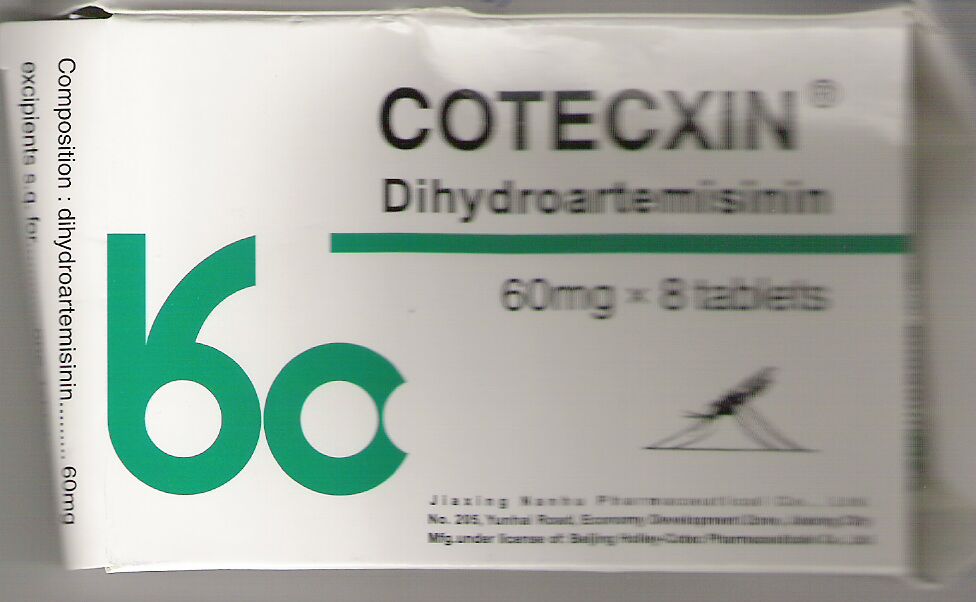 The Washington Post has an interesting article in today's [Sunday the 8th] Magazine section talking about the US Army's recent efforts to treat malaria.
Malaria:
- claims more than 1 million lives globally each year, 90 percent of them in sub-Saharan Africa, the vast majority children. Young survivors are frequently left with cognitive damage that can cause them to fail at school and work. African adults, while having lived long enough to gain some immunity against malaria's worst effects, often lose weeks of work while recovering from the disease. Western economists estimate that malaria results in an economic loss of $12 billion annually in Africa, the continent least able to foot the bill for fighting the disease.
- In Kenya, the most reliable antimalarial drugs cost about $6, or about four days' earnings for the average Kenyan. The drugs are generally unavailable in shops. Accessible antimalarials in Kenya generally mean cheap antimalarials -- usually ranging from 10 to 30 Kenyan shillings, or roughly 15 to 40 cents -- but they are also the least effective treatments, as the disease has become wholly resistant to many of these drugs once famously effective.
- Heppner [the Army researcher] and his Army colleagues remain serious players in the vaccine research field only because of the largess of other groups. His department received $2.7 million last year from the U.S. Agency for International Development and $1 million from its vaccine collaborator GlaxoSmithKline. But his most critical source of funding in recent years has been the private nonprofit Malaria Vaccine Initiative, created with a grant from the Gates Foundation in 1999.
- Worldwide funding for malaria, last calculated by the research group Malaria R&D in 2004, stood at $323.4 million. Columbia University economist Jeffrey Sachs estimates it would take $3 billion to vaccinate every African child who needs it.
One of our hosts this summer for the Cameroon team, W Nen, actually got malaria a few months after they first arrived in Cameroon. She said it was as bad as you think it is. The Nens also have first hand experience with people in Cameroon getting malaria, but it being misdiagnosed or not taken seriously at first. It is very real to people living in Cameroon.
There is also a related debate between the environmental concerns of DDT versus how amazingly effective it is against malaria. Read some of these articles.
Photo: The box of the malaria medicine the Nens sent home with the team.
Friday, October 06, 2006
SPACE's Core Score - Oct 2006
 In the spirit of last year's State of the 03 post and implementing this idea of a core score....
There are two core scores of SPACE - how we measure how well we are doing. First, let's score how many students after graduation serve in an intentional ministry. Also related, lets count how much of that is cross cultural. Our second core score is how many students we send out each summer and the metrics around those numbers. Let's also see what percentage of leaders have come out of being students.
The first score is important because there is direct function between people that stick around church and people that serve. And within the realm of youth ministry, statistics bear the fact that many students who love student ministries drop their faith after they graduate from high school. The whole intention of following Jesus is to live a life centered around doing something about it. And doing something about it helps solidify faith.
So actually, although we say that SPACE is about student [middle and high school] missions and service, you now you see, like I do, that there is much more at stake...
These core scores also take into account my dteam and the class of 2003. I think it's a fair metric since I actively recruit, when I can, from this class to help me with SPACE. Now that SPACE has been around for 3 years, I'm going to extend the scores to include the set of students that have been part of SPACE that have now graduated. So this is a look at what they are all doing now collectively:
[some of this is repeated from a previous post]
Part 1
** December 2003:
sent 11 of the 03 to Urbana Student Missions Conference
** Summer 2004:
3 - go on a two week long mission trip to Kazakhstan - 2 that also went to Urbana
** Summer 2005:
1 - works with Campus Crusade ministry in Wildwood NJ
3 - help as SPACE mission team leaders - 2 from Urbana
4 - go on overseas missional trips - 2 from Kstan team, 1 SPACE leader, 1 from Urbana
** Jan 2006:
- 3 go to NOLA on relief trips - 2 from the 03, 1 from SPACE
- 1 assist me with SPACE winter expedition - this one from the 03
** Summer 2006:
- 5 lead different teams for SPACE - 3 from the 03 and 2 SPACE grads
- 1 goes to Uganda - from the 03
** Fall 2006:
at least 8 that I know of intentionally serving with students and college ministries around. probably more.
Grand total - since 2003, graduated from the 03 and SPACE
13 - # of unique individuals serving in intentional ministry
10 - # serving in cross cultural contexts
Part 2
[some of you may have seen this also in a previous post]
2004:
3 teams (LC, NYC and DC) of 36 people
7 leaders - 5 of those were students - 71%
approx $7,500
2005:
3 teams (LC, Brasil and Trinidad) of 37 people
12 leaders - 10 were students - 84%
approx $27,000
2006:
5 teams (LC, Merge, DC, LA and Cameroon) of 68 people
20 leaders - 16 were students - 80%
approx $52,000
So that's quite an interesting summary. I'll probably try to this every Fall or so.
Thursday, October 05, 2006
Blogger Upgrade
You might see some funny stuff on here as I'm messing around with the blogger beta. In fact, just a few minutes ago, I thought I dumped the whole thing down the drain. HA.
MySpace over the hill?
"A new report by comScore puts more than half of MySpace users at over 35.
Those teenagers are so out of there." via The Business2.0 blog
TOTYNTK - Chapter 4 - Great Leading
 Chapter 4 – The One Thing You Need to Know: Great Leading
** The difference between great managers and great leaders:
Great managers discover what is unique about each person and capitalize on this uniqueness. Great managers serve as intermediaries between the individual and the company, and like all intermediaries, they perform their role well only when they perform it one on one.
Great leaders must play a different role. Their job is to rally people toward a better future, and as such, they are not intermediaries. They are instigators. Driven by their compulsion for a better future, their challenge is to do everything in their power to get other people to join together to make this future comes true. So, by definition, they will perform this role well only when they find a way to make many people, regardless of each person's uniqueness, excited by and confident in this better future. If, through their words, actions, images, pictures and scores, they can tap into those things we all share, they will succeed as leaders. If they can't, they will struggle.
** The essence of great leadership:
Discover What Is Universal and Capitalize On It.
** What are the universals of human nature?
[A very interesting discussion on culture, by the way. And.. remember, one significant thing about a culture is how many words they have to describe a concept.]
Anthropologist Donald Brown – Human Universals
1. Fear of death – the need for security
2. Fear of the outsider – the need for community
3. Fear of the future – the need for clarity
We are aware that the future is unstable, unknown and therefore potentially dangerous.
This is why, in every society, we give prestige to those people who claim to be able to predict the future.
4. Fear of chaos – the need for authority
Two universals reveal this fear – first, every society has devised its own story of how the world came to be and in each story, in each creation myth, the world was created out of chaos. Second, one of the most universal of human traits is our need to classify things. Out of our desire for order springs out need for authority. Every society has a word for leader.
5. Fear of insignificance – the need for respect
Usually the need for respect is attended to by an intermediary, by someone who deals with people one-on-one. Today, in the world of work, this intermediary role is played most effectively by the manager, not the leader.
** The job of a leader:
The job of a leader is not to win people's loyalty. The job of a leader is to rally people toward a better future. Winning people's loyalty should be a means to this end, not the end itself. If you have grappled with our fear of the future and somehow neutralize it, even turn it into something positive, you will have positioned yourself to pull off something truly significant as a leader.
[The job of a leader is not based on universal 1, 2, 4 or 5. It is about #3 - leading is about the fear of the future.]
The problem for you, the modern-day leader, is that you traffic in the unknown. All of your conversations concern the unknown, the future, and the possibilities you see there. If you are going to succeed as a leader, you simply must find a way to engage our fear of the unknown and turn it into spiritedness. If great managers are catalysts, speeding up the reaction between the individuals talents and the company's goals, then great leaders are alchemists. Somehow they are able to transform our fear of the unknown into confidence in the future.
** Clarity is the key:
By far the most effective way to turn fear into confidence is to be clear; to define the future in such vivid terms, through your actions, words, images, pictures, heroes, and scores, that we can all see where you, and thus we, are headed. Clarity is the antidote to anxiety and therefore clarity is the preoccupation of the effective leader. If you do nothing else as a leader, be clear.
** The balance between giving people clear direction and yet still enough white space to create and innovate
This doesn't mean that you describe in precise detail all of your tactics and plans and deadlines. On the contrary, as we'll see, to keep your followers challenged and engaged, you must allow them plenty of white space to invest, create and experiment. But it does mean that your ability to be clear and your followers feelings of confidence are causally linked.
** Points of Clarity – Where are your followers crying out for clarity?
1. Who Do We Serve?
You the leader must be clear about whom you are choosing to serve because we, your followers, require it of you. When you do this with clarity, you give us confidence – confidence in our judgment, confidence in our decisions, and ultimately confidence in our ability to know where to look to determine if we have fulfilled our mission.
A leader must not be clear on all points and that one of the areas in which he should allow significant ambiguity is in the strategies and tactics selected by his employees. Yes, he should be clear about whom he is trying to serve, but then he must actively encourage his employees to devise novel and as yet unproven ways of serving them. This is the only way to keep the organization alive.
2. What Is Our Core Strength?
3. What Is Our Core Score?
By zeroing in on one core score leaders brought clarity to their people.
Ideally, this score will be a leading indicator of success, such as employee engagement or employee safety or crime, rather than a trailing indicator, such as sales or profit or tax revenues, but from the perspective of your followers, what matters most is that it's clear.
4. What Actions Can We Take Today?
Two distinct types of actions – systematic and symbolic
Systematic action – interrupts our day-to-day routines and forces us to become involved in new activities. It disrupts us.
Symbolic action – doesn't alter what we do, it just grabs our attention. It distracts us, thereby giving us something new and vivid on which to focus.
** The Disciplines of Leadership – How do the best leaders achieve this clarity?
1. Take time to reflect
2. Select Your Heroes with Great Care
You must remember that the employees you choose to celebrate will reveal the future you are trying to create. When you bring an employee up onstage and praise her performance, this has a management impact. It will make this particular employee feel appreciated and will motivate her to do even better. However, it will also, if you do it well, have a leadership impact. If you can tell us, your followers, exactly what she did to deserve this recognition, if you can show us the people she served, or the strength she embodies or the scores she achieved, or the actions she took, you will make everything much clearer.
3. Practice
** Summary
Effective leaders don't have to be passionate. They don't have to be charming. They don't have to be brilliant. They don't have to possess the common touch. They don't have to be great speakers. What they must be is clear. Above all else, they must never forget the truth that of all the human universals – our need for security, for community, for clarity, for authority, and for respect – our need for clarity, when met, is the most likely to engender in us confidence, persistence, resilience and creativity.
Show us clearly whom we should seek to serve, show us where our core strength lies, show us which score we should focus on and which actions must be taken today, and we will reward you by working our hearts out to make our better future come true.
My thoughts:
1. For such a grand topic as being a good leader, this chapter has given some very clear - get it - and tangible suggestions for improvement. Core strengths, clients and scores are very concrete things we all can work and concentrate on.
2. You can teach a person to be clear and vivid. But can you teach a person to be a visionary? If they get the vision, you can teach them how to communicate it with clarity. But what if they never form their own visions? How do we create visionaries? I suspect there might be something supernatural here - see Joel 2.
3. Some ideas that relate to SPACE --
- I would like to think that I have been pretty clear when I have prepared teams that I have personally led. It usually centers around an idea like - "Our whole purpose is to serve and bless our GCC mission families." For overseas summer mission teams, that is who we serve. And I would think that at least some of my team members got tired of hearing me say it so much. The bigger question is how clear are we on our mission with SPACE on a bigger scope.
- Knowing our core strengths - not just within our teams but the student ministry overall [LC and CpR] - is important especially as we put summer team experiences together. If our mission teams are really put together with a partnership in mind, knowing our core strengths is an important piece.
- I see SPACE having two primary core scores right now: One of them is the proportion of students we send out versus overall students in the ministry and that theoretically, this proportion should grow. The second core score is how many students actually leave the student ministries to serve intentionally. Which reminds me that I'm working on an update for this year to my "The State of the 03" post from August of 2005 - more on that score later.
Related : My notes from Chapter 2
Wednesday, October 04, 2006
Youth Ministry in 50 years
Marko posted yesterday about what youth ministry might look like in 50 years, along with this link to an article from CT. Interesting question that I have been pondering for a little while. I thought I would throw my opinion out there - feel free to comment. Also, I haven't read the article yet but will as soon as I post this. I thought it would be more fun to come up with my ideas before I read it.
"Tell me what will be different about youth ministry in 50 years."
1. Your student ministry is no longer pale
You think the world is flat now.... Our student ministries will be full of a mixture of students from all kinds of backgrounds. The global and urban migration will extend into student ministries mixing ministries full of bi-, tri- and multi-racial students who bring all kinds of cultural, emotional and family issues and experience. Third culture kids [who have lived all over the world and in different cultures] will be a larger percentage of the kids we minister to.
The average youthworker will be interested in different cultures, have a vast view of the world and love to eat Sweet and Sour Pork, Tandoori Chicken and rice and beans. Our suburban churches become mixing bowls of world cultures all coming together for the mission of Jesus. The average youthworker will probably not be Caucasian.
2. Serious About Contextualization
Speaking of culture, our student ministries will have a new focus on the idea of engaging culture. Not in the present sense of 'culture war' - not fighting Hollywood, public schools or DisneyWorld.
Instead, our students ministries will be fleshing out the idea of contextualization - how do we engage the culture we live in and the culture our students come from. Ethnocentrism will no longer be tolerated - thinking your culture is the best is not going to get you very far in building relationships and impacting students.
There will be new elements of engaging worship from a student perspective [rebellious, loud, edgy] as well as the cultures that they were brought up in [African, Asian, etc.] Prepare for a cool mix of worship music that is born from adolescents but mixes world music, beats and instruments.
3. Bigger Freaks
Churches will be in decline and the society at large will continue to be cautious of religious extremism. Being an evangelical will be even less tolerated. Students sold out to Jesus are seen as even bigger freaks. The threat of terrorism around the world will continue to shake us - mission teams will have even more to think and plan regarding that threat. People that are serious about following Jesus stick around. The ones that are not serious leave fast. There is an even higher calling of commitment.
4. Creativity and Imagination
Creativity and imagination in student ministries shape a new level of engagement with students. Ministries we have not even dreamed of yet are created and implemented by and for students. Youthworkes are amazed at how vast their students imagaintions are.
5. Precision Missions
Short term missions is going to continue to explode - but it is going to be framed with more precision and strategy - in good ways. Local churches are going to hone this vision and step up to require student missions have a good context and synergy. Many more students are going to understand typically missiologist terms like people group, syncretism and conextualization - and are going to have hands on experience with those concepts.
5. Your present students are going to mold this vision.
And the best one I think - the students you are working with now are going to shape and mold this vision. They are the ones that will build relationships, in the future, with students you haven't even met yet that will be the youthworkers in 50 years. The creative, the committed, the one that brings the African drum to worship on Sunday, the ones that love Tandoori chicken.
Looking at your middle schooler of today and scared about the future ministry they will invest in? Nah - instead, be energized and excited. She will come around, with your patient encouragement, clarity and prayers. The time you invest in her, your modeling and when you both see a life impacted - it will all make a difference in her life. And really, when it comes right down to it, the future of youth ministry needs her.
Tuesday, October 03, 2006
In The Light
 From the article entitled "How Many Lightbulbs Does it Take to Change the World? One. And You're Looking At It."
The impact of a compact fluorescent lightbulb:
What that means is that if every one of 110 million American households bought just one ice-cream-cone bulb, took it home, and screwed it in the place of an ordinary 60-watt bulb, the energy saved would be enough to power a city of 1.5 million people. One bulb swapped out, enough electricity saved to power all the homes in Delaware and Rhode Island. In terms of oil not burned, or greenhouse gases not exhausted into the atmosphere, one bulb is equivalent to taking 1.3 million cars off the roads.
How really long they last:
Swirl bulbs don't just work, they pay for themselves. They use so little power compared with old reliable bulbs, a $3 swirl pays for itself in lower electric bills in about five months. Screw one in, turn it on, and it's not just lighting your living room, it's dropping quarters in your pocket. The advantages pile up in a way to almost make one giddy. Compact fluorescents, even in heavy use, last 5, 7, 10 years. Years. Install one on your 30th birthday; it may be around to help illuminate your 40th.
And the company that is determined to change the lightbulb industry:
A year from now, chances are that you yourself will have installed a swirl or two, and will likely be quite happy with them. In the name of conservation and good corporate citizenship, not to mention economics, one unlikely company is about haul us to the lightbulb aisle, reeducate us, and sell us a swirl: Wal-Mart.
In the next 12 months, starting with a major push this month, Wal-Mart wants to sell every one of its regular customers--100 million in all--one swirl bulb. In the process, Wal-Mart wants to change energy consumption in the United States, and energy consciousness, too. It also aims to change its own reputation, to use swirls to make clear how seriously Wal-Mart takes its new positioning as an environmental activist.
Much more in the article about business partnerships, CFLs being a classic example of creative destruction - like how digital music transformed the music industry - and how one light bulb you buy may in fact impact the world.
I replaced four normal lightbulbs with CFLs in my house tonight.
Tuesday Potpourri
** Steve Addision writes about Ireland:
** From Bart Campolo - change in strategy:
** Sivin posts some video from some worship at YLG06.
Related - my post about leadership workshops at YLG06.
In 2003 there were nine ordinations for the whole of Ireland, eight in 2004 and eight in 2005. In 2005, for the first time in its history, the Archdiocese of Dublin, with of over 1 million people, didn't have a single candidate for ordination, and in the whole Archdiocese there was a single priest under the age of 30. In a country that once used to export thousands of priests and nuns and brothers, African and Vietnamese priests are now a familiar sight.Related - Leslita B's post of her notes from The Celtic Way of Evangelism.
** From Bart Campolo - change in strategy:
So now, instead of a thrift shop, imagine a big, clean, homey neighborhood laundromat, where everyone gets welcomed by name, with good machines and a nice little coffee bar, comfortable furniture, books and toys for kids, and really good music. The kind of place where they'll drive you home if you don't have a car, or pick up and deliver your laundry if you're too sick or frail to carry it, and where the attendant is always ready to listen to your troubles and pray for you. The kind of place where anyone might stop by anytime to talk sports, movies, or politics, where the bulletin board is worth looking at, and where on Thursday nights you get invited to the big family dinner upstairs.
** Sivin posts some video from some worship at YLG06.
Related - my post about leadership workshops at YLG06.
Sunday, October 01, 2006
In A Pit...
 Mark Batterson, lead pastor at National Community Church - the church that meets in Union Station in DC, as well as two other locations - has a new book coming out today entitled In a Pit with a Lion on a Snowy Day. Sounds like it's going to be a good one.
Your greatest regret at the end of your life will be the lions you didn't chase. You will regret the risks not taken, the opportunities not seized, and the dreams not pursued. Stopping running away from what scares you most and start chasing the God-ordained opportunities that cross your path.NCC has been a church I've been following on and off for a few years. Being from the DC area, it's very cool to hear how they are impacting the city. Innovation, risk and fun are all terms that come to mind when I think about them. Also, when we took a day team to serve in DC in the summer of 2005, NCC sent us a whole bunch of contact cards in case we met anyone that wanted to connect with a church in the city. I've read the first chapter and I think most of you readers would enjoy the book as well. Click on the graphic to order from Amazon.
In a Pit with a Lion on a Snowy Day is inspired by one of the most obscure yet courageous acts recorded in Scripture: Benaiah chased a lion down into a pit. Then, despite the snow and slippery ground, he caught the lion and killed it (II Samuel 23:20-21).
Unleash the lion chaser within!
Friday, September 29, 2006
Lip Syncing
 Tonight was CpR's first 'outreach' of the school year - Lip Sync night. I put the word outreach in quotes because I think our definition of outreach is changing - in a good way.
It's always a blast to see how creative and talented the students are, in terms of choosing the music, putting together dance moves and combining it all for a few fun minutes on the stage. Don't believe people when they tell you suburban churches are not artistic and creative.
What was a bit different about tonight from other outreaches in past years was that there was a short time before the program started where kids were sent out into the community to bless strangers. I and some other leaders took some kids to a local high school football game to give away sodas and candy. Granted, there may not be very many people that will be interested in church because of getting a free soda. But this medium allows students to be stretched a little bit in terms of risking for others, blessing strangers and getting out of the church walls.
Photo: Some our Senior girls [LF in the black and AW in the red, from both the Brasil and Cam teams] - click to enlarge.
Thursday, September 28, 2006
The One Thing You Need to Know - Buckingham - Chapter 2
I picked up this book on sale over the weekend and had skimmed it a few months ago. It was a good deal so I grabbed it. Tonight I read chapters 1 and 2. And it grabbed me. Look for more notes soon, but take a good read at some of the stuff here.Chapter 2 - Managing and Leading: What's The Difference?
There is a vital distinction between managing and leading - they are not the same.
** On managing
...great managers are catalysts, and this analogy still holds. At their best, great managers speed up the reaction between each employee's talents and the company's goals.
The starting point [of the manager's responsibility] is each employee's talents. The challenge: to figure out the best way to transform these talents into performance. This is the job of the great manager.
** Qualities of leadership
When organizations say that each and every employee can be a leader, more often than not they are referring to those four behaviors: initiative, creativity, the courage of one's convictions and integrity. But they err when they label these behaviors leadership.
Yes, all leaders should possess integrity, but so should the rest of us. Integrity is not just a desirable leadership trait; it is a desirable human trait.
The same can be said of the other three behaviors. If you take initiative, improvise creative solutions to changing circumstances, and have the courage of your convictions, you will be a formidable and effective human being, and surely an asset to any organization, but you will not necessarily be a leader.
** The only satisfactory definition of leadership
Great leaders rally people to a better future.
What defines a leader is his preoccupation with the future.
You are a leader if, and only if, you are restless for change, impatient for progress and deeply dissatisfied with the status quo.
"I am not satisfied." This is the mantra of the leader. As a leader you are never satisfied with the present, because in your head you can see a better future, and the friction between the 'what is' and the 'what could be' burns you, stirs you up, propels you forward. This is leadership.
** The Leadership Talent of Optimism
If the core talent of great managers is an instinct to coach others toward success, then optimism and ego are the talents underpinning all great leadership.
The need for a talent for optimism is almost self-evident. As a leader you must believe, deeply, instinctively that things can get better.
When I say leaders are optimistic I mean simply that nothing - not their mood, not the reasoned arguments of others, not the bleak conditions of the present - nothing can undermine their faith that things will get better.
Properly defined, the opposite of a leader isn't a follower. The opposite of a leader is a pessimist.
** The Leadership Talent of Ego
However, no matter how reprehensible their actions [the recent spat of executive crooks - Enron, WorldCom, etc.] may have been, to explain their misfortune as a function of excess ego is actually a misdiagnosis. The reputations of these executives fell not because their egos were too strong but because their principles were not strong enough. They had too little integrity, not too much ego.
The key thing about leading is not only that you envision a better future, but also that you believe, in every fiber of your being, that you are the one to make this future come true.
Or think about Saint Paul returning to Jerusalem and informing the apostles that he, not they, knew what Jesus would have wanted for the young church, and that they should modify their practices to accord with his teachings, rather than the other way around. What gall. What ego.
This doesn't mean that they think they have all the answers. On the contrary, the best leaders have a strong expertise orientation.
Nor does it mean they are brash or abrasive. Nor does it mean they are egomaniacal. The difference between a leader with a powerful ego and an egomaniac is how the ego is channeled. The effective leader takes his self-belief, his self-assurance, his self-confidence and presses them into the service of an enterprise bigger than himself.
But this does mean that they make outstanding claims to excellence. It does mean that their self-worth is inextricably wrapped up in both their appetite to make such claims and in their ability to realize them.
So if you want to help develop a budding leader, don't tell him to deflate his ego into humility, to lessen his dreams, to downplay his belief in himself. This is confusing, negating advice. Instead, challenge him to be more inquisitive, more curious, and thereby more vivid in describing his image of a better future, and then encourage him to channel his cravings and his claims toward making this image come true.
** Leaders Are Born Not Made
They are born. A leader is born with an optimistic disposition or she is not. If she is not, then no amount of 'optimism training' is going to make her view the world in an overwhelmingly positive, opportunistic light. To lead effectively, you must be unfailingly, unrealistically, even irrationally optimistic. Like it or not, this is not learnable.
The same applies to ego. Through careful nurturing you can make a person feel more self-confident and more self-assured than he used to be, but nothing you can do will ever imbue him with the kind of powerful, claiming ego that so characterizes the best leaders. He either has it or he doesn't.
None of this implies that a person cannot be helped to improve as a leader. She can be helped to refine her picture of the future, even to change it entirely, and to employ ever more effective ways to present this future to her followers. But what you cannot help her do is see a better future, believe in this future and have faith that she is the one to create it. here, she's on her own.
** Summary
The manager's starting point is the individual employee. He looks at her palette of talents, skills, knowledge, experience and goals, and then uses these to design a specific future in which the individual can be successful. That person's success is his focus.
The leader sees things differently. He starts with his image of the future. Only with this image clear in his mind does he turn his attention to persuading other people that they can be successful in the future he envisions. But through it all, the future remains his focus.
A few things strike me:
1. The measure that I have been using to determine potential leaders [the qualities of initiative, creativity, the courage of one's convictions and integrity] is potentially not the right measurement.
2. The ego talent found in leaders [you believe, in every fiber of your being, that you are the one to make this future come true] reminds me of Waking the Dead - how we have a crucial role to play and how if we don't believe it, that's the beginning of losing our heart.
"I'm sorry if I'm the one to break the news to you: you were born into a world at war, and you will live all your days in the midst of a great battle, involving all the forces of heaven and hell and played out here on earth." - John Eldredge
3. I'm interested to read what else the books says about reproducing leaders since they cannot be made. I'm not totally sure that I agree with ego not being able to be reproduced - to a certain degree. I know people who have been transformed - they didn't use to think they would amount to much, but these days, they know they will mark human history.
Wednesday, September 27, 2006
Are you an Aussie Sender?
Had a fun time meeting with JWinter this evening, who is a recent UofMD graduate and going to Melbourne, Australia for a one year term, leaving in November, working with a college ministry with Campus Crusade. She is in the midst of raising support and is part of our Fusion community at GCC. As well as a neighbor of ours we had never met before. As well as friends with RP and JP, who helped start the campus movement in Melbourne a few years ago. Small world.
I remember when R and J got ready to leave. We were all working with high school small groups and hearing them talk about Australia was part of the convergence of information at precisely the right time that helped birth SPACE. I can still see the passion in his eyes as he talked about the majority of Aussies that didn't even know the name of Jesus. It's pretty wild to once again be a small part of what is happening in Melbourne.
If any of you readers feel specifically called as a sender for people going to Australia and would be interested in hearing more about JWinter, leave a comment or email and I can put you in touch.
Blog Spam
Some of you readers that read from an RSS feed might have noticed a strange post last night in the middle of the night. Think Chinese characters with lots of vibrant, neon, disco colors. No, that wasn't anything about students, mobilizing or mission. It was better - it was spam.
Up until yesterday, I had enabled a blogger feature that lets you post via email. Simply jot down your post and email it to your custom email address and it gets posted automatically. It's a really cool feature and I've used it to post from my phone via a text message and from Internet cafes and the like. Most recently, I used the address to post an update from when I was in Cameroon. During my time there, access to the web was limited but I did have the ability to send updates over someone else's email. So as I would write updates to our home team, I also included the blogger posting email address. One slight bump - when people replied to all, those got posted too. Good thing I gave D all of my important passwords.
Anyway, I've disabled the email posting - hopefully no more disco colored Chinese characters on here for a while.
Sunday, September 24, 2006
Summer of 1991
 In the summer of 1991, right after I graduated from college and right before going to grad school that fall, I took a summer camp counselor job at Camp Shenandoah Springs in Madison, VA. It was kind of on a whim, I had spent a weekend there on a retreat and fell in love with both the place and the family that ran the camp. I applied for a position in the early spring and then suddenly, 4 weeks before camp started, they had a last minute opening and offered me the job - 8 weeks as a counselor for a Christian camp run on an old Civil War-era farm in the Shenandoah mountains of Virginia.
They had what seemed to be a pretty cool summer camping program with some very cool elements - a lake, horses and girls. About that last element... almost all of my ministry experience up to that point had been with high school guys. I felt like it would be a growing experience to work in a residential camp ministry with guys and girls at the same place. Growing it was.
We had an amazing staff team of 8, including the lead counselor, a horse whisperer, a lifeguard and three worship leaders. I taught canoeing, first aid, and crafts. I also got a reputation for driving a black 4x4 in and through Civil war farmland.
Up until that point, I had had a lot of great ministry experiences. But boil them down and they were mostly about having a lot of fun. Summer camps, high school retreats, weekend camping trips, intentionally spending time with students. They sounded right on, but this summer made me see something that was missing - someone that had passion.
I had never seen someone weep - and really weep - for the future, watching them count the days they had left with these precious students. I hadn't really experienced living with someone who gave - almost at every moment both waking and nonwaking - to the charges they had been responsible for 24x7. I had never experienced morning staff prayers like this one - where our unified team openly begged God for safety, mercy and impact. This was the summer that I saw passion embodied - it was packaged in camp counselors.
A few days ago, one of the counselors I worked with connected with me via this blog, after not being in touch for over 10 years. He told me they were having a 25 year anniversary party today and asked "So, what are you doing this weekend?" The girlies and I were able to go and it was a great time to reconnect with some great friends - friends who like to package passion in human form.
Photo: CFine, BGoins and me, 15 years after serving together.
Technorati tags:: Camp+Shenandoah+Springs
Friday, September 22, 2006
Conversations ...
- with a college student trying to find a missions experience this coming summer
- with the director of a parachurch youth min in our area about Bulgaria and Cameroon
- lunch with one of our GCC Turkey team who is now aligning his future with his values and personality
- going to listen to a college grad who is going to Melbourne Australia for a year - following up on the work on a college campus that some of our friends [R and J] started a few years ago
Let's continue to find those workers....
D and I are getting away for the night. Our house is well guarded at night by two dogs and two dog sitters and guarded by day by MAB the mad roofer who is a really good shot with his staple gun.
Thursday, September 21, 2006

Balance of $0
Well we have almost closed the summer finances and I now have a whopping $0 in our SPACE fund. It's definitely a weird sensation. Some of you readers will remember that last December, I was asked to put a plan together to spend quite a bit of extra I had in the fund, instead of just letting it sit in the bank.
My spending proposal [which was approved] was outlined in the post entitled Extra Cashola. Out of that proposal, here is where the money actually went:
- gift for support for JAB and FZ and their team from IV-UofMD to a week in NOLA - December 2005
- help cover costs for SPACE winter expedition, January 2006
- send 3 leaders/students to one day training with the Urban Youth Worker Institute Seminar, March 2006
- help pay for leaders to be a part of the Senior NYC weekend, May 2006
- bought 30 StrengthsFinder books - part of Summer Leader Development, May 2006
- help cover costs for Mission Advance, June 2006
- gift for support for AMsr - going to India for a semester with Adventures in Mission [I think she left yesterday or today], June 2006
- help cover costs for Cameroon team, summer 2006
Since we have no money now, that really means we have to be totally self-sufficient. If we want to do something, provide an experience, buy some books, plan a winter expedition, we will have to come up with the resources ourselves. And I don't think that is a bad thing to have to do at all.
Subscribe to:
Posts (Atom)